Skip to content
Menu

2026 Best Bridge Gantry Crane for Global Buyers?

Choosing the 2026 best Bridge Gantry Crane requires more than comparing prices or lifting capacity. Global buyers need equipment that matches real working conditions, not a polished catalogue image. A crane moving steel coils inside a dry factory faces different demands from one handling containers beside a windy port. Span, rated load, lifting height, travel distance, duty class, and floor strength shape the decision. Small details matter. A misread dimension can create expensive installation changes.

This guide examines practical selection points from an engineering and purchasing perspective. It considers main girder design, hoist performance, wheel loads, power supply, control systems, and safety features. Buyers should request clear load charts, inspection records, material certificates, test documentation, and maintenance guidance. Reliable manufacturers also explain limitations instead of promising universal performance. That honesty matters. Local installation conditions, climate, available technicians, and spare-parts access deserve equal attention. A low initial quote may become costly when service support is distant.

The discussion also compares common Bridge Gantry configurations for workshops, yards, warehouses, and project sites. It highlights questions buyers often overlook, including wind exposure, uneven ground, corrosion, and future capacity growth. Not every “best” crane is best for your site. Recheck the numbers. A careful buyer balances productivity, safety, compliance, and long-term ownership value before signing a contract. Some assumptions may still need correction after a site survey. That is normal. Good decisions improve when evidence replaces confidence.
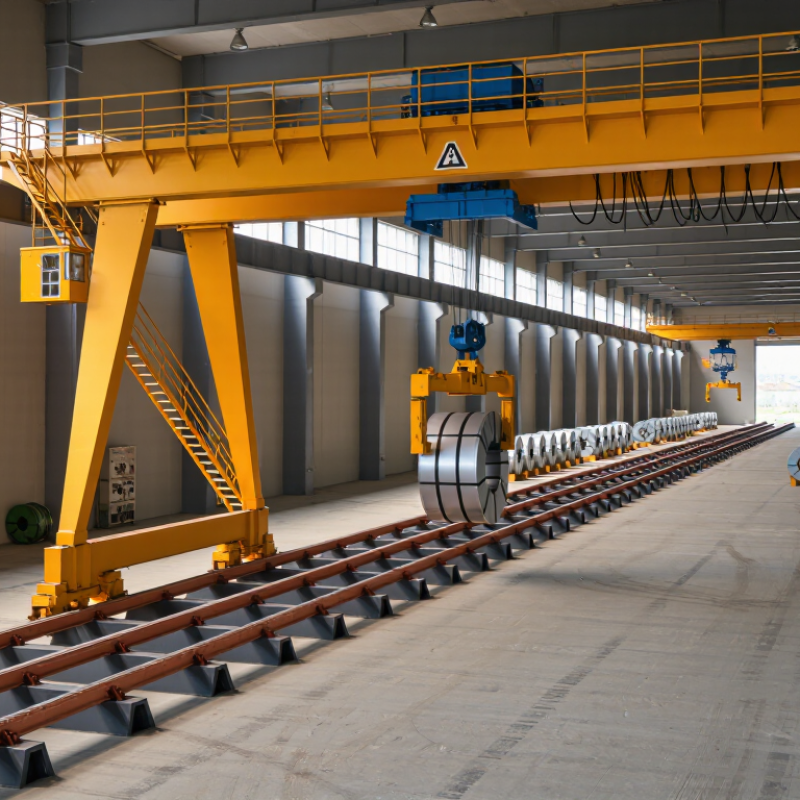
2026 Best Bridge Gantry Crane for Global Buyers?

Bridge Gantry Crane Types: 5–500 t Capacity and 6–30 m Span Options

The 2026 Best Bridge Gantry Crane for Global Buyers?

Bridge gantry cranes now cover demanding lifting ranges from 5 to 500 tonnes. The 6–30 metre span range suits workshops, shipyards, precast yards, and outdoor assembly areas. IMARC Group’s 2024 overhead crane market assessment reports continued growth, driven by infrastructure, manufacturing, and logistics investment. That growth does not make every configuration suitable.

A 5–50 tonne single-girder crane usually offers lower dead weight and simpler installation. Double-girder designs provide better hook height and stability for 50–500 tonne loads. Full gantry cranes serve open yards, while semi-gantry versions reduce one runway requirement. I have seen projects specify capacity first, then discover weak foundations and excessive wheel loads. That approach is backwards. Check duty class, lifting frequency, wind exposure, rail alignment, and available headroom before choosing span.

The European Materials Handling Federation’s FEM 9.755 guidance links crane classification with working cycles and load spectrum. A rarely used 500-tonne crane may need less demanding classification than a busy 20-tonne production crane. ISO 4301-1 also evaluates mechanisms by utilization and load history. A 30-metre span looks efficient, but deflection and sway can increase. A shorter span may deliver better control. Specification sheets often hide this trade-off. Load testing, foundation verification, and independent engineering review remain essential for reliable global procurement.

2026 Selection Criteria: ISO 4301 Duty Classes, Safety, and Automation

For global buyers, the best bridge gantry crane in 2026 is not automatically the largest or fastest model. ISO 4301-1 classifies cranes from A1 to A8, based on working cycles and load spectrum. Mechanism classes, such as M3 or M8, also matter. A crane lifting near its rated capacity every few minutes needs a higher duty class than one handling occasional light loads. A neat specification can still fail.

Buyers should request a duty calculation covering annual operating hours, average load, starts per hour, hook travel, and outdoor exposure. Safety documentation must include overload protection, upper and lower limit switches, emergency stops, guarding, braking tests, and a documented risk assessment. The UK Health and Safety Executive reported 138 worker fatalities in 2023/24, across all industries. That figure is not crane-specific, but it reinforces a practical point: safety cannot be treated as paperwork.

Automation deserves careful evaluation. The International Federation of Robotics reported 541,302 industrial robot installations worldwide in 2023, showing stronger demand for connected production systems. For cranes, useful features include variable-frequency drives, load monitoring, anti-collision sensors, remote diagnostics, and geofencing. However, automation can create new failure points. Buyers should verify manual recovery procedures, cybersecurity controls, spare-parts availability, and operator training. Test the alarm logic under realistic loads. Ask for evidence, not promises.

Performance Comparison: 5–20 m/min Hoisting and 20–40 m/min Travel

2026 Best Bridge Gantry Crane for Global Buyers?

For global buyers, hoisting speed often defines daily productivity. A 5–10 m/min hoist suits heavy loads and precise positioning. It gives operators better control near trucks, molds, and storage racks. Speeds from 10–20 m/min reduce waiting time during repeated lifting cycles. However, faster lifting can increase sway if acceleration settings are poorly adjusted.

Travel speed creates a different balance. A 20–30 m/min bridge or gantry travel rate supports controlled movement across compact yards. Rates near 40 m/min can improve output in large warehouses and open assembly areas. Yet maximum speed is not always practical. Long stopping distances, uneven rails, wind, and frequent starts may reduce real productivity. In operating reviews, smooth acceleration often matters more than the highest listed speed. I have seen specifications look impressive, while actual cycle times stayed disappointing.

Tips: Compare full lifting cycles, not only rated speeds. Check load charts, duty class, braking response, rail alignment, and control accuracy. Ask for test records under your planned working load. A 20 m/min hoist may sound ideal, but a 10 m/min setting could protect fragile cargo and reduce swinging. Also review local power supply, climate protection, maintenance access, and operator training requirements. These details are easy to overlook. They should not be.

2026 Best Bridge Gantry Crane for Global Buyers? - Performance Comparison: 5–20 m/min Hoisting and 20–40 m/min Travel

Configuration Rated Load Recommended Span Lifting Height Hoisting Speed Long Travel Speed Trolley Travel Speed Typical Duty Classification Typical Power Supply Best-Fit Application
Compact Single-Girder Gantry 5 t 10–20 m 6–9 m 20/5 m/min 20 m/min 20 m/min ISO M4 / FEM 2m 380–415 V, 50 Hz, 3-phase Maintenance yards, small fabrication shops and general material handling
Standard Single-Girder Gantry 10 t 15–30 m 6–12 m 12.5/4 m/min 25 m/min 20 m/min ISO M4 / FEM 2m 380–415 V, 50 Hz, 3-phase Steel processing, machinery assembly and indoor–outdoor workshops
Heavy Single-Girder Gantry 15 t 18–35 m 9–12 m 10/3.3 m/min 30 m/min 20 m/min ISO M5 / FEM 2m 380–415 V, 50 Hz, 3-phase Precast components, heavy fabrication and loading areas
Double-Girder Gantry 20 t 20–40 m 9–15 m 8/2.7 m/min 35 m/min 25 m/min ISO M5 / FEM 2m 380–415 V, 50 Hz, 3-phase Shipyard sections, steel stockyards and heavy industrial assembly
High-Cycle Double-Girder Gantry 20 t 20–40 m 12–18 m 5/1.7 m/min 40 m/min 30 m/min ISO M6 / FEM 3m 380–415 V, 50 Hz, 3-phase Frequent-duty production lines, logistics terminals and container-related handling
Performance values are representative engineering ranges for preliminary comparison. Final selection should be verified against the required load spectrum, span, lifting height, operating class, local electrical standard, outdoor wind conditions, temperature range, rail geometry and applicable safety regulations.

Global Compliance Guide: FEM, EN 15011, ASME B30.2, and CE Standards

2026 Best Bridge Gantry Crane for Global Buyers?

Global Compliance Guide: FEM, EN 15011, ASME B30.2, and CE Standards

Selecting a bridge gantry crane in 2026 requires more than comparing lifting capacity and price. FEM classifications help evaluate duty cycles, load spectra, and expected working life. These calculations should match real operating conditions, including starts per hour and average load weight. A crane rated for heavy service may still be unsuitable for corrosive air, outdoor wind, or frequent side loading.

EN 15011 addresses the design and safety requirements for bridge and gantry cranes in European markets. Buyers should request design calculations, inspection records, load-test results, and operating instructions. CE marking is not a quality award. It indicates conformity with applicable European requirements, supported by technical documentation and a proper risk assessment. Missing documents can delay installation and create safety gaps.

For the United States, ASME B30.2 covers important practices for overhead and gantry cranes, including inspection, operation, and maintenance. Local workplace rules may also apply. I have seen projects focus on the main hoist while ignoring runway alignment, emergency stops, pendant controls, and anti-collision systems. That mistake is expensive to correct. Standards are useful, but site verification remains essential. A competent inspector should review the finished crane under realistic conditions, not only inspect paperwork. Some specifications look complete on paper, yet leave unclear responsibilities for testing and future maintenance.

Buyer Evaluation Matrix: Total Cost, Energy Use, Maintenance, and Delivery Times

2026 Best Bridge Gantry Crane for Global Buyers?

A practical buyer matrix should begin with total cost, not the purchase price. Include engineering, transport, installation, commissioning, training, spare parts, and downtime. A low quotation can still become expensive after delivery. I have seen projects lose weeks because foundation work was excluded. That detail matters.

Energy use deserves a duty-cycle calculation. Compare motor efficiency, lifting frequency, standby consumption, and braking systems. A crane working eight hours daily needs different controls from one used occasionally. Request measured power data under realistic loads. Brochure figures can be optimistic. They are not always wrong, but they need checking.

Maintenance planning often decides long-term value. Review inspection access, diagnostic functions, component life, lubrication points, and local technician availability. Ask how quickly common parts can arrive. Delivery time also includes design approval, factory testing, port handling, customs clearance, and site assembly. A promised twelve-week shipment may not mean operational readiness. Build a matrix with weighted scores and documented evidence. Leave space for uncertainty. I once rated a lower-maintenance option too highly because its service network was assumed, not verified. That mistake changed the final cost.