
2026 Best Quick Connect Couplers for Global Buyers
Choosing the right Quick Connect Couplers in 2026 requires more than comparing prices or polished product photos. Global buyers must assess working pressure, flow rate, temperature, media compatibility, seal materials, and connection size. A coupler that performs well on a clean hydraulic test bench may fail in dusty construction conditions. Fit matters.
This guide examines leading Quick Connect Couplers for industrial, agricultural, pneumatic, hydraulic, and fluid-transfer applications. Each option should be reviewed through measurable evidence, including pressure testing, leak performance, cycle life, corrosion resistance, and traceable material documentation. Certifications can support trust, but they should match the buyer’s application and destination requirements. They are not automatic proof of suitability.
Experienced sourcing teams also check machining consistency, locking mechanisms, replacement seals, packaging quality, and supplier response times. A stainless-steel body may resist corrosion, while a hardened steel design may better handle repeated impact. The correct choice depends on the environment. No shortlist is perfect. Product data can be incomplete, and published specifications may not reflect field conditions.
For this reason, the comparison emphasizes practical verification instead of bold claims. Buyers should request samples, inspect tolerances, confirm thread standards, and test couplers with the actual hose or equipment. Small mismatches create expensive delays. The recommendations aim to help distributors, engineers, and procurement professionals make reliable decisions across international supply chains. Yet every purchase still deserves a final technical review by a qualified specialist.
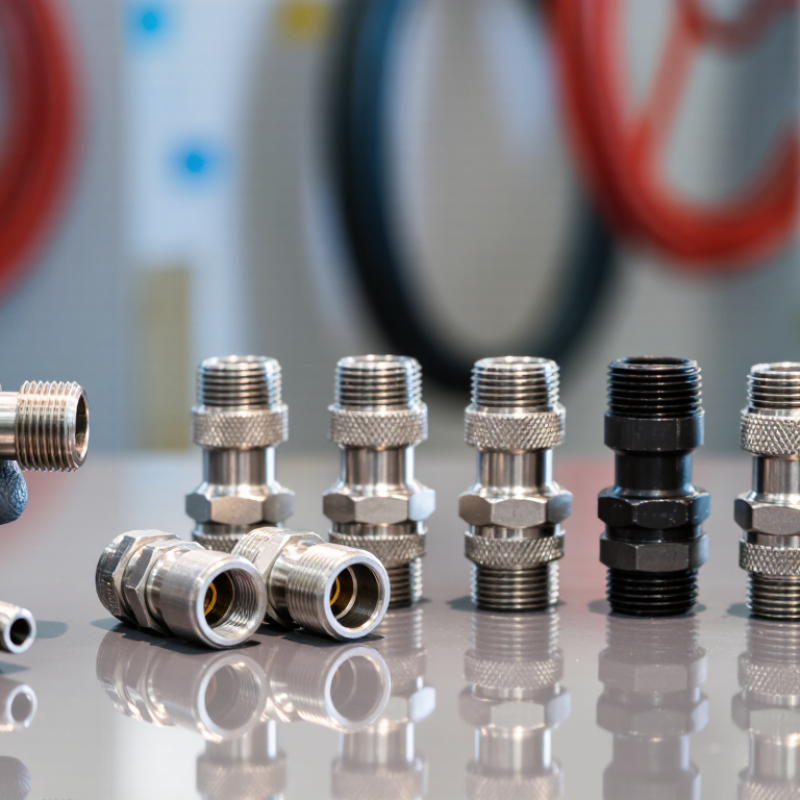
Quick Connect Couplers: Definition, Components, and Working Principles
Quick Connect Couplers: Definition, Components, and Working Principles
Quick connect couplers are mechanical fittings that join fluid lines without lengthy tools. They support fast hose changes in hydraulic, pneumatic, water, and industrial systems. For global buyers, the coupling should match the medium, pressure, temperature, and connection standard.
A typical coupler has a body, plug, socket, locking sleeve, retaining balls, valve, and sealing rings. The body guides the plug into position. The sleeve moves the locking balls into a groove. These balls prevent accidental separation during operation. Seals control leakage around the connection. Small parts matter. Poor sealing can reduce pressure and contaminate equipment.
When the plug enters the socket, internal valves open and create a continuous flow path. Pulling back the sleeve releases the locking mechanism. The valves then close, limiting fluid loss and air entry. I have seen operators force mismatched couplers together, causing damaged seals and difficult disconnection. That shortcut usually costs more later. Coupler selection also requires attention to flow restriction, corrosion resistance, connection size, and maintenance access. A compact fitting may look efficient, but its internal passage can reduce system performance. Buyers should verify technical drawings and test conditions before placing large orders. Specifications are useful, but field conditions can expose weaknesses that a catalog cannot show.
2026 Best Quick Connect Couplers for Global Buyers - Quick Connect Couplers: Definition, Components, and Working Principles
| Evaluation Dimension | Typical Options or Range | What It Means | Recommended Buyer Check |
|---|---|---|---|
| Definition | Removable fluid connector | A quick connect coupler joins and separates hoses, tubes, or rigid ports without using threaded tools for every connection. | Confirm whether the application requires a coupler, quick-disconnect fitting, dry-break connector, or hydraulic flat-face coupling. |
| Primary Working Principle | Plug-and-socket connection with locking mechanism | The male plug enters the female socket; internal locking balls, sleeves, threads, or bayonet features retain the connection and open the flow path. | Check the connection method, locking direction, accidental-release protection, and whether connection is permitted under pressure. |
| Main Components | Body, plug, socket, valve, sleeve, locking elements, seals, and release mechanism | Each component contributes to fluid control, retention, sealing, alignment, and serviceability. | Request a sectional drawing or component list when maintenance access and replacement parts are important. |
| Coupling Style | Ball-lock, sleeve-lock, screw-to-connect, cam-lock, and flat-face | Ball and sleeve designs support fast manual connection; screw-to-connect types provide strong retention; flat-face types reduce fluid loss and contamination. | Match the style to vibration, cleanliness, connection frequency, pressure, and operator access. |
| Connection Size | Common nominal sizes: 1/8 to 2 inches; larger sizes are available for specialized systems | Nominal size affects flow capacity, pressure drop, physical dimensions, and hose compatibility. | Specify nominal size, actual hose inside diameter, port size, and the required flow rate together. |
| Connection Interfaces | Female pipe thread, male pipe thread, metric thread, hose barb, tube connection, flange, and custom adapter | The interface determines installation compatibility and may require an adapter. | Identify thread standard and gender precisely; do not treat NPT, BSPP, BSPT, and metric threads as interchangeable. |
| Typical Applications | Hydraulic equipment, pneumatic tools, water lines, process equipment, coolant circuits, test benches, and compressed-air systems | Different media and operating conditions require different sealing, material, and valve designs. | Define the medium, temperature, pressure, contamination level, and connection frequency before choosing a configuration. |
| Typical Working Pressure | Pneumatic: commonly up to about 10 bar; hydraulic: commonly 100–420 bar depending on design | Working pressure is the permitted continuous operating pressure, not the short-term burst pressure. | Use the lowest pressure rating among the coupler, hose, adapter, seal, and equipment connection. |
| Flow Capacity | Varies by size and design; published flow data should be stated at a defined pressure drop | Internal valve geometry can restrict flow and create pressure loss even when the nominal port size is large. | Compare flow curves or flow-rate data at the actual medium, viscosity, temperature, and acceptable pressure drop. |
| Valve Configuration | Single shut-off, double shut-off, or non-valved straight-through | Single and double shut-off designs limit fluid escape when disconnected; straight-through designs prioritize low restriction but may allow drainage. | Select double shut-off for cleaner disconnection when both sides must retain fluid; verify residual pressure limits. |
| Connection Under Pressure | Usually prohibited unless specifically designed and rated as connect-under-pressure | Pressure can prevent valve opening, make connection hazardous, or damage seals and locking components. | Confirm the manufacturer’s allowed residual pressure for both connection and disconnection. |
| Body Materials | Plated steel, stainless steel, brass, aluminum, engineering polymer, or mixed construction | Material affects corrosion resistance, strength, weight, temperature capability, and media compatibility. | Evaluate corrosion exposure, galvanic contact, mechanical loads, cleaning chemicals, and required service life. |
| Seal Materials | Nitrile rubber, EPDM, fluorocarbon rubber, polyurethane, PTFE, or other application-specific compounds | Seal selection depends on fluid chemistry, temperature, pressure, abrasion, and gas permeability. | Match the seal compound to the exact medium and temperature range; avoid relying only on general material names. |
| Temperature Range | Often approximately −40°C to +120°C, depending on body, seal, medium, and pressure | Temperature changes can reduce seal elasticity, alter pressure capability, and accelerate material aging. | Use the temperature rating for the complete assembly, including seals and hose, rather than the metal body alone. |
| Leakage and Fluid Loss | Low-spill or dry-break designs provide the best fluid-loss control | Valve overlap and sealing geometry reduce air entry, fluid leakage, and environmental exposure during disconnection. | Request a leakage test method and acceptance limit relevant to the fluid and application. |
| Safety Features | Secondary locking sleeve, locking balls, safety pin, breakaway feature, and pressure-release mechanism | Safety features help prevent accidental separation, hose whip, uncontrolled release, or incorrect connection. | Consider vibration, operator movement, hose routing, and whether color or shape coding is necessary. |
| Interchangeability | Only within the same recognized profile or manufacturer-defined mating specification | Similar appearance does not guarantee compatibility; dimensions, valve design, locking geometry, and pressure ratings may differ. | Verify profile, dimensional standard, mating-part approval, and complete assembly rating before mixing sources. |
| Maintenance Requirements | Inspection, cleaning, lubrication where permitted, seal replacement, and dust-cap use | Dirt, side loading, damaged seals, and improper lubrication are common causes of leakage and difficult coupling. | Check spare-seal availability, cleaning procedure, lubrication compatibility, and recommended inspection intervals. |
| International Purchasing Data | Nominal size, thread standard, material, seal, pressure, temperature, flow, valve type, and test documentation | A complete technical description reduces substitution errors, customs delays, and installation incompatibility. | Request dimensional drawings, material certificates where required, pressure-test records, packing details, and applicable conformity documents. |
