Skip to content
Menu

7 Best Fixed Speed Screw Compressors for Buyers

Compressed air rarely gets attention until pressure drops on a production line. Then every minute matters. A Fixed Speed Screw Compressor can provide dependable, continuous airflow for workshops and factories with steady demand. Its motor runs at a constant speed, making selection straightforward, but operating costs depend heavily on load, controls, maintenance, and system design.

The U.S. Department of Energy’s Improving Compressed Air System Performance source notes that compressed air can represent a significant share of electricity use in manufacturing facilities. That makes efficiency more than a specification-sheet detail. Buyers should compare specific power, rated flow, working pressure, motor efficiency, noise, cooling requirements, and service access. A unit may look strong on paper. It may still be poorly matched to fluctuating demand.

This guide reviews seven fixed-speed screw compressors through practical buying criteria, including capacity, reliability, and ownership considerations. Where available, manufacturer specifications should be checked against the intended duty cycle and local service support. Actual energy use varies with installation and operating conditions; published ratings cannot tell the whole story. That is an important limitation. A clear comparison can narrow the shortlist, but the final choice should follow measured air demand, not guesswork.
7 Best Fixed Speed Screw Compressors for Buyers

How Fixed-Speed Screw Compressors Work

How Fixed-Speed Screw Compressors Work

A fixed-speed screw compressor uses two meshing helical rotors to trap and shrink air. As the rotors turn, air enters through an inlet, moves along the rotor chambers, and exits at higher pressure. In oil-injected models, oil helps seal clearances, remove heat, and lubricate moving parts. The motor runs at a constant speed whenever the machine is on. Simple in principle. Yet its energy use depends heavily on demand.

When plant pressure falls below a set point, the compressor loads and delivers air. Once pressure reaches the upper set point, it unloads; the motor may keep running while producing little or no useful air. A receiver tank softens pressure swings, but it cannot erase that unloaded energy draw.

The U.S. Department of Energy’s Improving Compressed Air System Performance guide notes that compressed air can account for about 10% of electricity use in U.S. manufacturing. That figure is broad, not a promise for any individual site. For buyers, logged pressure, loaded hours, and leak checks reveal more than nameplate flow alone. I have seen an oversized unit cycle often in a small workshop. It still made air, but not efficiently. That detail is easy to miss.

Key Factors for Evaluating Fixed-Speed Compressor Models

When evaluating the seven best fixed-speed screw compressors, start with the air demand, not the advertised motor size. Record peak pressure, average flow, operating hours, and short-term demand changes. A compressor that matches production closely usually avoids wasteful unloading cycles. Measure the load. Oversizing may feel safer, but it can increase energy costs and maintenance needs.

Check the compressor’s specific power, motor efficiency, and control response under real working conditions. Ask for performance data at your required pressure, not only at laboratory conditions. Review the air end, oil separation system, cooling design, and receiver capacity. These details affect outlet stability and service intervals. Noise matters too. A unit beside workers may require acoustic treatment or a separate equipment room.

Maintenance access often separates a practical model from an impressive brochure. Filters, belts, drains, and oil separators should be reachable without dismantling nearby parts. Confirm replacement intervals, service training, warranty terms, and local technical support. I have seen buyers focus on purchase price and overlook downtime caused by difficult servicing. That judgment can be expensive. Consider the total cost over five years, including electricity, consumables, installation, ventilation, and unexpected repairs. A simple monitoring system can reveal pressure drops and abnormal temperature changes early, although sensors also need calibration. Review the data regularly; assumptions become unreliable when production changes.

Seven Fixed-Speed Screw Compressors to Consider

Fixed-speed screw compressors remain practical where compressed-air demand stays steady throughout the shift. Seven configurations deserve attention. A compact belt-driven unit suits workshops with limited floor space and moderate tool use. A direct-drive model reduces transmission losses and usually needs fewer belt inspections. An air-cooled compressor fits ordinary factories, especially where cooling water is unavailable. A water-cooled design can perform better in hot rooms, but its cooling circuit adds maintenance work.

A two-stage screw compressor is worth considering for higher pressure requirements and continuous production. A tank-mounted version saves installation time and helps stabilize short bursts of demand. A heavy-duty oil-injected unit may suit dusty plants, provided filters and oil separators receive regular service. Check the actual duty cycle, not only the advertised motor rating. Measure leaks during quiet hours. Inspect the drain system, inlet filter, and controller history before buying. Small details matter.

In field assessments, oversized compressors often run unloaded for long periods. That wastes energy. An undersized unit may run hot and struggle during peak production. The selection is rarely perfect. Some suppliers also present noise figures under ideal conditions, not beside a working press. Ask for test conditions, service intervals, starting current, and replacement-part lead times. A reliable choice should match the air profile, room temperature, maintenance skills, and available electrical supply.

7 Best Fixed-Speed Screw Compressors for Buyers

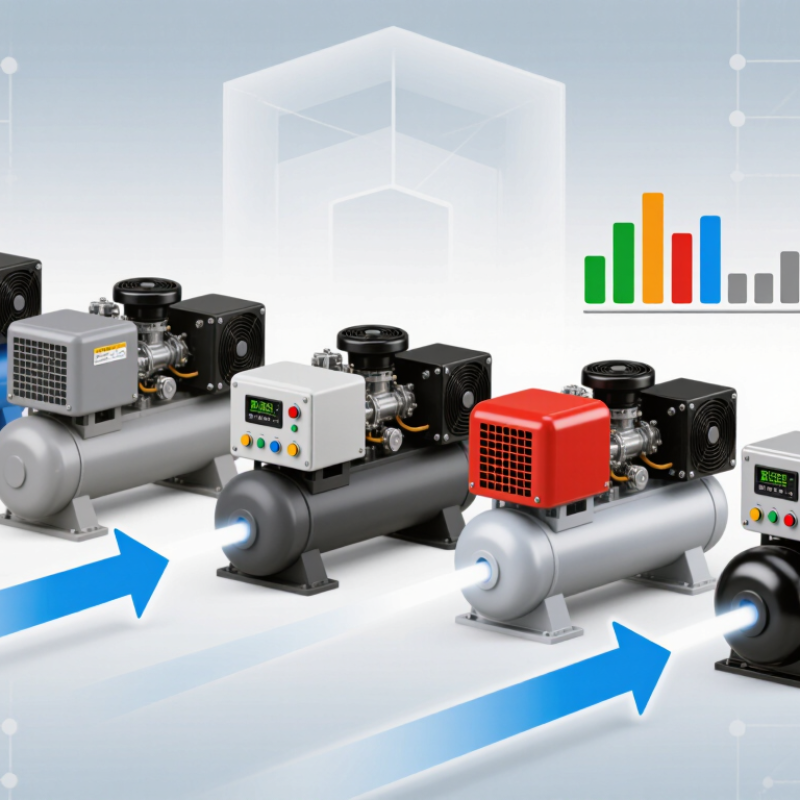
Seven fixed-speed screw compressor size classes to consider, compared by motor rating and indicative free air delivery (FAD).

Airflow values are representative planning estimates at approximately 7.5 bar(g), not specifications for particular products. Actual FAD varies with compressor design, operating pressure, and test conditions; confirm published data before purchase.

Comparing Compressor Capacity, Efficiency, and Service Needs

7 Best Fixed Speed Screw Compressors for Buyers

Comparing compressor capacity, efficiency, and service needs starts with your real air demand. Check free air delivery at the required pressure, not only the motor rating. A 75 kW unit may look powerful, yet it can underperform if pressure losses, altitude, or high inlet temperatures are ignored. Record peak demand, average demand, and daily operating hours. Load matters most.

Fixed speed compressors suit facilities with steady production and long running periods. They normally operate at one motor speed, then unload when demand falls. That unloading cycle can waste energy during quiet shifts. An air receiver may reduce frequent loading changes, but it cannot repair an oversized compressor. In my experience, buyers often trust the nameplate too much. A two-week demand log gives better evidence.

Service requirements also affect ownership cost. Inspect oil condition, intake filters, separators, cooler surfaces, and vibration levels at scheduled intervals. Keep the cooling area clean; dust can raise discharge temperature within hours. Check condensate management and compressed-air leaks during maintenance visits. Follow the manufacturer’s service schedule, but review it against site conditions. Some machines need more frequent attention in dusty workshops. Energy meters and maintenance records help verify actual efficiency, though many facilities fail to install them early. Look for accessible service panels, clear alarms, and locally available replacement parts before purchase.

Matching a Compressor to Your Operating Requirements

Selecting among the 7 best fixed speed screw compressors starts with your operating pattern, not the catalog horsepower. Fixed speed units suit plants with steady demand, such as continuous machining or packaging lines. They run efficiently near full load but may waste energy during idle periods. The U.S. Department of Energy reports that compressed air can consume 10–15% of industrial electricity. That makes demand matching essential.

Check the real flow requirement across each shift. Record pressure, leaks, receiver size, and short production stops. A 7-bar requirement may become 8.5 bar after filters and piping losses. That difference matters. The Compressed Air and Gas Institute notes that energy often represents more than 70% of a compressor’s lifecycle cost. A smaller unit may look cheaper, yet repeated unloading can quietly increase operating costs.

Practical details deserve attention. Place the intake away from dust and heat. Confirm the motor rating at local voltage and ambient temperature. Review the ISO 1217 performance data, not only the advertised capacity. DOE guidance also indicates that system leaks can waste 20–30% of compressor output. Sometimes the best purchase is a leak survey first. That feels less impressive, but it prevents oversizing. A fixed speed compressor should match the base load, while a receiver handles brief peaks. Still, production rarely stays perfectly stable. This is where selection becomes a judgment call.

7 Best Fixed Speed Screw Compressors for Buyers - Matching a Compressor to Your Operating Requirements

The options below represent common fixed-speed oil-injected rotary screw compressor sizes, not specific models. Airflow figures are indicative free air delivery (FAD) ranges at approximately 7–10 bar(g); actual output varies with pressure, design, cooling conditions, and test method. Confirm the manufacturer’s performance data before purchase.

Option Motor Power Typical FAD Common Working Pressure Best Suited To Buyer Considerations
Compact workshop unit 5.5–7.5 kW 0.7–1.2 m³/min 7–10 bar(g) Small workshops, maintenance bays, and intermittent pneumatic-tool use. Check starting current, receiver capacity, and whether the airflow is sufficient during simultaneous tool use.
Light industrial unit 11 kW 1.4–1.8 m³/min 7–10 bar(g) Small production areas with steady demand from a limited number of machines. Allow for leaks and future demand; avoid sizing solely from the motor rating.
General-purpose production unit 15 kW 1.9–2.5 m³/min 7–10 bar(g) Light manufacturing, packaging, and workshops with regular daily air consumption. Compare delivered airflow at the required pressure and check the service access needed for routine maintenance.
Mid-size plant unit 22 kW 2.8–3.8 m³/min 7–10 bar(g) Small-to-medium production lines and facilities with several concurrent air users. Review the load profile: a fixed-speed machine is most appropriate where demand is reasonably steady.
High-demand production unit 37 kW 4.8–6.5 m³/min 7–10 bar(g) Continuous manufacturing, larger pneumatic systems, and multi-shift operations. Assess ventilation, heat rejection, electrical supply, and the cost of running unloaded during low-demand periods.
Large industrial unit 55 kW 7.0–9.5 m³/min 7–10 bar(g) Large production areas with high, sustained compressed-air demand. Plan for suitable foundations, lifting access, room ventilation, and appropriately sized air treatment equipment.
Heavy-duty plant unit 75 kW 9.5–13.0 m³/min 7–10 bar(g) Large facilities and process operations requiring a substantial, relatively stable air supply. Consider a plant-wide demand study, standby capacity, and whether multiple compressors would provide better operating flexibility.