
What Is Anionic Polyacrylamide Used For?
Anionic Polyacrylamide is a water-soluble polymer used to improve solid–liquid separation. Its negatively charged chains attract suitable mineral particles and suspended solids. This action encourages small particles to join into larger flocs. Larger flocs settle faster and become easier to filter.
In municipal and industrial wastewater treatment, operators use Anionic Polyacrylamide to clarify water and concentrate sludge. A properly selected grade can reduce turbidity in settling tanks and improve filter performance. In mining, it helps separate water from tailings, coal fines, and mineral slurries. Paper mills may use it as a retention and drainage aid, helping fibers remain in the sheet while water leaves more efficiently. Agriculture and soil-control projects can also use it to reduce erosion when application conditions are carefully managed.
Results depend on polymer charge, molecular weight, dosage, mixing energy, and water chemistry. Small trials matter. Overdosing may create slippery surfaces, poor flocs, or higher treatment costs. Under-dosing may leave water cloudy and solids poorly settled. Jar testing, field observation, and supplier technical data should guide selection. Operators should also follow the product safety data sheet and local discharge requirements. It is not a universal fix. Real wastewater changes with seasons, temperature, pH, and contaminant load. A reliable evaluation therefore examines both treatment performance and residual polymer control, rather than judging success from clear water alone. Experiences from full-scale plants show that slow, even mixing often matters as much as the product grade. Mistakes still happen, especially when laboratory results are transferred without adjustment. Understanding what Anionic Polyacrylamide is used for helps users choose a safer, more practical treatment approach.
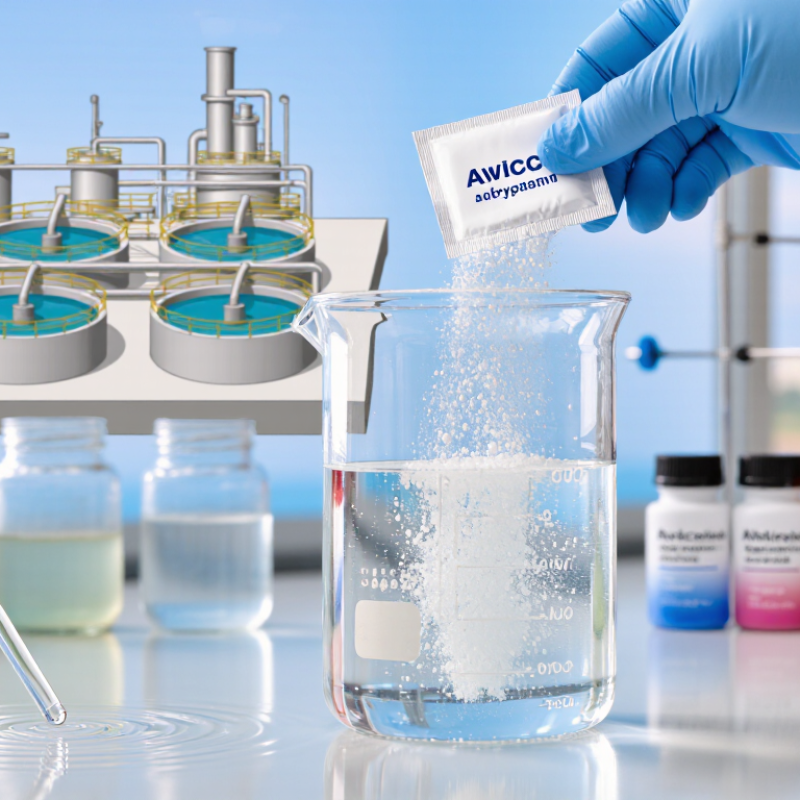
What Is Anionic Polyacrylamide and How Does It Work?
Anionic polyacrylamide is a water-soluble polymer with negatively charged functional groups. Its long molecular chains attract suspended particles, especially those carrying positive or weak surface charges. The polymer links small particles into larger flocs. These flocs settle faster or separate more easily during filtration.
In wastewater treatment, operators use it to clarify process water, thicken sludge, and improve dewatering. It also supports solid-liquid separation in mining, mineral processing, paper production, and some industrial systems. A small dose can create visible changes. The water may become clearer, while sludge forms firmer cakes under pressure.
Performance depends on water chemistry. pH, temperature, particle type, mixing speed, and polymer concentration all matter. A jar test should guide the working dose before full-scale use. Poor mixing can break newly formed flocs. Excess polymer may leave the water cloudy or produce a slippery, stringy texture. That mistake is common.
The polymer usually requires careful preparation in clean water. Operators should allow enough hydration time before adding it to the process. Dry powder can irritate the eyes and airways, so dust control and suitable protective equipment remain important. Anionic polyacrylamide is not a universal fix. Results can disappoint when testing is skipped, even with technically suitable equipment.
What Is Anionic Polyacrylamide Used For? — What Is Anionic Polyacrylamide and How Does It Work?
| Application Area | Primary Purpose | How Anionic Polyacrylamide Works | Typical Treatment Stage | Key Operating Considerations |
|---|---|---|---|---|
| Municipal Wastewater Treatment | Improves the removal of suspended solids and helps dewater biological sludge. | The negatively charged polymer chains adsorb onto particles and connect them into larger flocs that settle or filter more easily. | Coagulation and flocculation; secondary sludge thickening; sludge dewatering. | Performance depends on sludge characteristics, pH, mixing intensity, and polymer dose. Jar testing is normally required. |
| Industrial Wastewater Treatment | Separates suspended solids from water in mining, mineral processing, paper, textile, and general process wastewater. | Polymer molecules bridge fine particles, increasing floc size and improving sedimentation, clarification, or filtration. | After screening and, where necessary, inorganic coagulation. | Selection should consider particle charge, solids concentration, temperature, and the presence of oils or dissolved chemicals. |
| Mining and Mineral Processing | Promotes the settling and clarification of mineral slurries and tailings. | Adsorption and polymer bridging join fine mineral particles into dense aggregates that separate from water more efficiently. | Thickener feed, tailings clarification, and concentrate or slurry dewatering. | Polymer performance can vary with mineral type, particle size, water chemistry, and the concentration of dissolved salts. |
| Paper and Pulp Processing | Supports retention of fine fibers and fillers and improves process-water clarification. | The polymer attaches to suspended components and promotes floc formation, helping retain material on the forming section or remove solids from water. | Stock preparation, white-water treatment, and sludge dewatering. | Excessive dosage may produce oversized flocs or affect sheet formation, so controlled addition is important. |
| Soil Erosion and Construction-Site Runoff Control | Reduces turbidity and limits the loss of fine soil particles in runoff. | Anionic polymer chains bind with soil particles, especially in suitable mineral soils, causing them to agglomerate and settle. | Runoff channels, sediment basins, construction entrances, and disturbed soil areas. | Use must follow local environmental requirements. Product selection and application rate depend on soil type, water flow, and site conditions. |
| Oil and Gas Water Treatment | Assists in separating suspended solids from produced water and other process streams. | It promotes aggregation of dispersed solids, making them easier to remove through settling, flotation, or filtration. | Pre-treatment, clarification, dissolved-air flotation, or filtration. | Compatibility with hydrocarbons, surfactants, high salinity, and downstream treatment chemicals should be verified before use. |
| Sludge Dewatering | Improves the release of water from sludge and increases the solids content of the dewatered cake. | Flocculation forms permeable, shear-resistant flocs that allow water to pass through a filter press, belt press, or centrifuge. | Before mechanical dewatering equipment. | Optimum results depend on polymer type, charge density, molecular weight, equipment settings, and sludge conditioning time. |
| Water Clarification | Accelerates the removal of fine suspended particles from raw or process water. | Electrostatic attraction and polymer bridging help convert small, slowly settling particles into larger flocs. | Following coagulation and before sedimentation or filtration. | Anionic polyacrylamide is not a universal replacement for a primary coagulant; it is often used as a flocculant aid. |
| Charge Characteristics | Provides negatively charged functional groups along the polymer chain. | The anionic charge promotes interaction with positively charged sites on suspended solids or with particles already destabilized by coagulants. | Chosen during chemical selection and laboratory testing. | Available grades differ in molecular weight and degree of anionic charge; the correct grade is application-specific. |
| Operating Form | Allows the product to be prepared as a dilute polymer solution for controlled dosing. | When properly hydrated, the long-chain molecules expand in water and can contact multiple particles during gentle mixing. | Polymer make-down, maturation, and metering systems. | Use clean dilution water, avoid excessive shear, and allow adequate hydration. Exact preparation conditions depend on the product grade. |
| Environmental and Safety Considerations | Supports efficient solid-liquid separation while requiring responsible handling. | The polymer itself aids physical separation, but residual chemical, unreacted monomer, and treated-water requirements must be managed appropriately. | Procurement, storage, dosing, treatment, and disposal. | Follow the relevant safety data sheet, regulatory requirements, spill controls, and site-specific discharge limits. |
Note: Actual polymer selection and dosage should be confirmed through representative jar tests, pilot trials, or equipment trials because wastewater chemistry and solids characteristics vary widely.
