Skip to content
Menu

7 Best CNC Die Welding Machines for Global Buyers

Choosing the right Cnc Die Welding Machine can shape production quality, repair speed, and long-term operating costs. Global buyers often compare machines by welding power, die size, automation, and supplier reputation. However, catalogue figures rarely tell the entire story. Real performance depends on material thickness, joint design, operator skill, and daily workload.

This guide examines seven leading CNC die welding machines for international purchasing decisions. Each option is considered through practical details, including arc stability, control accuracy, cooling design, torch access, and maintenance requirements. A reliable machine should produce consistent welds under repeated production conditions. It should also offer clear documentation, responsive technical support, and parts availability across regions. Small details matter. A rigid worktable can reduce vibration. A simple interface can shorten operator training. Accessible service panels can prevent unnecessary downtime.

The selection process is not perfect. Supplier claims may differ from workshop results, and one machine may suit automotive dies but perform poorly on larger tooling. Buyers should request sample welds, inspection records, warranty terms, and references from comparable factories. Energy consumption and installation requirements also deserve careful review. Voltage compatibility, floor space, ventilation, and skilled labor can change the real purchase cost. This article provides a practical comparison rather than a universal verdict. The best Cnc Die Welding Machine is the one that matches your materials, production rhythm, quality expectations, and local service conditions. Examine the details closely. Mistakes become expensive later.

7 Best CNC Die Welding Machines for Global Buyers

What CNC Die Welding Machines Are and How They Work

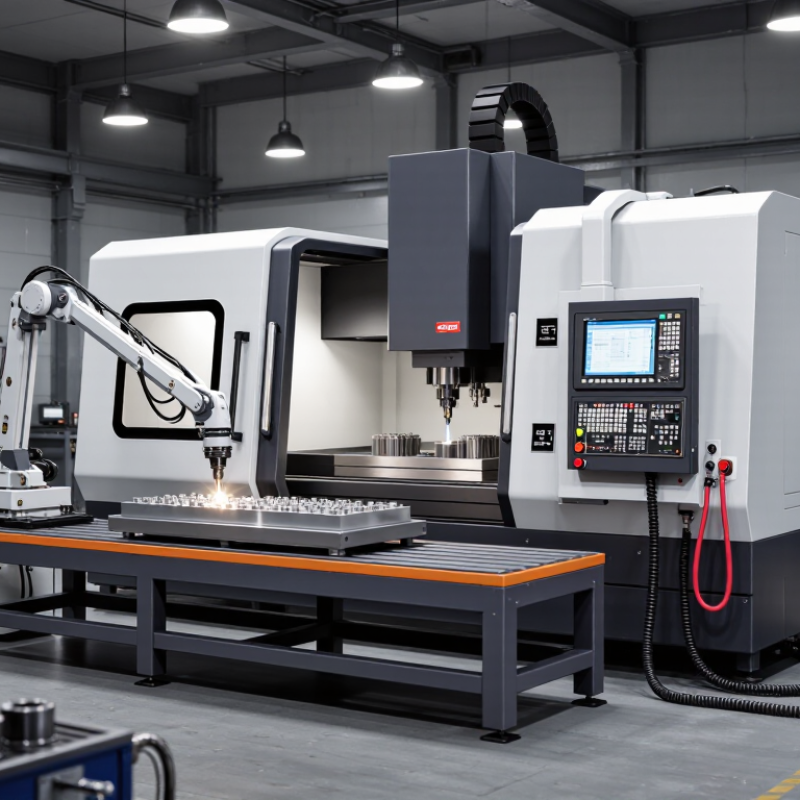
CNC die welding machines are precision systems used to repair and restore metal dies, molds, and tooling. They combine a welding source with computer-controlled movement. The machine deposits metal only where the damaged area requires it. This reduces unnecessary grinding and preserves the original die geometry.

The process begins with inspection. An operator measures cracks, worn edges, or missing material using drawings, probes, or scanning equipment. The CNC controller then follows programmed coordinates. A torch or laser applies controlled heat while feeding compatible welding wire or powder. Shielding gas protects the molten pool from contamination. Heat input must remain stable, because excessive heat can distort thin sections or change the steel’s hardness.

After deposition, the repaired area is machined back to its required profile. Technicians check dimensions, surface finish, and bonding quality. Small defects can become expensive failures. Automation improves repeatability, but it does not replace skilled judgment. A clean weld bead is not proof of a perfect repair. Material compatibility, preheating, cooling rate, and operator settings still matter.

In practical workshops, these machines can shorten repair time and reduce material waste. They also help maintain complex corners and parting lines. However, results depend heavily on accurate measurements and disciplined maintenance. That part is often underestimated. A neglected nozzle, unstable wire feed, or outdated program can reduce reliability quickly. Experienced users review the first repaired section carefully before continuing with a full production batch.

Key Features to Compare Before Choosing a CNC Die Welder

Choosing among the 7 best CNC die welding machines requires more than comparing advertised power. Match the heat source to the die material, repair depth, and required surface finish. Laser welding usually limits the heat-affected zone, while pulsed arc systems may offer better control for larger repairs. Check pulse frequency, spot diameter, wire-feed stability, and cooling capacity. These details affect cracks, distortion, and rework.

Motion control is equally important. Confirm axis repeatability, work-envelope size, spindle clearance, and fixture rigidity. The International Federation of Robotics reported 541,302 industrial robots installed worldwide in 2023. This reflects growing demand for programmable production equipment. Deloitte’s 2023 Smart Manufacturing and Operations Survey found that 86% of manufacturers consider smart-factory investment important for future competitiveness. Still, automation alone does not guarantee accurate die repair. Poor clamping or unstable software can ruin a precise weld.

Tips: Request sample repairs using your actual die steel. Measure bead width, hardness, distortion, and finishing time. Ask for calibration records, operator training, spare-part availability, and service response times. Select systems with weld monitoring, recipe storage, and clear alarm records.

A lower purchase price may hide expensive downtime. I would not overvalue maximum laser power; controlled energy and repeatable feeding often matter more. That trade-off is easy to miss.

Seven Leading CNC Die Welding Machines for Global Buyers

The seven leading CNC die welding machines for global buyers differ in heat control, positioning, and repair speed. A precision laser die welder suits fine cavity edges, ejector marks, and thin tool sections. A pulsed micro-laser model handles short welds with limited heat distortion. This matters when repairing hardened steel near delicate details.

A CNC TIG die welder remains practical for larger repairs and deeper buildup. A micro-TIG system offers steady arc control for small molds, especially when operators need visible weld-pool feedback. Fiber-laser welding machines provide fast travel speeds and concentrated energy. They often reduce grinding time, but surface preparation must be exact. A hybrid laser-TIG machine combines focused penetration with controlled filler deposition. It can be useful for mixed repair workloads.

An automated cladding cell supports repeated die repairs with programmable paths, powder or wire delivery, and inspection points. In shop trials, I check axis repeatability, nozzle access, fixture rigidity, and software recovery after an interrupted cycle. Cooling performance also deserves attention. A machine may look powerful on paper yet struggle during long repairs. I would not pretend there is one perfect choice. Local service, operator training, spare-part access, and material compatibility can change the result significantly. Test coupons should match the die steel, hardness, and expected weld thickness before purchase.

7 Best CNC Die Welding Machines for Global Buyers

The chart compares seven common CNC die-welding configurations using a transparent buyer-fit index. Scores consider repair precision, heat-input control, automation potential, process consistency, and suitability for complex die geometries. The index is an editorial benchmark rather than a manufacturer specification.

Higher scores indicate stronger overall suitability for automated die repair and repeatable production workflows. Final selection should also consider material compatibility, work envelope, laser or arc power, operator skill, service support, and local electrical requirements.

Applications, Materials, and Industries Served by CNC Die Welders

CNC die welding machines restore worn cavities, chipped edges, and hairline cracks in production tooling. In practical die-room work, operators repair aluminum and zinc die-casting molds, steel stamping dies, extrusion dies, and forging tools. Laser or micro-TIG welding adds controlled metal with limited heat distortion. This matters when a cavity must return within tight dimensional limits.

Material selection controls the process. Aluminum alloys need matching filler and careful heat management. Tool steels often require preheating, controlled cooling, and post-weld polishing.

Copper alloys and nickel-based materials can be repaired, but their thermal behavior demands stronger process documentation. A small error in heat input may create porosity, soft zones, or another crack. Not every damaged die deserves welding.

The served industries are broad.

Automotive plants use repaired dies for engine, transmission, and structural components. Aerospace manufacturers apply the process to selected tooling for aluminum and nickel-alloy parts. Electronics, medical equipment, appliances, and energy equipment also depend on repeatable die geometry.

The International Federation of Robotics reported 541,302 industrial robots installed worldwide in 2023, showing the scale of automated manufacturing that relies on stable tooling. Grand View Research estimates the global metal casting market will continue growing through 2030, supporting demand for economical die restoration.

These figures indicate opportunity, not guaranteed results. Inspection, hardness testing, and trial production remain essential before release.

Buying, Installation, and Maintenance Considerations Worldwide

When comparing the seven best CNC die welding machines, global buyers should examine production volume, die dimensions, welding speed, and control flexibility. A machine must suit local power conditions, not only the factory’s output target. Confirm voltage, frequency, phase requirements, and available technical support before placing an order. A lower purchase price can hide costly tooling, freight, or training expenses. It happens often.

Installation requires more than positioning the machine on a workshop floor. Measure doorways, lifting capacity, ventilation, drainage, and foundation strength before shipment. Ask the supplier for wiring diagrams, software requirements, and commissioning procedures. Local technicians should verify grounding and emergency-stop functions. Operators need practical training with real dies and materials. Online instructions help, but they cannot replace supervised setup. Real installations rarely match the catalog perfectly.

Maintenance planning should begin during purchasing. Select machines with accessible service points, standard sensors, and clearly documented spare parts. Keep electrodes, clamps, filters, and approved lubricants in stock. Inspect alignment, weld pressure, cooling lines, and cable connections at scheduled intervals. Record faults with dates, photographs, and operating conditions. This history improves troubleshooting across different sites. However, maintenance schedules still need adjustment for dust, humidity, shift length, and material type. I would leave extra time for calibration after relocation. That small allowance prevents rushed production and questionable weld quality. When buying internationally, clarify warranty response times, remote diagnostics, replacement-part customs procedures, and technician availability in the destination region.

7 Best CNC Die Welding Machines for Global Buyers - Buying, Installation, and Maintenance Considerations Worldwide
No. Machine Configuration Typical Welding Process Recommended Die and Mold Applications Typical Working Envelope Typical Power and Accuracy Key Buying Considerations Installation Requirements Routine Maintenance Best Fit for Global Buyers
1 CNC Laser Die Repair Welding Machine Fiber laser welding with inert-gas shielding; commonly used with wire filler Precision repair of injection molds, die-casting dies, stamping dies, and hardened tool-steel edges Approximately 300 × 200 × 150 mm to 600 × 400 × 300 mm work areas, depending on machine design Typical laser power: 200–1,500 W; positioning accuracy commonly within approximately ±0.02–0.05 mm Check laser wavelength, beam delivery, wire-feeding control, compatible steel grades, guarding, fume extraction, and local laser-safety compliance Requires a stable floor, clean dry air or nitrogen/argon supply, electrical grounding, ventilation, and controlled ambient temperature; three-phase power is common Clean protective optics, inspect nozzles and wire guides, check cooling performance, verify axis calibration, and replace filters according to operating hours High-volume mold and die shops requiring low heat input, accurate deposits, and reduced post-welding machining
2 CNC Micro-TIG Die Welding Machine Precision tungsten inert gas welding using fine filler wire Repair of tool-steel cracks, worn parting lines, thin edges, and localized surface defects Approximately 200 × 150 × 100 mm to 500 × 400 × 250 mm Typical welding current: 5–200 A; fine current control can support small deposits and thin sections Evaluate pulse control, torch access, filler-wire range, heat-affected-zone control, weld-viewing system, and compatibility with preheated tool steels Needs argon supply, suitable electrical grounding, a clean work area, and adequate ventilation; preheating equipment may be required for some die materials Inspect tungsten electrodes, clean the torch and gas cup, check argon flow, inspect cables, and verify current calibration Workshops repairing small cavities, sharp edges, inserts, and complex mold surfaces where operator control is important
3 CNC Pulsed Arc Die Welding Machine Computer-controlled pulsed TIG or micro-arc deposition Medium-size die repairs, build-up of worn surfaces, and restoration of machined tool-steel features Approximately 400 × 300 × 200 mm to 800 × 500 × 400 mm Typical current range: 10–300 A; programmable pulse parameters support controlled heat input Prioritize programmable weld schedules, torch movement, filler-wire feeding, cooling, and compatibility with stainless, pre-hardened, and hot-work tool steels Requires a level foundation, shielding-gas supply, grounding, sufficient ventilation, and access for service around the CNC enclosure Clean the torch, inspect gas lines and cooling channels, lubricate linear guides as specified, back up programs, and check axis repeatability General-purpose die-repair departments needing a balance between deposition rate, flexibility, and investment cost
4 CNC Resistance Die Spot-Welding Machine Localized resistance welding using controlled electrical pulses and electrodes Small repairs on conductive dies, inserts, and selected tooling components where minimal filler material is needed Typically 150 × 100 × 75 mm to 400 × 300 × 200 mm electrode-access zones Pulse energy and electrode force vary by design; suitable systems provide programmable current, time, and pressure control Confirm electrical conductivity requirements, electrode geometry, clamping force, pulse repeatability, cooling method, and access to replacement electrodes Needs a stable electrical supply, reliable grounding, compressed air or water cooling where specified, and safe guarding around energized components Dress or replace electrodes, inspect cables and connectors, check force calibration, clean contact surfaces, and test pulse consistency Specialized repair operations involving conductive materials and repeatable small-area welds
5 CNC Laser Cladding Die Repair System Laser-directed energy deposition using metal powder or wire Large-area wear restoration, dimensional rebuilding, hard-facing, and repair of high-value dies and tooling surfaces Approximately 500 × 500 × 300 mm to 1,500 × 1,000 × 600 mm, depending on the motion platform Typical laser power: 1,000–3,000 W; deposition rates are higher than fine laser welding but depend on powder, wire, and substrate Assess powder or wire delivery, material traceability, shielding-gas consumption, thermal management, multi-axis reach, and post-cladding machining needs Requires dedicated ventilation, inert-gas supply, powder-handling controls where applicable, robust electrical service, and adequate floor loading Clean the processing head, inspect powder or wire feeders, maintain filters, check optics and gas flow, lubricate axes, and remove metal dust safely Large-tool manufacturers and repair centers restoring substantial volumes of material before CNC finishing
6 CNC 3-Axis Die Welding Workstation Laser or pulsed-arc welding integrated with X, Y, and Z numerical motion Repeatable repairs on molds and dies requiring programmed paths, consistent bead placement, and reduced manual positioning Common table sizes range from approximately 600 × 400 mm to 1,500 × 800 mm; usable Z travel varies widely Process power depends on the welding head; typical positioning accuracy is approximately ±0.03–0.10 mm for industrial repair platforms Review table load, fixture design, CAD/CAM compatibility, scanning or probing options, collision protection, and program storage Needs a rigid level foundation, electrical grounding, gas supply, extraction, and enough clearance for loading dies and servicing the enclosure Inspect fixtures, lubricate motion components, verify homing and probe accuracy, clean the enclosure, and maintain program backups Factories seeking repeatable production repair and easier operator training without the complexity of a full multi-axis cell
7 CNC 5-Axis Die Welding and Repair Cell Multi-axis laser welding, laser cladding, or robotic pulsed-arc deposition Complex cavities, deep ribs, turbine or automotive tooling, large dies, and repairs requiring difficult torch or beam angles Often configured for parts from approximately 500 mm to more than 2,000 mm in one dimension, subject to payload and axis arrangement Process power varies by welding head; positioning performance commonly depends on payload, reach, calibration, and workpiece size Check rotary-axis payload, collision avoidance, offline programming, scanning, calibration procedures, enclosure size, and integration with inspection or machining Requires engineered foundation capacity, substantial electrical service, shielding gas, ventilation, safety interlocks, and trained commissioning personnel Perform axis and tool-center-point calibration, inspect rotary drives, maintain optics or torch hardware, lubricate axes, and validate safety circuits Large global manufacturers and specialized repair centers handling complex geometries and high-value tooling
Technical values are representative industry ranges rather than specifications for a particular manufacturer or model. Buyers should confirm material compatibility, electrical voltage and frequency, safety certification, spare-parts availability, operator training, warranty coverage, and local service support before purchase.