Skip to content
Menu

10 Best LED Emergency Lights for Buyers in 2026

A power failure turns a familiar hallway into a different place. In 2023, U.S. fire departments responded to an estimated 1.39 million fires, according to the National Fire Protection Association’s U.S. Fire Loss report. Emergency lighting cannot prevent every incident, but it can help people see exits and obstacles when normal lighting fails. Small details matter.

LED technology offers practical advantages, though performance varies by product. The U.S. Department of Energy says LEDs can use at least 75% less energy and last up to 25 times longer than incandescent lighting. Those figures describe LED lighting broadly, not every emergency fixture or battery system. A bright lamp is not enough. Buyers should also check rated runtime, battery-recharge time, light distribution, mounting options, and clear test instructions.

This guide compares 10 Led Em Lights for buyers in 2026, focusing on features that matter in real spaces: stairwells, retail aisles, workshops, and building corridors. It considers brightness claims alongside backup duration, build quality, warranty terms, and ease of maintenance. A listed runtime may not match performance with an aging battery or difficult temperatures. That part is easy to overlook. No single model suits every building, and specifications should be verified against the intended installation. The right choice is the one that remains dependable when the lights go out.
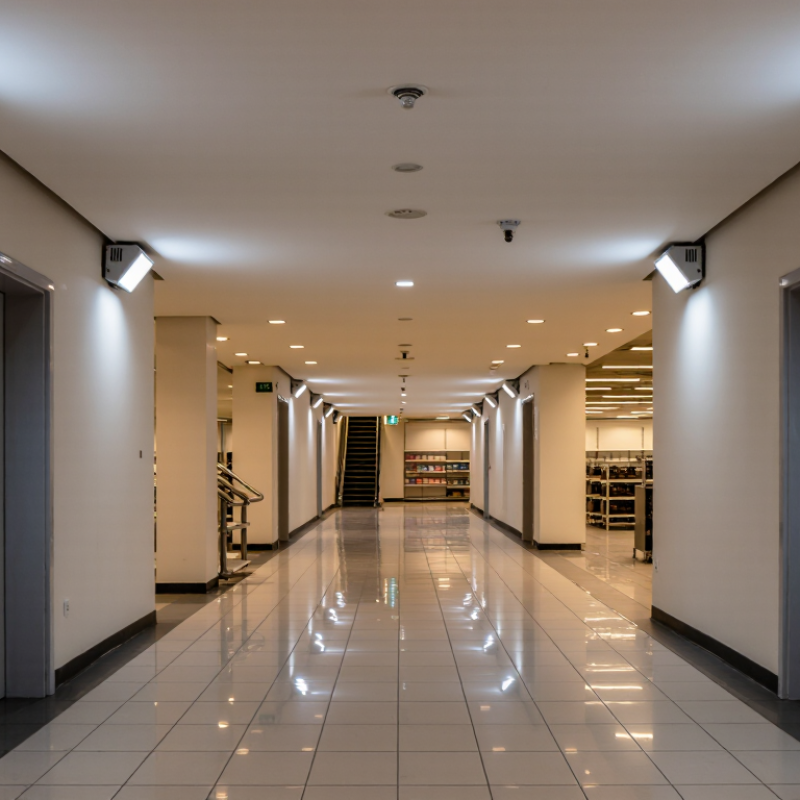
10 Best LED Emergency Lights for Buyers in 2026

What LED Emergency Lights Are and How They Work

LED emergency lights illuminate escape routes when normal power fails. While mains power is available, a charging circuit keeps the internal battery ready. During an outage, a transfer circuit switches the fixture to battery power. A driver then supplies controlled current to the LED array. The light should come on quickly. No switch hunt in a dark stairwell.

NFPA 101 assesses emergency lighting through factors such as floor-level illumination and operating duration; applicable provisions include a 90-minute test period. The U.S. Department of Energy’s LED Lighting guidance reports that LEDs use at least 75% less energy and can last up to 25 times longer than incandescent lighting. That comparison concerns light-source energy and lifespan, not battery runtime. Batteries still age. A clean specification sheet can hide that weak point. Check whether light reaches stair treads, corridor turns, and exit areas—not only nearby walls. Dusty lenses, cold conditions, or overdue battery replacement may reduce useful output. Built-in self-tests help, but a brief indicator check cannot replace a full-duration test. Record test dates and replace batteries when measured runtime falls short.

Main Types and Features of LED Emergency Lights

LED emergency lights come in several forms. Dedicated emergency fixtures stay off during normal use and switch on when power fails. Some combine a regular light with a backup battery, which can simplify installation in smaller spaces. Exit-sign lights often include emergency illumination, while portable units can be moved where needed. Each type suits a different layout.

Check the runtime, brightness, battery type, and charging indicator before choosing. A long runtime is useful, but it may come with a larger battery and fixture. Look for clear test controls, durable housing, and a beam pattern that reaches floors and stairwells. A bright spot on one wall is not enough. Also confirm that the fixture suits the room’s temperature and moisture conditions. These details are easy to overlook.

Tips: Match light placement to the route people will actually use, not just the nearest outlet. Test the unit regularly and replace batteries according to its instructions. Keep a simple test log. It takes little time, and it can reveal a weak battery before an outage.

How to Choose an LED Emergency Light in 2026

Choose an LED emergency light for the space it must cover, not just the brightness listed on its box. A narrow corridor needs a different beam pattern from a wide stairwell. Check the beam, too. Compare the manufacturer’s coverage guidance with your room layout, then consider mounting height and glare. A very bright lamp can still leave dark corners.

Check the rated runtime and whether the light activates automatically when normal power fails. Look for clear battery replacement guidance, charging indicators, and a test function you can use without special tools. Cold or dusty locations may affect performance, so check the specified operating conditions. Small details matter. A long runtime is useful only if the battery remains charged and the light reaches the area people need to see.

Inspect the housing, mounting method, and controls before buying. Can staff reach the test button? Will the unit stay secure on the intended surface? Review the instructions and any site-specific requirements, especially for shared buildings. Then test the light where it will actually be installed; a desk test may not reveal shadows from shelves or door frames. Brightness numbers can dominate a listing. I would treat them as a starting point, not the whole decision.

10 Best LED Emergency Lights for Buyers in 2026

Choosing among the 10 best LED emergency lights for buyers in 2026 starts with the space you need to illuminate. A narrow hallway needs a focused beam; a workshop may benefit from broad, even coverage. Check the stated brightness and runtime together. A powerful light that fades quickly may not suit a long outage. Look for clear battery and charging information, plus a charge indicator that is easy to read in dim conditions. Small details matter. A grippy handle and stable base can make a light less awkward to position on a shelf or floor.

Compare how each model is powered and mounted before deciding. Rechargeable units reduce the need to store spare batteries, while replaceable batteries can be useful when charging access is limited. Neither choice is perfect. Consider weather resistance only if the product’s rating supports your intended setting, and keep indoor and outdoor use distinct. For emergency fixtures, check installation requirements and test procedures in the product documentation. A monthly test can reveal a dead battery or faulty connection before you need the light. I would not choose by brightness alone; published figures can be hard to compare across designs. Pay attention to controls, charging time, and whether the light stays useful at lower settings. A little less glare can help.

10 Best LED Emergency Lights for Buyers in 2026

A code-based benchmark for evaluating emergency lighting performance.

NFPA 101 specifies egress-path emergency illumination benchmarks of 1.0 foot-candle average and 0.1 foot-candle minimum initially, declining to 0.6 and 0.06 foot-candle respectively after 90 minutes. Check the applicable code and edition for your location when selecting a light.

Installation, Testing, and Maintenance Essentials

10 Best LED Emergency Lights for Buyers in 2026
Installation, Testing, and Maintenance Essentials

A dependable emergency light starts with correct placement. Install units along exit routes, near changes in floor level, and beside exit doors, following the approved plans and local code requirements. Keep fixtures clear of signs, shelving, and decorative panels. Aim adjustable heads at the walking surface, not directly into people’s eyes. Match the unit’s voltage and mounting method to the site, and have a qualified electrician handle wiring. A small placement mistake can leave a dark patch where it matters.

Testing is not optional upkeep. NFPA 101 specifies monthly functional tests and an annual test lasting 90 minutes for applicable emergency lighting equipment; confirm the adopted edition and local authority requirements. During checks, verify that lamps turn on, batteries hold their charge, and the route remains visibly lit. Record dates, failures, and repairs. The U.S. Department of Energy reports that LEDs use at least 75% less energy and can last up to 25 times longer than incandescent lighting. Still, LED longevity does not guarantee a healthy battery or driver.

Tips: Test at the same time each month. Label each unit with its test date. Replace failed batteries promptly, then retest the fixture; a quick visual check alone can miss a weak battery. Keep records where maintenance staff can find them. One overlooked fixture can spoil an otherwise careful inspection.

10 Best LED Emergency Lights for Buyers in 2026 - Installation, Testing, and Maintenance Essentials

Buyer’s shortlist by luminaire type, not a ranking of specific products. Performance, battery duration, installation requirements, and code obligations vary by model and jurisdiction. Check the product listing, project plans, and applicable local codes before purchase.

# LED Emergency Light Type Best-Fit Application Installation Essentials Testing and Maintenance Key Buyer Checks
1 Dual-head battery emergency unit Corridors, small rooms, and areas needing adjustable emergency beams. Wall- or ceiling-mount the unit; aim each head to cover the required path and avoid blocked or poorly directed beams. Test the lamps and battery operation according to the manufacturer’s instructions and the applicable inspection schedule. Replace failed batteries or heads with compatible parts. Check emergency-mode light output, battery type, rated duration, head adjustability, and suitability for the mounting location.
2 Recessed emergency downlight Finished ceilings where a low-profile appearance is preferred. Confirm ceiling cutout, plenum and insulation requirements, access to the driver or battery, and the approved wiring method before installation. Use the test switch or built-in test function as specified. Keep the test control accessible and check that the emergency mode operates correctly. Verify ceiling compatibility, emergency output, battery access, and whether the unit is maintained or non-maintained.
3 Surface-mounted emergency bulkhead Stairwells, corridors, utility spaces, and other areas with exposed or solid ceilings. Mount to a suitable surface and connect to the specified supply. Follow the enclosure’s installation instructions and preserve access for inspection. Check the indicator, test function, lens, and battery condition. Clean the lens with a method approved by the manufacturer. Confirm mounting orientation, enclosure rating, supply requirements, emergency-mode output, and rated duration.
4 Weather-resistant emergency bulkhead Locations exposed to moisture, dust, or outdoor conditions, when the product is specifically listed for that environment. Use the specified glands, seals, and mounting method. Do not assume an indoor-rated fitting is suitable for a damp, wet, or hazardous location. Inspect seals, enclosure, lens, and cable entries for damage or water ingress; perform functional tests as instructed. Check the exact environmental rating, temperature range, corrosion resistance, and any restrictions on installation location.
5 High-bay emergency luminaire Warehouses, workshops, and other spaces with high ceilings. Confirm the emergency light distribution at the mounting height. Coordinate installation with access equipment and the building’s lighting layout. Test emergency operation and inspect the luminaire and battery or emergency driver. Plan safe access for periodic inspection. Review emergency-mode photometric data, mounting height, temperature limits, driver compatibility, and maintenance access.
6 Illuminated LED exit sign with battery backup Exit identification along designated egress routes and at required exit locations. Install where the sign is visible along the route, using the permitted mounting orientation and required directional legend. Check sign illumination, directional inserts, charge indicator, and emergency operation. Test the battery backup as specified. Verify legend, viewing conditions, mounting options, local sign requirements, and rated emergency duration.
7 Remote-head emergency lighting system Sites where several remote heads can be served by a compatible central emergency unit. Confirm the heads and supply unit are designed to work together. Follow cable-length, circuit, and load limits stated by the manufacturer. Test the complete system, including the supply unit and each connected head. Inspect wiring and connections during scheduled maintenance. Check system capacity, compatible head types, circuit layout, cable limits, and how a unit fault is indicated.
8 Central-inverter-fed emergency LED luminaire Buildings using a central emergency power or inverter system for designated lighting circuits. Use luminaires and drivers confirmed as compatible with the inverter. Circuit design and commissioning should be performed by qualified personnel. Test the central source and the connected emergency lighting circuits. Maintain the inverter and batteries according to the system documentation. Verify inverter compatibility, circuit arrangement, load capacity, transfer behavior, monitoring, and required emergency duration.
9 Self-testing LED emergency luminaire Facilities seeking automatic functional and duration testing with status indication. Install the test indicator where it can be seen and follow setup instructions for test timing and any building monitoring connection. Review test results and fault indicators; automatic testing does not remove the need for required records, inspections, or corrective maintenance. Check what tests are performed, how failures are reported, whether results are retained, and whether the system meets local documentation requirements.
10 Combination exit sign and emergency light Locations where both an illuminated exit sign and emergency illumination are needed at the same point. Position the sign for clear visibility and aim the emergency heads to serve the intended egress area. Confirm both functions are permitted at the location. Test the sign and emergency heads in backup mode; check the battery indicator, lenses, and directional legend. Assess sign visibility, emergency light distribution, mounting height, battery duration, and whether separate fittings are required by the design.

Testing reminder: testing frequency and required duration are jurisdiction- and system-dependent. For example, U.S. life-safety rules commonly require periodic functional testing and an annual test of battery-powered emergency lighting, but the applicable code edition, local amendments, and equipment instructions determine the actual requirements. Keep test records where required.