Skip to content
Menu

What Are the 2026 Best Lightning Arrestor Types for Buyers?

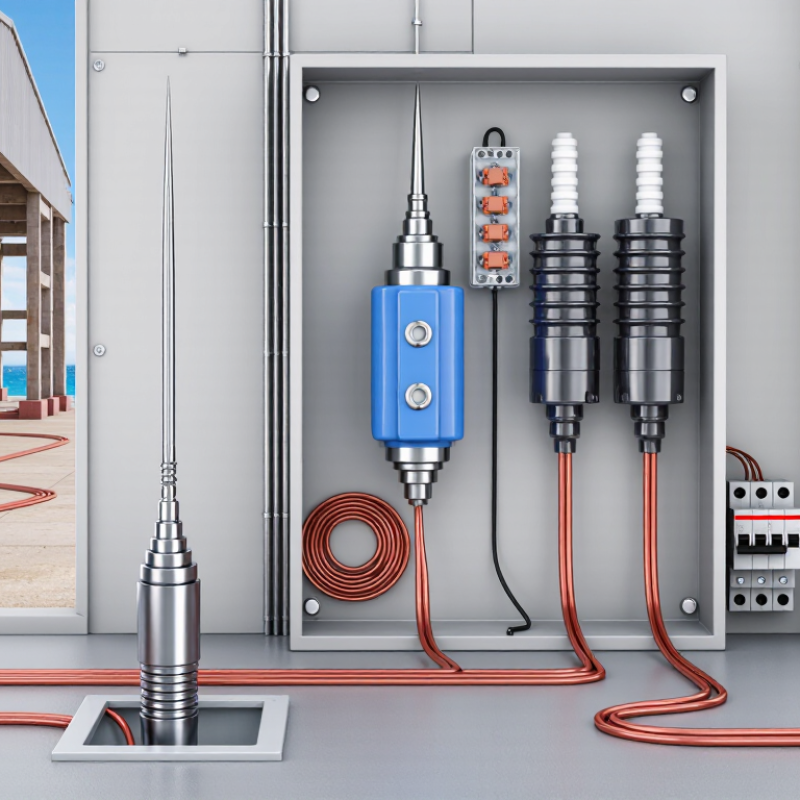
Choosing the right Lightning Arrestor in 2026 requires more than comparing prices or discharge ratings. Buyers must match the device with the building’s electrical system, exposure level, grounding design, and local weather conditions. A coastal warehouse may need stronger corrosion protection, while a small residential property may require a compact, coordinated surge protection system. The best choice depends on the installation.

This guide examines common options, including air terminals, rod-type arrestors, metal-oxide varistor devices, distribution-class arrestors, and line protection units. Each type serves a different purpose. External air terminals intercept lightning strikes. Surge arrestors help limit dangerous voltage inside electrical networks. Metal-oxide designs respond quickly and usually require minimal maintenance. Still, product labels can be confusing. A high maximum discharge current does not automatically mean better protection.

Practical inspection matters. Look for clear test data, suitable voltage ratings, durable housing, and certified compliance with recognized standards. Check whether the manufacturer explains grounding requirements and replacement indicators. A qualified electrical professional should verify coordination between the arrestor, cables, breakers, and grounding electrode system. Installation errors can reduce protection, even when the product itself is excellent.

There is no universal winner.

Some buyers focus too heavily on one specification. That is a mistake worth acknowledging. Real conditions often change the decision. A reliable 2026 purchase should balance verified performance, installation quality, maintenance access, warranty support, and long-term operating risk. This comparison will help buyers assess each Lightning Arrestor type with clearer expectations and fewer assumptions.
What Are the 2026 Best Lightning Arrestor Types for Buyers?

Lightning Arrestor Basics and Their Role in Electrical Protection

Lightning arrestors protect electrical equipment from transient overvoltages caused by lightning and switching events. They do not stop lightning. Instead, they divert surge energy to ground and limit voltage across insulation. Metal-oxide, gapless arrestors are widely used because they respond quickly and require limited maintenance. Their varistor blocks normal voltage, then conducts during a surge. Simple, but not foolproof.

The best type depends on system voltage, maximum continuous operating voltage, expected surge current, and grounding quality. Distribution arrestors suit many pole-mounted transformers and smaller installations. Station-class arrestors provide higher energy-handling capacity for substations and larger equipment. Enclosed designs may help in polluted, coastal, or industrial environments. A qualified engineer should coordinate the arrestor with insulation levels and upstream protective devices. Choosing by voltage alone can leave a dangerous gap.

Installation quality often matters as much as the arrestor itself. Keep connection leads short, straight, and separate from sensitive conductors. Bond the ground connection to a low-impedance grounding system. Inspect moisture damage, cracked housings, loose terminals, and leakage indicators. Not always. A correctly rated device can still underperform when its grounding path is long or sharply bent. For 2026 purchasing, examine test data, certification, replacement access, and documented service life. A specification may look complete yet remain misleading. Review the design after major electrical changes.

2026 Lightning Arrestor Types: Typical Nominal Discharge Current

Lightning arrestors are selected according to system voltage, installation location, expected surge exposure, and required discharge capability. The chart shows representative nominal discharge current ratings commonly associated with major arrester categories. Actual selection must follow the applicable electrical system design and standards.

Reference framework: IEC 60099-4 and IEC 61643-11. Ratings can vary by application and system configuration.

Key Lightning Arrestor Types Available to Buyers in 2026

In 2026, buyers can choose among metal-oxide, gapped, line, and secondary surge arresters. Each type serves a different electrical environment. Metal-oxide arresters remain the common choice for modern distribution and transmission systems. They respond quickly and limit voltage without continuous power-frequency current. Gapless designs also reduce maintenance because they contain fewer moving or spark-gap parts. Station-class units suit substations and high-energy exposure. Distribution-class units fit poles, transformers, and commercial feeders.

Polymer-housed arresters are lighter and resist moisture better than many traditional ceramic designs. Their molded surface helps reduce damage during handling and coastal installation. Porcelain-housed arresters still offer strong mechanical stability and familiar inspection practices. However, they can be heavier and may present greater breakage risk. Line arresters protect overhead conductors where tree contact, switching events, and direct lightning exposure overlap. Secondary surge protective devices protect sensitive panels and equipment inside buildings.

Buyers should compare rated voltage, maximum continuous operating voltage, discharge current, energy class, housing material, and expected fault behavior. A unit with a high energy rating is not automatically correct. System grounding and temporary overvoltage conditions matter more than appearance. Look for test evidence aligned with recognized IEC or IEEE requirements. Check installation clearances, conductor length, and replacement access before ordering. A common mistake is selecting by price alone. Another is ignoring old grounding connections. That decision can weaken an otherwise suitable arrester. Reflect on the actual site. Dry inland poles, wet substations, and rooftop equipment need different protection choices.

What Are the 2026 Best Lightning Arrestor Types for Buyers? - Key Lightning Arrestor Types Available to Buyers in 2026

Lightning Arrestor Type Primary Construction Typical Applications Main Advantages Important Limitations Buyer Selection Priorities Relevant Standards
Gapless Metal-Oxide Surge Arrester Nonlinear metal-oxide varistor blocks connected directly between the line and earth, with no series spark gap. Distribution transformers, medium-voltage feeders, substations, industrial systems, and renewable-energy installations. Fast response, low residual voltage, no gap erosion, compact design, and effective repeated surge-current handling. Continuous system voltage and temporary overvoltage must be selected correctly; excessive energy can thermally damage the arrester. Rated voltage, maximum continuous operating voltage, discharge class, energy capability, leakage-current monitoring, and grounding arrangement. IEC 60099-4; IEEE C62.11
Distribution-Class Metal-Oxide Arrester Compact metal-oxide arrester designed for distribution-line and transformer protection. Overhead distribution networks, pole-mounted transformers, service entrances, and small commercial or industrial facilities. Generally economical, compact, widely applicable, and suitable for protecting distribution equipment from lightning and switching surges. Lower mechanical and energy-duty capability than higher-duty station designs; installation exposure can affect service life. System voltage, fault-current capability, housing material, line-lead length, ground-lead routing, and contamination conditions. IEC 60099-4; IEEE C62.11
Intermediate-Class Metal-Oxide Arrester Metal-oxide surge arrester with a higher discharge and energy-duty capability than typical distribution-class units. Medium-voltage substations, feeder terminals, larger transformers, capacitor banks, and industrial power systems. Balanced protection level, energy capability, physical size, and cost for many medium-voltage applications. May not provide the mechanical strength or energy margin required for major substations or severe fault-duty locations. Switching-surge exposure, transformer insulation coordination, short-circuit rating, discharge-current class, and mounting environment. IEC 60099-4; IEEE C62.11
Station-Class Metal-Oxide Arrester High-duty metal-oxide arrester with robust construction, higher energy absorption capability, and carefully controlled protective characteristics. High-voltage substations, generator step-up transformers, transmission equipment, shunt reactors, and critical grid assets. Strong mechanical design, high energy withstand capability, reliable insulation coordination, and low protective voltage for critical equipment. Higher purchase cost, larger physical size, and more demanding installation and testing requirements. Switching-energy duty, system short-circuit level, transformer insulation level, pressure-relief performance, seismic requirements, and monitoring options. IEC 60099-4; IEEE C62.11
Line-Discharge-Class Arrester Metal-oxide arrester classified for defined line-discharge and energy-duty performance in higher-voltage systems. Transmission lines, substations, cable terminations, transformer terminals, and locations exposed to significant switching surges. Provides a higher energy margin and is useful where long lines or inductive systems can transfer substantial surge energy. Selection is highly dependent on system studies; an unnecessarily high-duty design may increase cost and physical requirements. Line-discharge class, switching-surge energy, temporary overvoltage duration, protective level, and coordination with nearby insulation. IEC 60099-4; IEEE C62.11
Gapped Silicon-Carbide Arrester Silicon-carbide nonlinear resistors connected in series with spark gaps. Older substations, legacy distribution systems, and replacement or maintenance work on existing installations. Proven historical technology and compatibility with some legacy equipment and mounting arrangements. Slower coordination behavior than modern gapless designs, gap wear, possible follow current, and limited suitability for new installations. Confirm compatibility with the existing system, insulation coordination, gap condition, maintenance history, and replacement availability. Applicable legacy specifications; verify current project requirements before purchase.
Expulsion-Type Arrester Uses an internal gap and gas-generating material to interrupt follow current after a surge event. Selected overhead distribution applications, particularly where cost and simple construction are important. Simple design, comparatively low initial cost, and acceptable performance in some overhead distribution environments. May expel hot gases or particles, has limited repeated-surge capability, and is generally less suitable for enclosed or highly critical equipment. Installation clearance, public-safety requirements, fault-current rating, coordination with fuses, and local utility practices. Applicable regional distribution-arrester requirements; confirm the latest project specification.
Low-Voltage Surge Protective Device with MOV Technology Metal-oxide varistors, often combined with thermal disconnectors and visual or remote status indication. Building service panels, control panels, data networks, photovoltaic AC or DC circuits, and low-voltage equipment protection. Compact installation, fast clamping response, modular replacement options, and compatibility with coordinated multi-stage protection. Protects against transient overvoltage rather than sustained overvoltage; correct wiring, backup protection, and earthing are essential. Nominal system voltage, maximum continuous operating voltage, surge-current rating, voltage-protection level, mode of protection, and status indication. IEC 61643-11; IEC 61643-31; UL 1449 where applicable
Photovoltaic DC Surge Arrester DC-rated metal-oxide surge protection device designed for photovoltaic strings, combiner boxes, or inverter inputs. Rooftop solar systems, ground-mounted photovoltaic arrays, DC combiner boxes, and inverter-side protection. Helps limit lightning-induced and switching transients on long DC cable runs and supports coordinated solar-system protection. AC-rated devices cannot be substituted automatically; DC arcing, polarity, maximum PV voltage, and fault-current conditions require specific evaluation. Maximum photovoltaic system voltage, DC short-circuit current, number of poles, protection mode, backup fuse, enclosure rating, and isolation requirements. IEC 61643-31; IEC 61643-32 where applicable
Communication-Line Surge Protector Gas discharge tubes, solid-state clamping components, or hybrid circuits matched to signal and data-line characteristics. Ethernet, telephone, RS-485, instrumentation, security systems, industrial control, and building-automation networks. Protects sensitive interfaces while allowing normal signal transmission when correctly matched to the communication protocol. Incorrect capacitance, resistance, bandwidth, or grounding can cause signal loss, data errors, or inadequate protection. Signal voltage, maximum data rate, insertion loss, capacitance, common-mode and differential-mode protection, connector type, and shield bonding. IEC 61643-21; applicable communication and installation standards
Buyer guidance: The most suitable lightning arrestor depends on the system's continuous operating voltage, temporary overvoltage profile, short-circuit current, expected lightning and switching energy, insulation coordination, grounding system, installation environment, and applicable national standards. A higher-duty arrester is not automatically the best choice if its protective level and system ratings are not properly coordinated.

How to Compare Arrestor Ratings, Materials, and Installation Methods

What Are the 2026 Best Lightning Arrestor Types for Buyers?

Choosing a lightning arrestor starts with exposure, not price. NOAA lightning climatology estimates nearly eight million flashes worldwide each day. That risk changes with altitude, storm frequency, pollution, and system voltage. Metal-oxide, gapless arrestors suit most modern distribution and station applications. Distribution-class units fit compact feeders. Station-class units provide higher energy handling and better protection for substations. Polymer housings reduce weight and resist shattering. Porcelain remains mechanically familiar, but it needs careful inspection for cracks. Ratings decide survivability. That choice is often missed.

Compare maximum continuous operating voltage, rated voltage, nominal discharge current, and energy capability. IEEE C62.11 testing helps buyers compare metal-oxide arrester performance under defined impulse conditions. IEC 60099-4 also evaluates residual voltage, thermal stability, and long-duration current duty. A higher kA label alone proves little. Check the protection level against transformer insulation coordination and basic impulse insulation level. Short, straight leads matter. Every extra bend adds inductive voltage during a fast surge.

Installation should follow the equipment layout and applicable electrical standards. Mount the arrester close to the protected terminal. Keep phase and ground conductors short and separated. Use a visible disconnector where maintenance practice requires one. Inspect grounding bonds, especially after construction changes. NFPA 780 offers practical guidance for lightning protection systems, but local engineering rules still control. I would not select from a catalog alone. Field measurements, fault history, and a qualified review can reveal weaknesses that a rating table hides.

Choosing the Right Lightning Arrestor for Different Applications

For 2026 procurement, the best lightning arrestor depends on the application, not marketing labels. A utility substation needs station-class metal-oxide arrestors with high energy capacity. Distribution lines often need polymer-housed arrestors, especially where salt, dust, and repeated surges are present. These devices must match system voltage, grounding, and temporary overvoltage conditions.

Commercial buildings require a different approach. Type 1 surge protective devices suit service entrances and can handle severe current paths. Type 2 devices protect distribution panels and sensitive equipment. Type 3 units work near computers, controls, and medical electronics. NOAA states that lightning can carry around 30,000 amperes and heat air near 50,000°F. That energy can travel through power, data, and communication wiring. One device is rarely enough.

Industrial sites need coordinated protection across incoming feeders, motor controls, instrumentation, and outdoor cables. NFPA’s Lightning Fires report estimated about 22,600 lightning-related fires annually in the United States during 2007–2011, causing roughly $451 million in direct property damage. The figures are older, but the exposure remains useful for risk planning. Check response time, discharge current, residual voltage, enclosure rating, and replacement indicators. Installation quality matters more than many buyers expect. A poorly bonded arrestor may look correct, yet fail when the grounding path is long, corroded, or undersized. That detail is easy to miss.

Safety, Maintenance, and Purchasing Considerations for 2026

What Are the 2026 Best Lightning Arrestor Types for Buyers?

Safety, Maintenance, and Purchasing Considerations for 2026

Metal-oxide surge arresters remain a practical choice for modern power systems. They respond quickly and usually require little routine servicing. For exposed structures, air terminals and down-conductor systems help intercept strikes before current reaches internal equipment. Low-voltage arresters can protect control panels, communication lines, and sensitive electronics. The correct type depends on system voltage, exposure, grounding quality, and installation location.

Safety begins with accurate selection, not the product label alone. Buyers should verify maximum continuous operating voltage, rated discharge current, energy capability, and temporary overvoltage performance. Independent test reports and conformity documents add useful confidence. A qualified electrical engineer should confirm coordination between the arrester and upstream protection. A poor ground can weaken an otherwise capable device.

Maintenance is often underestimated. Inspect housings for cracks, swelling, burn marks, corrosion, or moisture entry. Check connections after severe storms and review any leakage-current or event-counter readings. Coastal air, industrial pollution, and repeated surges can shorten service life. Keep inspection records with dates and measured findings. Do not rely on appearance only. A quiet arrester may already be degraded. Purchasing teams should also confirm replacement access, warranty terms, spare availability, and installation instructions. One uncomfortable lesson is that the cheapest option can create higher maintenance costs later. Even careful checklists miss unusual site conditions. Local assessment still matters.