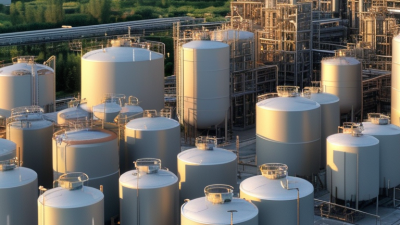
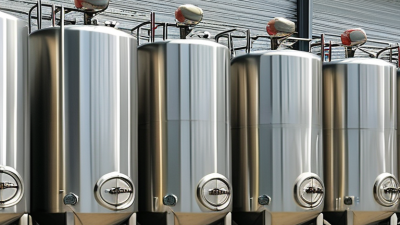
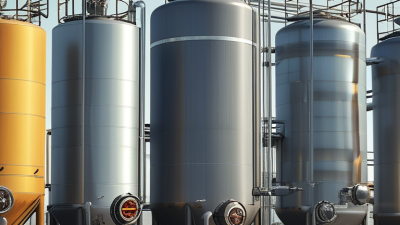
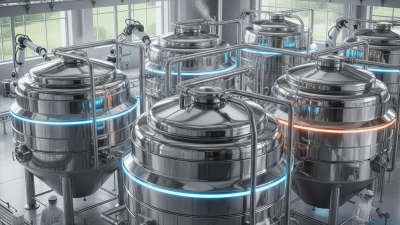
What makes the 2026 best open top tank is not simply its capacity or price. Global buyers now compare material quality, wall thickness, access design, corrosion resistance, and long-term service. A tank standing outdoors faces sunlight, rain, dust, temperature changes, and difficult maintenance conditions. These details can decide whether storage remains dependable after several seasons.
Tank-industry consultant Mark H. Smith observes, “A reliable tank begins with the stored product, not the catalogue specification.” That practical view matters. Water, wastewater, food ingredients, fertilizers, and industrial liquids can require very different linings, fittings, and cleaning methods. Buyers should check polyethylene, fiberglass, or coated steel options carefully. They should also examine overflow routes, drainage points, support structures, and inspection access.
Small details matter.
This guide reviews leading open top tank choices for global buyers in 2026. It considers usable volume, installation flexibility, export packaging, replacement parts, supplier support, and documented quality controls. Regional climate must also influence selection. A tank suitable for a cool warehouse may perform poorly under intense tropical sunlight. That sounds obvious, yet it is often overlooked.
No ranking can fit every project. Some comparisons may remain imperfect because suppliers publish different test data and service assumptions. Buyers should request current technical sheets, warranty terms, material certificates, and installation guidance before making a final decision. The strongest choice is usually the tank that matches the liquid, site, maintenance skills, and realistic operating budget—not the one with the most impressive headline capacity.
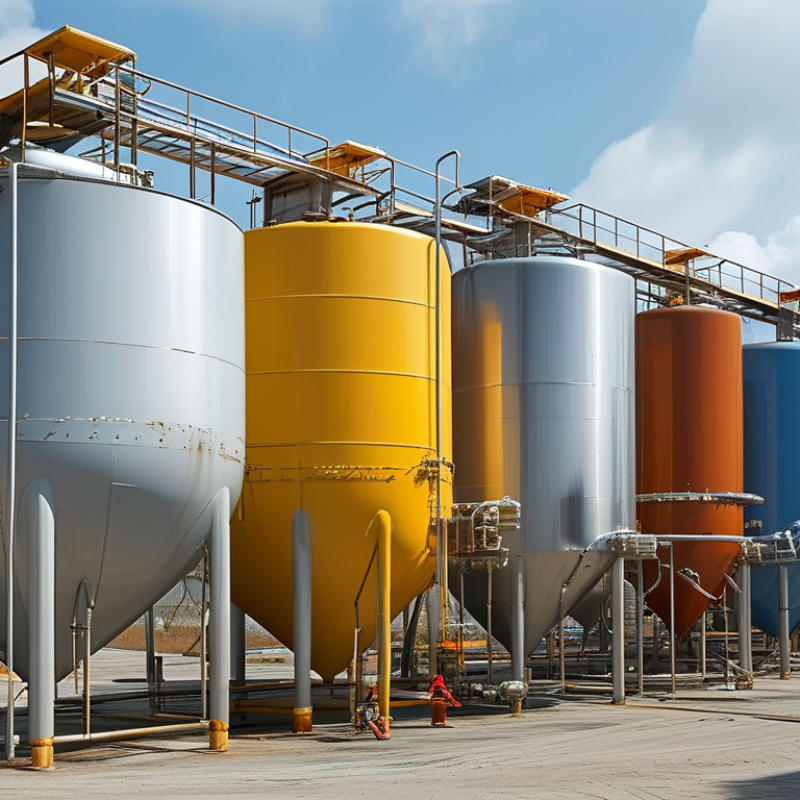
Open-top tanks provide accessible storage and processing for non-hazardous liquids. Common capacities range from 500 to 50,000 litres. A 500-litre tank may suit laboratory batches or small production rooms. Larger models support water treatment, agriculture, and industrial preparation. However, nominal capacity is not working capacity. Allow space for mixing, splashing, and thermal expansion.
Construction details matter more than appearance. Buyers should check the tank material, wall thickness, weld quality, outlet position, and support frame. Food, chemical, or general utility applications may require different material grades and surface finishes. An open top also increases exposure to dust and evaporation. A removable cover, mesh guard, or controlled indoor location may improve protection. The best design depends on the liquid and site conditions.
Tips: Request a dimensional drawing before ordering. Confirm inlet height, drain size, access width, and forklift clearance. Ask for material certificates, weld inspection records, and a pressure or leak test suitable for the tank design. Shipping can change the practical choice, especially for 20,000-litre and 50,000-litre units. A tank may fit the process but fail through a narrow doorway. That detail is easy to miss. Rechecking the layout with the installer can prevent an expensive correction.
For global buyers, an open top tank must match the real temperature cycle, not only the product specification. HDPE performs well around −20°C to 60°C, with good impact resistance and practical chemical durability. However, sunlight and repeated heating can increase expansion. At 80°C, HDPE may deform unless the design includes stronger walls, proper supports, and verified resin data.
PP is often selected for hotter chemical service. It can handle many applications near 80°C, but cold conditions require caution. Below freezing, some PP tanks can become less impact-resistant, especially during transport or sudden loading. I have seen buyers focus on maximum temperature and overlook winter handling. That is an expensive gap in the review.
FRP offers useful stiffness across broad temperature ranges, but its performance depends on the resin, laminate, liner, and manufacturing quality. A tank suitable for −20°C may not safely tolerate 80°C without a documented design calculation. Check thermal cycling, UV exposure, chemical concentration, and nozzle reinforcement. Do not accept a generic temperature claim. Ask for material certificates, wall-thickness data, load assumptions, and inspection records. Open top tanks also need stable foundations; uneven support can create stress that material charts never show. That detail is easy to miss.
For 2026 purchasing, compliance starts with ASTM D1998, not a glossy product sheet. This standard covers rotationally molded polyethylene tanks and emphasizes wall thickness, impact resistance, dimensional control, and suitable design. Buyers should request tank drawings, resin details, and inspection records. A 5,000-liter open top tank should sit level, with reinforced support and a clearly rated working load. Small details matter.
ISO 9001 shows whether production follows a controlled quality system. The ISO Survey 2023 recorded more than one million ISO 9001 certificates worldwide. Certification does not prove every tank is excellent. It does show documented processes, corrective actions, and traceable changes. Ask for the current certificate scope, not only a logo. That distinction is often missed.
For food, beverage, and sensitive processing applications, FDA 21 CFR 177.1520 applies to permitted olefin polymers and their conditions of use. It does not automatically approve an entire tank assembly. Confirm resin compliance, additives, temperature limits, and migration documentation. Plastics Europe reported global plastics production at about 400 million tonnes in 2022, increasing the need for responsible material control. Recycled content may sound attractive, but it can complicate food-contact compliance. Buyers should verify every batch. Insist on evidence.
What Are the 2026 Best Open Top Tanks for Global Buyers?
For 2026, the strongest open top tanks balance chemical resistance, UV stability, and load performance. Material selection matters more than appearance. Tank walls should resist the stored chemical at its actual concentration and temperature. A container that handles diluted acid may fail with a hotter mixture. Ask suppliers for immersion data, compatibility charts, and independent test records. Practical experience shows that small details, such as welded seams and drain fittings, often determine long-term reliability.
UV stability is equally important for outdoor storage. Look for verified UV stabilizers and documented exposure testing. Sunlight can make plastic brittle, faded, and easier to crack. It may happen slowly. Inspect the rim, corners, and exposed supports every few months. Load performance depends on wall thickness, liquid density, floor support, and movement during filling. A tall tank can deform when its base is uneven. This is often underestimated. No tank wins every test, and published ratings may not reflect rough sites.
Tips: Confirm chemical compatibility before ordering. Request the maximum working load, not only the empty-tank weight. Check whether temperature changes affect capacity. Place the tank on a level, fully supported surface. Keep inspection photos and maintenance records. I would still run a small-scale compatibility check when the chemical mixture is unusual. That extra step can prevent an expensive mistake.
| Tank Configuration | Typical Capacity Range | Chemical Resistance | UV Stability | Indicative Load Performance | Typical Service Temperature | Best-Fit Applications | Main Selection Consideration |
|---|---|---|---|---|---|---|---|
| Rotomolded HDPE Open-Top Tank | 100–10,000 L | Very good resistance to many acids, alkalis, salts, detergents, and water-based chemicals. Limited by strong oxidizers, aromatic solvents, and some hydrocarbons. | Good when UV-stabilized resin and a suitable cover are specified; prolonged exposure can still cause surface aging. | Suitable for low-pressure liquid storage; commonly designed around liquids with a specific gravity near 1.0. Reinforcement may be needed for higher-density liquids or elevated platforms. | Approximately −40°C to 60°C, depending on chemical, concentration, and tank design. | Water treatment, agricultural chemicals, plating solutions, process water, and general chemical storage. | A practical balance of impact resistance, weight, corrosion resistance, and installation cost. |
| Fabricated Polypropylene Open-Top Tank | 200–20,000 L | Excellent resistance to many acids, alkalis, and aggressive aqueous chemicals. Not generally suitable for strong oxidizing acids, chlorinated solvents, or many aromatic solvents. | Moderate to good with UV-stabilized material; outdoor installations usually require a cover, shelter, or UV-rated specification. | Rigid fabricated walls support industrial service, but structural performance depends strongly on wall thickness, welding quality, bracing, and support spacing. | Approximately 0°C to 80°C for many aqueous services; verify the chemical and concentration before use. | Chemical processing, pickling, electroplating, rinsing, wastewater treatment, and laboratory-scale production. | Preferred when chemical resistance and custom dimensions are more important than low weight or rapid delivery. |
| PVC Open-Top Process Tank | 100–10,000 L | Very good resistance to many acids, alkalis, salts, and oxidizing aqueous solutions. Performance declines with ketones, esters, aromatic solvents, and elevated temperatures. | Fair to good depending on formulation; prolonged direct sunlight can reduce toughness unless the tank is UV-protected. | Good for supported, low-pressure service. PVC is relatively rigid but more vulnerable to impact and low-temperature brittleness than HDPE. | Approximately 0°C to 60°C, with exact limits determined by chemical concentration and fabrication method. | Water treatment, chemical dosing, filtration systems, ventilation scrubbers, and corrosive aqueous processes. | A cost-effective option for compatible aqueous chemicals where impact and heat exposure are controlled. |
| FRP Open-Top Tank with Resin Liner | 500–50,000 L | Can provide excellent resistance to selected acids, alkalis, solvents, and process chemicals when the resin and corrosion barrier are correctly matched. | Good outdoor durability; the resin system, gel coat, pigments, and maintenance condition affect long-term UV performance. | High stiffness and good large-tank capability. Structural capacity depends on laminate design, support, wind exposure, seismic conditions, and liquid density. | Commonly about 0°C to 90°C, but the allowable range varies significantly with resin chemistry and service conditions. | Large-volume chemical storage, wastewater treatment, mineral processing, scrubber systems, and industrial process water. | Best for large capacities or specialized chemicals when an engineered resin selection is available. |
| 316 Stainless Steel Open-Top Tank | 100–30,000 L | Good resistance to many food, pharmaceutical, and process liquids. Vulnerable to chloride pitting, crevice corrosion, strong reducing acids, and some high-temperature chemicals. | Excellent UV stability; sunlight does not normally degrade the metal, although seals, coatings, and insulation may require protection. | High mechanical strength and stiffness; suitable for heavier loads when designed with proper shell thickness, legs, bracing, and foundations. | Approximately −20°C to 150°C or higher in engineered systems; chemical compatibility must be checked at operating temperature. | Food and beverage processing, pharmaceutical production, clean liquids, heated process liquids, and sanitary applications. | Chosen for hygiene, cleanability, temperature capability, and mechanical strength rather than lowest purchase cost. |
| Rubber-Lined Carbon Steel Open-Top Tank | 1,000–100,000 L | The lining can provide strong protection against selected acids, alkalis, abrasion, and process chemicals; the lining compound must match the service. | Steel has excellent UV stability, while exposed rubber lining and seals require inspection and protection from sunlight and weathering. | Very high structural capacity and suitability for large installations, heavy contents, external loads, and engineered support systems. | Often about 0°C to 90°C, depending on the rubber compound, lining thickness, and chemical exposure. | Mining, bulk chemical processing, abrasive slurries, wastewater treatment, and large industrial storage. | Suitable for demanding large-scale service, but lining inspection and repair planning are essential. |
| Buyer guidance: The ranges above are representative engineering values, not universal ratings. Final selection should be confirmed against the exact chemical name, concentration, temperature, specific gravity, filling frequency, outdoor exposure, support arrangement, local regulations, and the tank fabricator’s design calculations. Open-top tanks are generally atmospheric vessels and should not be pressurized. | |||||||
Freight can change the best tank choice quickly. UNCTAD’s Review of Maritime Transport 2024 states that ships carry over 80% of global trade by volume. Therefore, empty weight and packed dimensions deserve serious attention. Request both figures before comparing quotations. A lighter tank may reduce ocean freight, port handling, and inland delivery costs. However, thin walls can increase damage risks. That trade-off is easy to miss.
Customization should match the liquid, climate, and installation site. Ask for material grade, UV protection, outlet size, access opening, and reinforcement details. A coastal buyer may need stronger corrosion protection. A high-altitude site may need different structural calculations. The World Bank’s Logistics Performance Index 2023 evaluates customs, infrastructure, logistics competence, and delivery timeliness. These factors can affect the arrival date, even when the tank is ready. A promised lead time is not always a delivered lead time.
Compare landed cost per usable liter, not only factory price. Use this calculation: tank price, freight, insurance, duties, inland transport, and installation, divided by usable capacity. A 10,000-liter tank with 9,000 usable liters can look cheaper than it really is.
Warranty terms also need close reading. Check coverage length, repair responsibility, testing standards, and exclusions for sunlight or chemical exposure. I would not choose the lowest quote automatically. My own procurement mistake would be trusting a low freight estimate without confirming destination charges. That number needs written confirmation.