Why Choose a Quarter-turn Actuator for Your Application?
In the realm of industrial automation, the choice of an actuator is pivotal for enhancing efficiency and reliability. The Quarter-turn Actuator stands out as a superior choice due to its unique design and functionality. According to a recent market analysis by Research and Markets, the global actuator market is expected to reach $38 billion by 2027, with a significant growth attributed to the increasing adoption of automation technologies. This highlights the need for reliable solutions like quarter-turn actuators that align with evolving industrial demands.
Quarter-turn actuators are widely recognized for their compact size and rapid operation. This allows for quick response times in critical applications. A report from Transparency Market Research indicates that these actuators hold a considerable share of the market, driven by industries such as oil and gas, water treatment, and HVAC systems. However, selecting the right actuator involves considering various factors, such as torque requirements and operating environments.
While quarter-turn actuators offer numerous benefits, they are not without challenges. Maintenance and compatibility with existing systems can pose issues for operators. Reflecting on these aspects is essential for making informed decisions. By understanding the reasons behind choosing a quarter-turn actuator, businesses can optimize their operations effectively and sustainably.
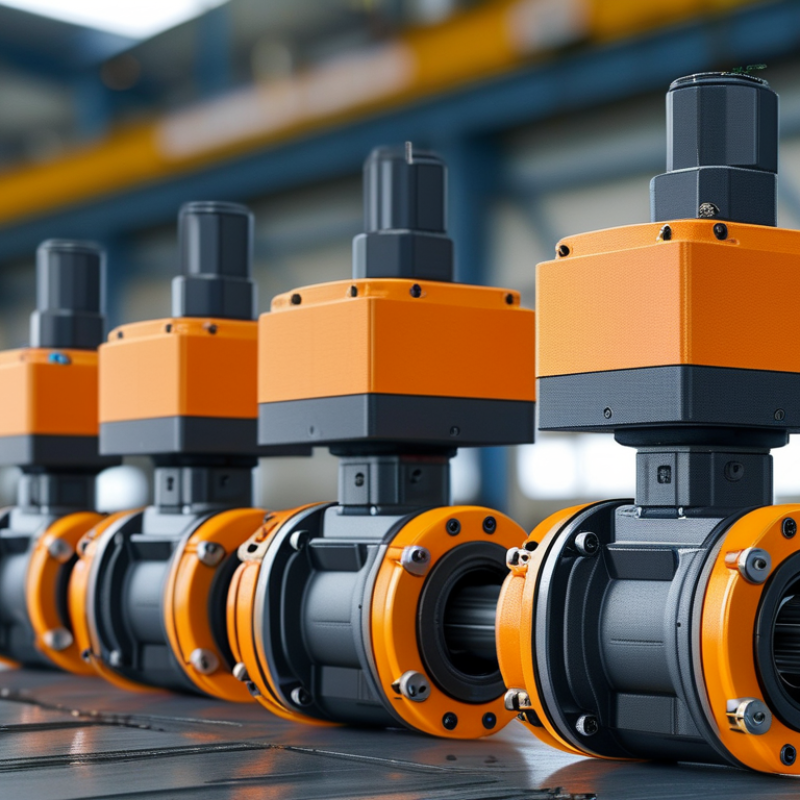
Understanding Quarter-turn Actuators and Their Mechanism
Quarter-turn actuators are pivotal in process automation, playing a significant role in various industries. These devices execute a 90-degree rotation, making them ideal for applications like valves and dampers. Industry reports indicate that the global market for quarter-turn actuators is projected to grow by 6% annually. This growth underscores their increasing importance in enhancing efficiency and reliability in operations.
The working mechanism of a quarter-turn actuator is relatively simple yet effective. They convert rotary motion into linear motion, using gear systems, which helps control flow in pipes. Whether pneumatic, electric, or hydraulic, each type offers distinct advantages. For instance, electric actuators are known for their precision and energy efficiency, while pneumatic actuators excel in rapid actuation. Reports show that about 40% of companies prefer pneumatic systems for time-sensitive tasks.
Yet, challenges exist. Selecting the wrong actuator can lead to system failures and increased expenses. Factors like operating environment, torque requirements, and control methods should influence decisions. Ignoring these aspects can disrupt processes and affect productivity. Industry professionals emphasize the need for careful evaluation of application requirements to maximize actuator performance. A thoughtful approach is key to achieving optimal results.
Key Advantages of Using Quarter-turn Actuators in Automation
Quarter-turn actuators play a crucial role in modern automation systems. Their design allows for efficient operation of valves, dampers, and other devices that require a quarter-turn motion. According to a report by MarketsandMarkets, the global actuator market is expected to grow significantly, driven by an increasing demand for automation in various industries. As processes become more automated, choosing the right actuator can impact both efficiency and reliability.
One key advantage of quarter-turn actuators is their simplicity. This simplicity translates to faster installation and reduced maintenance. Many applications benefit from their straightforward design, which minimizes potential failure points. Additionally, they can operate in harsh environments, showcasing their versatility. Data from technology reviews indicates that the failure rates for these actuators are notably lower than linear alternatives. This makes them a reliable choice for critical operations.
Another aspect to consider is the energy efficiency of quarter-turn actuators. They provide a mechanical advantage, requiring less energy to perform their tasks. Research shows that energy-efficient systems can lead to cost savings in the long run. However, not every application will benefit from this actuator type. Certain scenarios may require different actuation solutions. It’s essential to analyze specific needs before making a decision.
Why Choose a Quarter-turn Actuator for Your Application? - Key Advantages of Using Quarter-turn Actuators in Automation
| Advantage | Description | Application Areas |
| Speed and Efficiency | Provides rapid operation with minimal power consumption, enhancing productivity. | Manufacturing, Water Treatment, HVAC Systems |
| Compact Design | Space-saving design suitable for limited installation areas. | Industrial Plants, Marine Applications, Robotics |
| Durability | Built to withstand harsh environments, reducing maintenance costs. | Oil & Gas, Chemical Processing, Waste Management |
| Versatility | Compatible with various control systems and suitable for different valve types. | Pharmaceuticals, Food & Beverage, Pulp & Paper |
| Safety Features | Equipped with fail-safe options and emergency response mechanisms. | Power Generation, Water Treatment Facilities, Hazardous Applications |
Applications and Industries That Benefit from Quarter-turn Actuators
Quarter-turn actuators are essential in various applications and industries. These devices provide efficient control for valves and dampers. Industries like oil and gas, water treatment, and manufacturing often rely on them. Their capability to execute a 90-degree turn makes them ideal for quick operations. This efficiency leads to faster response times in critical systems.
In the food and beverage industry, quarter-turn actuators ensure
precise flow control. They help maintain hygiene standards and prevent contamination. In HVAC systems, these actuators regulate airflow and improve energy efficiency. However, they may not be suited for all environments. Factors like
extreme temperatures can affect their performance.
While many industries benefit from quarter-turn actuators, some might overlook specific needs.
Proper sizing and selection are crucial for optimal performance. Using the wrong actuator can lead to inefficiencies or system failures. Regular maintenance is also necessary to ensure reliability and longevity.
Attention to detail remains vital when integrating these devices into existing systems.
Comparing Quarter-turn Actuators with Other Actuator Types
When considering various actuator types, quarter-turn actuators stand out for specific applications. These devices are commonly used for controlling valves and dampers, providing reliable performance in industries like oil and gas, water treatment, and HVAC. According to a recent report by the International Society for Automation, quarter-turn actuators can minimize energy use by up to 30%, making them a favored choice among engineers.
In comparison to linear actuators, quarter-turn actuators offer faster operation speeds. They can complete a full rotation in under 5 seconds, depending on the model and load. This quick response time is essential for processes that demand immediate adjustments. However, while they excel at rotational tasks, they are not suitable for applications that require linear movement. This limitation raises questions about their versatility in complex systems.
Multi-turn actuators, another common type, are the better option for tasks requiring longer rotation. They can handle intricate moves but often at the cost of speed and efficiency. Understanding these trade-offs is crucial for engineers when selecting the right actuator. Each type has strengths and weaknesses, and often, the key lies in the specific application requirements for optimal performance.
Comparison of Actuator Types for Industrial Applications
Factors to Consider When Selecting a Quarter-turn Actuator for Your Needs
When selecting a quarter-turn actuator, several factors come into play. The type of application is crucial. For example, if you're dealing with valves or dampers, the actuator must fit those specific requirements. It's essential to consider the torque output as well. Different applications demand varying torque levels. An insufficient torque could lead to failure in operation.
The environment in which the actuator operates is also significant. Factors like temperature, humidity, and exposure to chemicals should dictate the selection. Some environments are harsh, affecting actuator longevity. Not all products suit every situation. Always evaluate material compatibility and environmental resistance.
Lastly, think about control options. Some actuators offer advanced control features. Others are more straightforward, suited for basic tasks. Understanding the level of automation required can guide your choice. These details truly matter. A well-suited actuator enhances performance, while a poorly chosen one may lead to frequent maintenance. Make informed decisions, but be open to reassessing if things don’t perform as expected.

