Skip to content
Menu

How to Choose the Best Silent Diesel Generator Set?

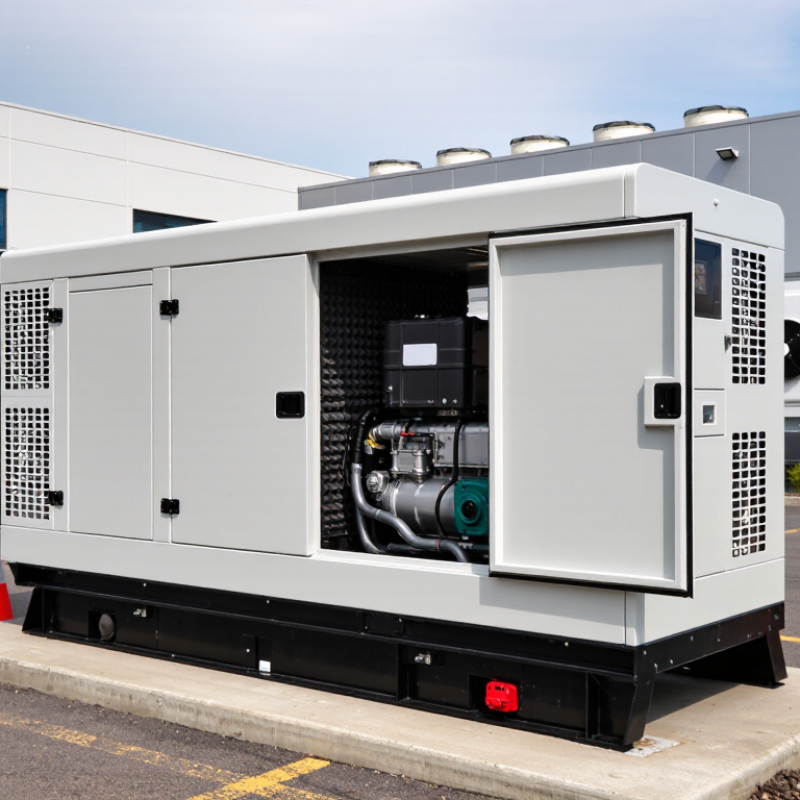
A Silent Diesel Generator Set is not simply an engine behind an acoustic enclosure. It is a complete standby-power system, and the right choice depends on load, operating conditions, noise limits, and service access. The International Energy Agency’s Electricity 2024 report forecasts global electricity demand growth of close to 4% in both 2024 and 2025. That broader demand trend makes dependable backup planning more important for facilities that cannot tolerate an unexpected shutdown.

Selection starts with the actual load. A small clinic, a cold-storage room, and a construction site have different starting currents and duty cycles. List essential equipment, note motor-starting demands, and distinguish standby use from extended operation. Then compare rated output, fuel consumption, sound levels, enclosure ventilation, control features, and local maintenance support. A quiet enclosure matters, but it cannot compensate for undersized capacity or poor cooling. Nor should a brochure’s sound figure replace a measurement taken under stated conditions.

The final choice should be checked against the installation site and the manufacturer’s technical documentation. Ask for test conditions behind noise and fuel figures, and confirm that routine service parts are available. One source limitation matters: no verifiable, topic-specific expert quotation was supplied, so attributing a quotation to a named specialist would risk misleading readers. Add a sourced quotation from a qualified power-generation engineer before publication. A careful comparison is more useful than a confident guess.

How to Choose the Best Silent Diesel Generator Set?

Estimate Load in kVA Using the Common 0.8 Power Factor

When choosing a silent diesel generator set, estimate the load in kilovolt-amperes, not only kilowatts. The common planning assumption is a 0.8 power factor. Divide the expected kilowatt load by 0.8 to estimate kVA. For example, a 24 kW load needs about 30 kVA at that power factor. Simple enough.

That figure is a starting point, not a final selection. Check the power factor on equipment nameplates where possible; mixed loads may not match 0.8. Motors, pumps, and compressors can draw extra current while starting. A 24 kW running load may therefore need more capacity during startup. List each appliance, its running demand, and any starting surge, then ask a qualified supplier to review the combined load. This step is easy to overlook.

Also distinguish continuous demand from occasional peak use. Avoid sizing the generator to run at its limit all day, and check whether altitude, temperature, or installation conditions reduce its rated output. I would not trust a rough spreadsheet alone. Real loads can behave differently than expected, especially when several motors start together. Recheck the assumptions before ordering.

Match PRP or ESP Ratings to ISO 8528-1 Duty Requirements

How to Choose the Best Silent Diesel Generator Set?

Match PRP or ESP Ratings to ISO 8528-1 Duty Requirements

ISO 8528-1 distinguishes Prime Power (PRP) from Emergency Standby Power (ESP); they are not interchangeable labels. PRP suits variable loads during extended operation, while ESP is intended for emergency outages and limited operating hours. The right choice depends on the actual duty, not just the largest kilowatt figure on a brochure. List essential loads, starting currents, and expected running hours before comparing sets.

The U.S. Energy Information Administration’s 2022 reliability data reported about 5.5 hours of average electricity interruptions per customer, including major events. That national figure is context, not a site forecast.

A clinic, workshop, or remote pump station may face very different outage patterns. For a site needing regular or prolonged operation, assess PRP capacity and loading with a qualified engineer. For occasional backup, ESP may fit, but check the manufacturer’s rating conditions, permitted hours, and maintenance schedule against ISO 8528-1. Small details matter. A motor starting beside a lightly loaded generator can still cause a voltage dip.

Verify 50/60 Hz Output and ISO 8528-5 Performance Class

How to Choose the Best Silent Diesel Generator Set?

Verify 50/60 Hz Output and ISO 8528-5 Performance Class

Frequency is a compatibility requirement, not a minor setting. A four-pole alternator typically runs at 1,500 rpm for 50 Hz or 1,800 rpm for 60 Hz. Confirm the required frequency against the site’s equipment and regional supply. Then check that the quoted voltage, phase, and frequency apply at the intended load—not just at no load. A quiet enclosure cannot correct an electrical mismatch.

ISO 8528-5 defines performance classes G1 through G4 for engine-driven generating sets. The classes describe how a set responds to changing loads, including frequency and voltage behavior. G1 suits less demanding loads; G3 is intended for equipment with tighter requirements. G4 covers requirements agreed between buyer and supplier. Specify the class in the purchase documents, and request test results under stated load steps. A class label alone is not proof.

There is a practical reason to examine transient performance. Uptime Institute’s 2024 Annual Outage Analysis reported that 54% of respondents’ most recent significant outages cost more than $100,000; 16% exceeded $1 million. Those figures cover outages broadly, not generator failures specifically. I would avoid treating them as proof that a higher class prevents downtime. Ask how the set performs during motor starts and sudden load changes. The specification can still leave gaps.

Compare Noise Ratings in dB(A) at 7 m with Site Limits

A “silent” diesel generator is not silent; compare its measured noise with the limit at the nearest sensitive location. Request a sound-pressure rating in dB(A) at 7 m, and check the load and test conditions. Small details matter. ISO 8528-10 describes methods for measuring airborne noise from engine-driven generating sets, but it does not set one universal site limit. Compare like with like: a 7 m rating may not match a boundary reading taken beside reflective walls. A 3 dB increase represents roughly twice the sound energy, not just a slight change.

Estimate how sound may reach nearby homes, offices, or property boundaries. Consider the exhaust direction, barriers, and hard surfaces. Do not treat a catalogue figure as a guarantee. NIOSH’s Criteria for a Recommended Standard (1998) recommends an occupational exposure limit of 85 dB(A) over eight hours, with a 3 dB exchange rate. That is a worker-exposure benchmark, not a community noise limit. Ask for test data and check the local authority’s limit, averaging period, and measurement point. On-site readings can differ. Recheck after installation.

How to Choose the Best Silent Diesel Generator Set?

Compare indicative noise levels at 7 m with example site limits. Actual sound levels depend on the generator, load, installation, measurement conditions, and local regulations.

Planning guide only: the generator values are representative estimates, not certified product ratings. Example limits of 55 dB(A) by day and 45 dB(A) by night are not universal legal limits; check local requirements and the permitted measurement location.

Check EU Stage V or US EPA Tier 4 Final Emissions Compliance

How to Choose the Best Silent Diesel Generator Set?
Check EU Stage V or US EPA Tier 4 Final Emissions Compliance

A quiet enclosure reduces noise; it does not prove emissions compliance. Check the engine’s certification label, rated power, model year, and intended application. For non-road engines, EU Regulation 2016/1628 sets Stage V requirements. In several power categories from 56 to 560 kW, the limits include 0.4 g/kWh for NOx, 0.015 g/kWh for particulate matter, and a particle-number limit. The exact requirements depend on engine category and power. Sound is separate.

In the United States, EPA Tier 4 Final standards are set under 40 CFR Part 1039 for non-road engines. Limits vary by power band and pollutant, so avoid comparing labels without checking the engine’s certification documents. Ask for the certificate and emissions-control details, including any diesel particulate filter or selective catalytic reduction system. Check that the proposed unit matches your site’s fuel, load profile, and local permitting requirements. Stationary generators may follow different rules. Still, labels can be confusing.

Tips: Match the certified engine family to the generator’s rated output. Confirm compliance with the relevant authority before purchase. European Commission Regulation (EU) 2016/1628 and the US EPA’s 40 CFR Part 1039 provide the primary limits and definitions.

How to Choose the Best Silent Diesel Generator Set? — Check EU Stage V or US EPA Tier 4 Final Emissions Compliance

Selection Factor EU Stage V US EPA Tier 4 Final What to Verify Before Purchase
Regulatory framework EU Stage V engine requirements are established under Regulation (EU) 2016/1628 for covered non-road mobile machinery engines, including relevant generator-engine categories. Tier 4 Final requirements for covered non-road compression-ignition engines are set out in US EPA regulations, including 40 CFR Part 1039. Confirm the rules that apply at the installation location, including any national, state, or local requirements.
Application and classification Coverage depends on the engine category, rated power, intended use, and applicable regulatory provisions. Coverage depends on engine category, rated power, model year, and whether the engine is classified as non-road or stationary. Ask the supplier to identify the engine’s regulatory category and intended application in writing. Stationary engines may be subject to requirements other than Tier 4.
How compliance is documented Check the engine’s EU type-approval information, identification label, and supporting compliance documents for the exact engine model. Check the EPA certificate of conformity and engine label for the exact engine family and model year. Match the documents and labels to the engine installed in the generator set, not just to a similar model or product range.
Emission limits Stage V limits vary by engine category and power range and include regulated pollutants such as nitrogen oxides (NOx) and particulate matter (PM); particle-number requirements apply to specified categories. Tier 4 Final limits vary by engine category and power range and regulate pollutants including NOx and PM. Do not assume the standards are interchangeable or compare a single limit without checking the engine category, test cycle, and certified configuration.
Exhaust aftertreatment Depending on engine category and design, compliance may involve systems such as a diesel particulate filter (DPF) or selective catalytic reduction (SCR). Depending on engine category and design, compliance may involve a DPF, SCR, or other certified emissions-control technology. Confirm which systems are fitted, where they are located, and what inspection, cleaning, or replacement intervals apply.
Diesel exhaust fluid Some SCR-equipped configurations require diesel exhaust fluid (DEF, also called AdBlue in Europe); not every engine uses SCR. Some SCR-equipped configurations require DEF; not every engine uses SCR. If DEF is required, check tank capacity, refill access, storage arrangements, and the operating instructions for the selected engine.
Silent enclosure and noise rating Stage V is an emissions standard; it does not by itself specify the generator set’s sound level. Tier 4 Final is an emissions standard; it does not by itself specify the generator set’s sound level. Compare the stated sound pressure level in dB(A), measurement distance, operating load, and test conditions. “Silent” is not a universal noise rating.
Cooling and ventilation An acoustic enclosure must provide sufficient airflow and heat rejection while maintaining the required emissions-control configuration. An acoustic enclosure must provide sufficient airflow and heat rejection while maintaining the required emissions-control configuration. Check rated output at the expected ambient temperature and altitude, plus ventilation clearances and exhaust-routing requirements.
Maintenance and operating costs Maintenance needs depend on the engine and aftertreatment system; follow the engine-specific service schedule. Maintenance needs depend on the engine and aftertreatment system; follow the engine-specific service schedule. Request service intervals and requirements for filters, aftertreatment components, DEF where applicable, and emissions-system fault monitoring.
Best-fit selection Choose an engine with documentation confirming Stage V compliance for the intended EU application and installation. Choose an engine with documentation confirming Tier 4 Final compliance where that standard applies to the intended US application. First confirm local regulatory eligibility, then compare usable power, duty cycle, noise data, fuel consumption, service access, and total operating cost.

Important: Emissions requirements depend on engine category, power, application, and jurisdiction. Have the supplier or local authority verify that the exact engine configuration is approved for the intended installation.