How to Choose a Power Rail Insulator in 2026?
Choosing a Power Rail Insulator in 2026 is not a catalog exercise. It is a decision about electrical clearance, mechanical support, contamination, and service life. A component that performs well in a clean test room may behave differently beside a wet platform, brake dust, or repeated temperature swings.
The International Energy Agency’s 2019 report, The Future of Rail, estimates that rail carries about 8% of global passenger travel and 7% of freight movement, while using 2% of transport energy. Those figures describe rail’s wider role, not insulator failure rates. Still, they underline why dependable infrastructure matters. A small insulating part can affect the safety and availability of a much larger system.
Start with the actual operating conditions: nominal and transient voltage, available space, mounting loads, vibration, and exposure to moisture or pollutants. Then compare materials and surface paths against the equipment design and applicable technical standards. IEC 60850, for example, addresses supply-voltage ranges for traction systems; it does not select an insulator for a particular installation. That distinction is easy to miss.
Ask suppliers for traceable test data, material details, and installation guidance—not just a headline voltage rating. Check whether the tested configuration matches the real rail, hardware, and environment. Look closely at joints and edges. Small details matter.
There is no universal best choice. And a datasheet cannot predict every site condition. In 2026, the sound choice is the one supported by verified evidence, practical fit, and a clear plan for inspection and replacement.
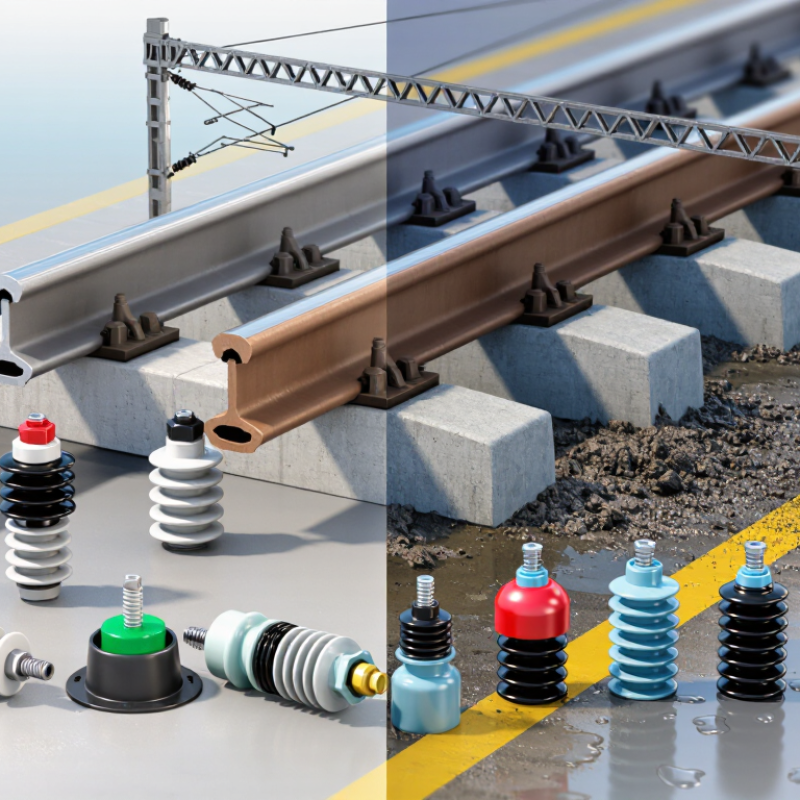
Define the Electrical and Mechanical Requirements
Define the electrical and mechanical requirements before comparing power rail insulators. Start with the system’s highest operating voltage, including temporary surges, rather than its usual reading. Then check the required clearance and creepage distances for the installation environment. Dust, condensation, and conductive residue can change the risk considerably. A clean indoor cabinet is not the same as a damp, exposed enclosure. Check the insulator’s dielectric strength and resistance to electrical tracking in its technical data. Never treat one voltage rating as proof that every installation is suitable.
Mechanical details matter just as much. Record the rail profile, mounting-hole spacing, fastener size, and expected load. Include vibration, cable pull, and repeated servicing if they occur in real use. A part can meet electrical needs and still crack under uneven tightening. Watch the temperature range, too; heat from nearby equipment may age some materials faster. Small details count. Ask how the insulator behaves after thermal cycling, not only when new. I would also question any selection based on a catalogue image alone. Confirm dimensions against the actual rail and review test data for the intended conditions. If the load or environment is uncertain, measure it before choosing; assumptions tend to hide the awkward cases.
Assess the Rail’s Operating Environment
A power rail insulator should be selected for the conditions it will face, not just its voltage rating. Start with normal and worst-case temperatures, including heat trapped inside enclosures and cold starts outdoors. Repeated temperature swings can stress interfaces and loosen mounting points. Check humidity, condensation, dust, salt spray, and industrial residue; a clean indoor sample tells little about a rail beside a washdown area or coastal platform. Small deposits matter.
Then map electrical and mechanical exposure together. Switching surges, transient overvoltage, and contamination can increase surface leakage risk, while vibration may gradually damage brackets or connections. Ask whether the rail is sheltered, exposed to sunlight, or likely to collect water in pockets. These details affect material choice, surface geometry, creepage distance, and maintenance intervals. Use applicable equipment standards and verified ratings, but confirm they match the actual installation and test conditions. A site survey after rain or a dusty operating shift can reveal issues drawings miss. Don’t assume “indoors” means benign. Conditions change, and an assessment can age; revisit it after layout or cleaning-process changes, or when tracking marks appear.
Compare Insulator Materials and Design Options
How to Choose a Power Rail Insulator in 2026?
Compare Insulator Materials and Design Options
Choosing a power rail insulator starts with the environment, not just the voltage rating. Porcelain and other ceramics offer rigidity and heat resistance, but can crack under impact. Glass-reinforced polyester is lighter and easier to shape; its resin system and moisture exposure matter. Epoxy supports compact designs, while silicone-based options can help where surface contamination is a concern. No material wins everywhere. Dust, condensation, vibration, and cleaning methods can change the practical choice.
Check electrical spacing and material data together. IEC 60664-1:2020 classifies insulating materials by comparative tracking index: Group I is at least 600, Group II is 400 to below 600, and Group IIIa is 175 to below 400. These figures describe tracking resistance, not a complete insulator rating. Creepage distance still depends on voltage and pollution conditions. IEC 60085 also defines thermal classes, including 155 and 180, for electrical insulation systems. A higher class may help with heat, but does not excuse poor mechanical support. Look closely at mounting points, rail alignment, and clearance around fasteners. A catalog value can feel reassuring. It is not the whole design. Check the assembled rail under expected heat, moisture, and load conditions; small installation details can undermine a sound material choice.
Verify Safety Standards and Compatibility
A power rail insulator should match the conditions it will actually face, not just a headline voltage rating. Check the applicable safety standards for the installation and market, then confirm that the product’s test documents cover the intended use. Look for rated voltage, temperature limits, flame behavior, and resistance to electrical tracking. These details matter near warm conductors, dusty enclosures, or equipment exposed to moisture. Paperwork matters. If a certificate lists a different material or product configuration, ask for clarification before approval.
Compatibility is equally practical. Measure the rail width, mounting-hole spacing, conductor position, and available clearance inside the enclosure. Compare these dimensions with the insulator drawing, including tolerances; a small mismatch can shift a conductor or complicate assembly. Fit is not enough. Check that the insulator supports the expected mechanical load and remains suitable at operating temperature. A catalog table may leave out a useful detail, so verify uncertain dimensions against a current drawing or test report. I would recheck the installed spacing after assembly, too. It is an easy step to skip when the parts appear to line up.
Evaluate Service Life, Maintenance, and Total Cost
When choosing a power rail insulator in 2026, compare service life under actual site conditions, not a catalogue’s best-case estimate. Heat, moisture, salt, dust, ultraviolet exposure, and repeated electrical stress can accelerate aging. IEC 60815 provides a framework for assessing pollution severity and selecting external insulation accordingly. Use local inspection records to check for tracking, cracks, discoloration, loose fittings, or rising leakage current. Small clues matter.
Maintenance changes the real cost. A low purchase price may be offset by difficult access, frequent washing, inspection labor, or planned outages. The U.S. Department of Energy’s 2023 National Transmission Needs Study reports that about 70% of U.S. transmission lines and transformers are more than 25 years old. That figure does not predict an insulator’s life, but it highlights the value of planning replacements before aging assets become urgent problems. Build a life-cycle estimate that includes installation, inspections, cleaning, outage coordination, and disposal. Then compare alternatives over the same service period. Be cautious with precise lifespan promises; local conditions can make them look neat on paper and wrong in the field. A little uncertainty belongs in the budget.

