How to Choose a Trolley Elevator for Your Business?
Choosing a Trolley Elevator affects more than how goods move between floors. It shapes daily workflow, loading safety, and the time staff spend handling stock. A unit that looks suitable in a brochure may not fit a narrow doorway or a crowded loading bay. Small details matter.
Toyota production engineer Taiichi Ohno is often associated with this principle: “Where there is no standard, there can be no improvement.” Applied here, it means defining real operating needs before comparing equipment. Record the heaviest trolley load, its dimensions, wheel spacing, and daily trip frequency. Measure each doorway, landing, and approach route. Check where staff will wait while the platform travels. These details help turn a broad equipment search into a practical specification.
Then compare capacity, platform size, travel height, controls, and loading arrangements against your site conditions. Ask suppliers how the lift handles uneven loads, repeated cycles, and routine servicing. Request drawings and clear technical documentation. Verify that installation and operation suit your building and the applicable safety requirements. A confident sales claim is not a substitute for measured details.
There may be trade-offs. A larger platform can ease loading but occupy valuable floor space. A faster cycle may add little value if goods arrive in batches. Review the proposed setup with the people who will use it. Their feedback can expose awkward turns or bottlenecks that a plan misses. Even one site walk can help. This guide explains how to weigh those factors and choose a Trolley Elevator that fits the work, not just the specification sheet.
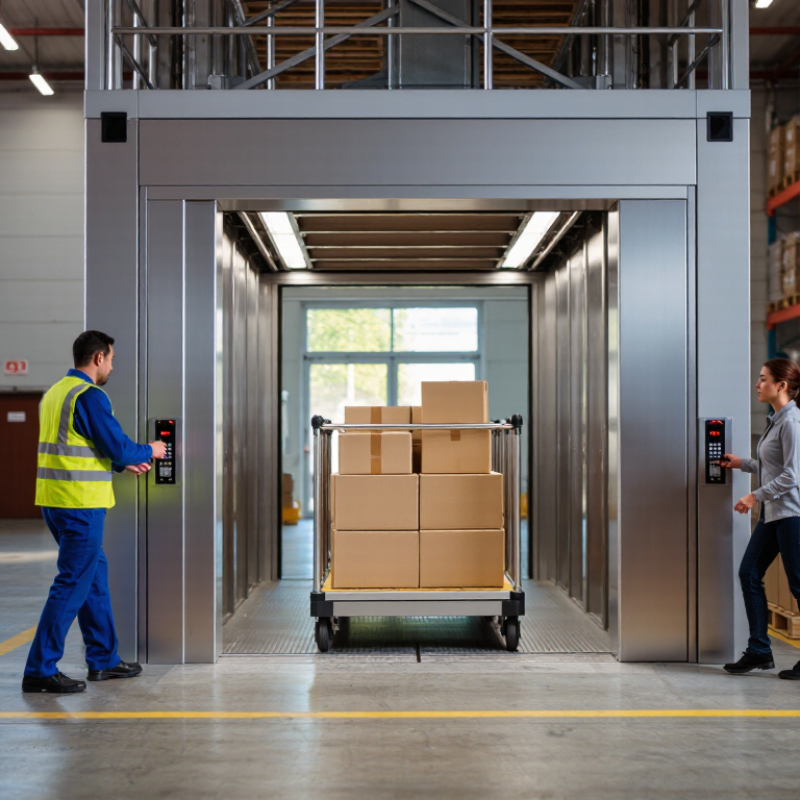
Assess Your Business’s Trolley Elevator Requirements
Assess the loads your trolley elevator must carry during a normal shift, not just on an unusually quiet day. Measure the trolley’s full length, width, and height, including handles and protruding goods. Small details matter. Record the heaviest loaded trolley and consider whether staff, tools, or other items will travel with it. Then estimate how many trips occur during peak periods. A lift sized only for average traffic may create queues when deliveries arrive together.
Check the route from loading area to landing, including doorways, tight turns, floor transitions, and available stopping space. Measure the elevator entrance and car interior; a trolley that fits on paper may be awkward to turn inside. Note the number of floors served, expected daily operating hours, and any exposure to moisture, dust, or temperature changes. Ask the installer to verify site measurements and electrical requirements before specifying equipment. Allow room for safe loading. A spreadsheet can look precise while missing a small obstruction, so walk the route with the actual trolley if possible. Recheck assumptions when stock sizes or shift patterns change.
Compare Elevator Types, Capacity, and Travel Distance
A trolley elevator must match the carts, goods, and route used every day. Start with the load, not the catalog. Measure the heaviest loaded trolley, including its contents, and check its wheelbase and turning space. Then compare the clear doorway and car dimensions. A lift may have enough rated capacity but still be awkward if a trolley cannot roll in without a sharp turn.
Hydraulic lifts often suit shorter travel distances and modest floor counts. Traction elevators are commonly considered when the lift must serve more floors or travel farther. A goods platform may work for simple, controlled transfers, but it may not suit a business that needs enclosed transport or frequent trolley access. Each type has trade-offs. Noise, loading time, and available shaft space matter too.
Capacity should include the trolley, its load, and any staff who ride with it. Add a practical margin for heavier deliveries, rather than choosing a rating that only works on paper. Travel distance affects the system, cycle time, and installation requirements; measure the actual floor-to-floor route.
Think about peak periods as well: a lift that handles one cart comfortably may create queues when several departments need it. A qualified lift professional can verify the site measurements and operating needs.
Some details are easy to overlook. I would recheck the doorway width before finalizing a layout.
Check Site Conditions, Safety Standards, and Accessibility
Before choosing a trolley elevator, measure the actual route, not just the proposed shaft. Record floor-to-floor height, doorway width, turning space, and the loaded trolley’s dimensions. A tight corner can make a suitable platform unusable. Check floor strength, pit depth, overhead clearance, drainage, and available power with a qualified site professional. Note dust, moisture, and temperature changes; they can affect equipment and maintenance needs. A quick sketch helps, but it is not a substitute for a site survey.
Check applicable safety requirements with the installer and local authority before comparing designs. Ask how the unit prevents movement with doors open, protects users at landings, and handles power loss. Confirm inspection and maintenance access, too. Small details matter. Controls should be reachable from a stable standing position, and landings should allow clear trolley maneuvering without blocking escape routes. If people need to ride, verify that the equipment is specifically designed and approved for passenger use; a goods lift is not automatically suitable. One planning detail is easy to miss: staff may use different trolley sizes across shifts. Recheck the largest load and busiest route before ordering.
How to Choose a Trolley Elevator for Your Business?
Check Site Conditions, Safety Standards, and Accessibility
Selected U.S. ADA benchmarks: accessible doorways generally require 32 inches of clear width, accessible routes generally require 36 inches of clear width, and a circular wheelchair turning space requires a 60-inch diameter. These are accessibility checks, not elevator specifications. Confirm applicable local codes, rated load, trolley dimensions, landing space, and site conditions before selecting equipment.
Select a Supplier and Plan Installation and Staff Training
Choose a supplier who asks about the actual trolley, not just the rated load. Share its dimensions, loaded weight, wheel type, daily trips, and the narrowest doorway. Ask for drawings showing shaft or platform dimensions, landing clearances, controls, guarding, and maintenance access. Request documented commissioning checks and a written service plan. Compare these details across bids; a low price can hide costly site changes.
Plan installation with the people who move goods every day. Confirm floor capacity, power, delivery access, and work areas before setting an installation date. BLS reported 2.4 recordable injury and illness cases per 100 full-time workers in private industry in 2023, in its Survey of Occupational Injuries and Illnesses. That figure is not specific to trolley elevators, but it underlines why safe procedures deserve time. Train staff on loading, keeping hands clear, reporting faults, and responding to stoppages. Use a real trolley during practice. Details matter. A rushed handover is still a weak spot, even when the equipment works perfectly. Allow time for questions, repeat demonstrations, and refresher training after changes in staff or workflow.

