Top 10 Water Reservoir Tank Types for Efficient Water Storage Solutions
Water is a precious resource, essential for life and development. To store it efficiently, water reservoir tanks play a vital role. These structures come in various types, designed to meet different needs and environments. From large-scale municipal uses to smaller applications, the choice of a suitable tank is critical.
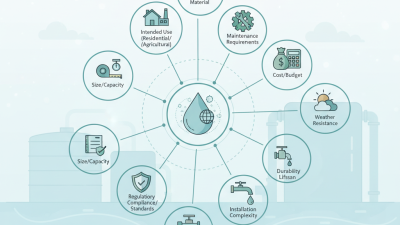
Choosing the right water reservoir tank can be overwhelming. Many factors influence this decision, such as capacity, material, and location. Common materials include concrete, steel, and plastic, each offering unique advantages and disadvantages. Understanding these options can help users make informed choices.
Water reservoir tanks not only store water but also impact local ecosystems. Improper planning may lead to wastage or contamination. It’s crucial to reflect on the long-term effects of these tanks. By selecting the correct tank type, one can optimize storage solutions while safeguarding the environment.
Types of Water Reservoir Tanks: An Overview of Storage Solutions
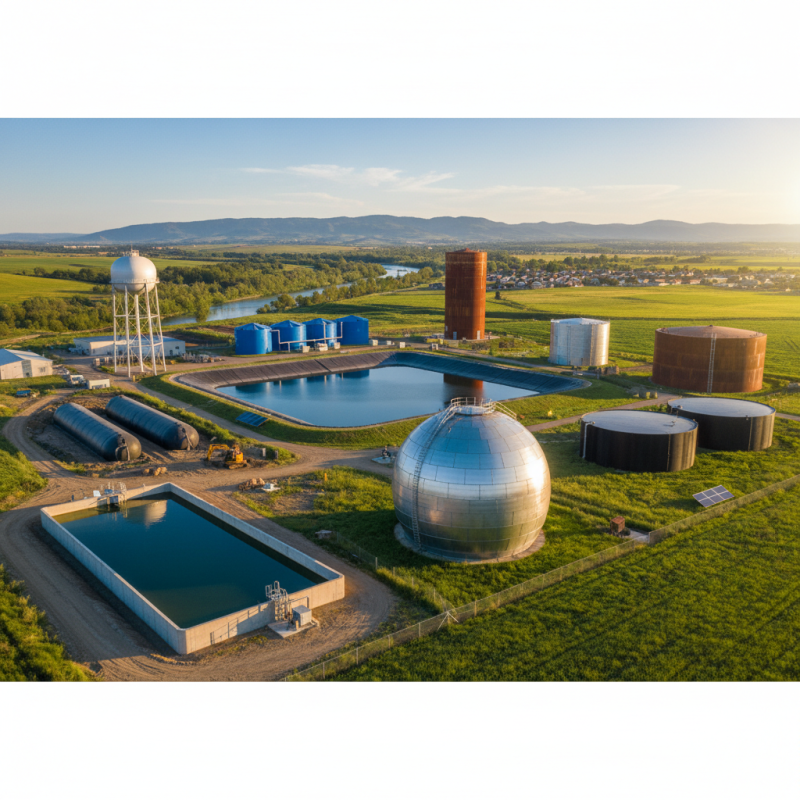
When it comes to water reservoir tanks, various types exist to cater to specific needs. These include above-ground tanks, underground tanks, and customized options. Above-ground tanks are popular due to their easy installation and maintenance. They are often made from materials like polyethylene or fiberglass, ensuring durability and resistance to corrosion. According to a report by the American Water Works Association, properly designed tanks can last over 30 years.
Underground tanks are another durable option. They offer natural insulation and are less prone to damage from environmental factors. The report highlights that these tanks can hold large volumes of water, making them ideal for agricultural use. However, they can be expensive and require careful planning during installation.
**Tip:** Always assess the local climate and soil conditions before choosing a tank type. This significantly impacts installation and longevity.
Custom tanks provide flexibility. They can be designed to fit unique spaces or specific purposes. Though they may be pricier than standard tanks, the investment can pay off in efficiency and convenience. Water scarcity can push communities to rethink traditional storage solutions. Limited water capacity could hinder essential services if not planned properly.
**Tip:** Regular maintenance of tanks is crucial. Neglecting this can lead to leaks, contamination, or inadequate performance over time.
Top 10 Water Reservoir Tank Types for Efficient Water Storage Solutions
Key Features and Benefits of Water Reservoir Tanks
Water reservoir tanks come in various types, each offering unique features and benefits for efficient water storage. One popular type is the underground reservoir. It provides effective insulation against temperature fluctuations. This keeps the water cool and reduces evaporation losses. However, installation can be complex and costly.
Above-ground tanks are another option. They are often made from sturdy materials. They can be easily accessed for maintenance. This makes them user-friendly. The downside? They may be more prone to damage from environmental factors. Regular inspections are necessary to ensure integrity.
Fiberglass tanks are lightweight yet durable. They resist corrosion and can last for many years. However, they can be expensive. Moreover, selecting the right tank size is crucial. A tank that is too small can lead to shortages, while a large, unused tank can waste resources. Balancing capacity with demand requires careful planning and reflection.
Comparative Analysis of Aboveground vs. Underground Tanks
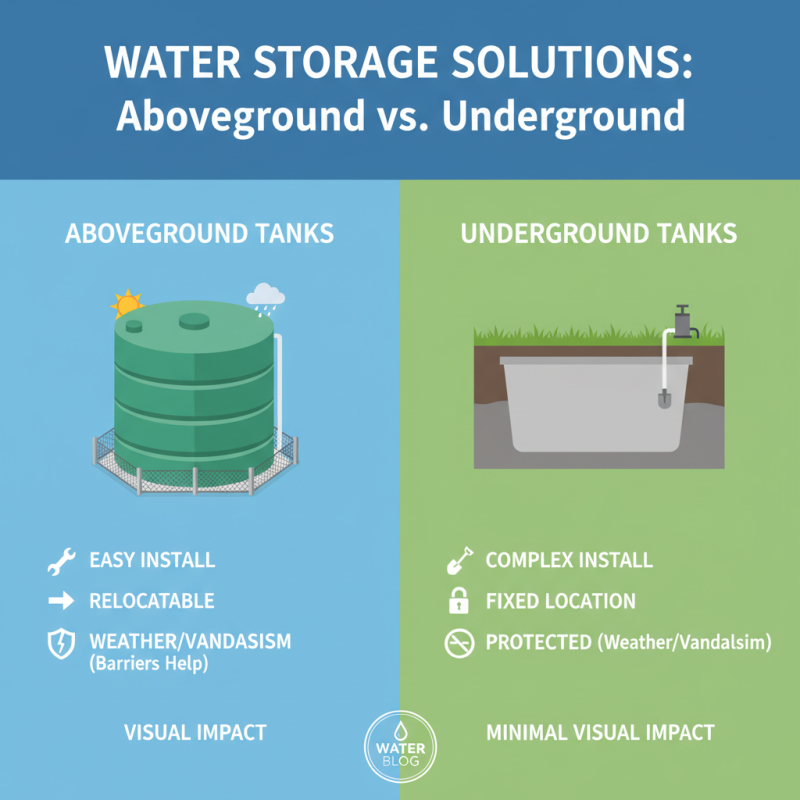
When considering water storage solutions, aboveground and underground tanks present unique advantages and challenges. Aboveground tanks are easy to install. They can be relocated more easily. However, they may be susceptible to weather conditions and vandalism. Protecting them with barriers can be beneficial. These tanks can also be more visible, impacting landscape aesthetics.
Underground tanks, on the other hand, offer excellent space efficiency. They are less likely to freeze or suffer from external damage. Yet, installation can be complex and costly. Digging and site preparation require careful planning. Regular inspections are harder. This can lead to hidden leaks or other issues that go unnoticed.
**Tips:** Always consider local regulations before installation. Ensure tanks meet safety standards to avoid fines or legal issues. Assess your location’s soil type, which influences tank choice. Proper maintenance of both tank types is essential. Regularly check for corrosion in aboveground tanks and maintain moisture levels in underground options. An efficient storage system is about finding the right balance between visibility and protection, both have merits and pitfalls to carefully weigh.
Materials Used in Water Reservoir Tanks: Pros and Cons
When it comes to water reservoir tanks, the choice of materials significantly affects performance. Concrete tanks are durable and suitable for large capacities. Yet, they can be expensive to install. Steel tanks, on the other hand, offer robustness. However, they are prone to rust if not properly coated. There is a balance to be found between cost and longevity.
Plastic tanks are lightweight and resistant to corrosion. They are easy to transport and install. However, they may not withstand extreme temperatures as well. Fiberglass tanks combine strength and resistance to chemicals. Yet, they might come with a higher initial cost.
Each material has its strengths and weaknesses. Local climates and specific needs should guide your choice. It’s not a one-size-fits-all situation. Assessing long-term maintenance and replacement costs is crucial. This can be overlooked, leading to regret later. Consider every option carefully. Evaluate pros and cons thoroughly before committing.
Best Practices for Maintenance and Operation of Water Tanks
Water tanks are essential for efficient water storage. Their maintenance and operation require careful attention. Regular inspections can prevent costly repairs. A study from the American Water Works Association indicates that neglecting maintenance can lead to a 25% reduction in efficiency.
Cleaning water tanks is crucial. The Water Quality Association recommends cleaning at least once a year. This practice not only ensures the quality of stored water but also prolongs the tank’s lifespan. During cleaning, it is vital to check for any signs of corrosion or leaks. Such issues can escalate if not addressed promptly.
Proper operation of water tanks involves monitoring water levels. Automated systems can help, but manual checks are still necessary. Routine assessments are often overlooked. This could result in unexpected shortages or overflows. Data shows that approximately 15% of water storage facilities experience operational failures annually. Addressing these shortcomings can enhance overall efficiency.