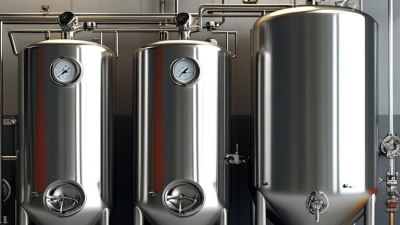
2026 Top Types of Jacketed Stainless Steel Tanks
The 2026 market for jacketed stainless steel tank systems is becoming more specialized. Manufacturers now expect precise temperature control, reliable sanitation, and flexible production capacity. A jacketed stainless steel tank can support heating, cooling, blending, fermentation, storage, or crystallization. Its value depends on design details, not appearance alone.
Process-equipment engineer Daniel R. Hayes explains, “A good jacket controls temperature without creating cleaning problems.” That principle remains practical on the factory floor. Operators notice it when syrup moves evenly, when chilled cream reaches its target quickly, and when no residue hides behind poorly designed fittings. The best tank type depends on product viscosity, batch size, pressure requirements, and cleaning method. No universal winner exists.
This guide examines the leading 2026 tank configurations, including dimple jackets, half-pipe coil jackets, conventional full jackets, insulated vessels, and agitated processing tanks. Each design has trade-offs. Dimple jackets often reduce weight and material use. Half-pipe jackets can provide strong heat transfer for demanding processes. Full jackets offer broad temperature coverage, but they may increase cost and structural complexity.
Some choices remain imperfect. A cheaper tank may consume more energy over time. A highly polished interior may still fail without proper weld inspection. Even an advanced jacket can perform poorly with weak sensors or uneven mixing. Buyers should review thermal calculations, surface finish, drainability, pressure ratings, documentation, and service access before approving a purchase. The smartest decision is rarely the most impressive-looking one.
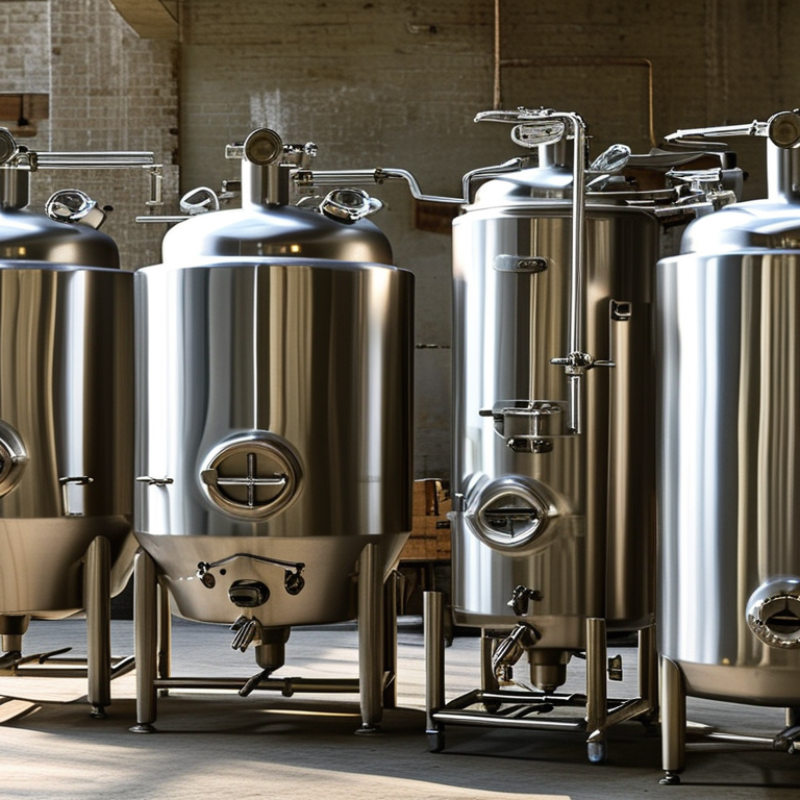
What Defines a Jacketed Stainless Steel Tank?
2026 Top Types of Jacketed Stainless Steel Tanks
What Defines a Jacketed Stainless Steel Tank?
A jacketed stainless steel tank has a process vessel surrounded by a separate heating or cooling space. This space transfers thermal energy through the tank wall. The product stays inside the primary vessel. Steam, hot water, glycol, or chilled water flows through the jacket. That separation matters.
The jacket may use a dimpled surface, half-pipe coils, or a full conventional shell. Each design changes heat-transfer performance, cleaning access, weight, and fabrication cost. Dimpled jackets suit moderate duties and lower utility volumes. Half-pipe jackets handle stronger circulation and higher mechanical demands. Full jackets provide broad coverage, but they may require more complex welding and inspection.
The stainless steel grade should match the product, temperature, and cleaning chemicals. Smooth internal welds reduce residue around corners and connections. A practical inspection checks weld quality, pressure integrity, drainability, and temperature response. Operators should also verify that sensors measure the product, not only the jacket fluid. That mistake happens.
Tank shape, agitator design, insulation, and nozzle placement affect real performance. A narrow vessel may heat differently from a wide one, even with the same jacket area. The term “jacketed tank” is not perfectly consistent across suppliers. Drawings should identify jacket zones, test pressures, materials, and allowable operating temperatures. Small omissions can become expensive during installation.
How Jacketed Tank Heating and Cooling Systems Work
Jacketed stainless steel tanks transfer heat through a secondary space wrapped around the vessel. The jacket may use hot water, steam, thermal oil, chilled water, or glycol. An external control loop adjusts fluid flow according to the tank’s measured temperature. Simple in principle. Reliable results depend on contact area, fluid velocity, insulation, and product movement. Without agitation, liquid near the wall can heat faster than the center.
During heating, a valve admits the selected utility into the jacket. During cooling, chilled fluid removes heat from the stainless steel wall. An agitator then distributes that temperature through the product. Temperature sensors should sit where they represent the bulk material, not only the jacket or outlet. Small errors matter. A sensor placed too close to the wall may trigger cooling too early.
Tank design also affects performance. Vertical tanks support efficient circulation, while mixing tanks help control temperature in thick products. A staged temperature ramp can reduce scorching, thermal shock, and unwanted viscosity changes. For sensitive materials, operators should record inlet temperature, outlet temperature, mixing speed, and product temperature. Cleaning deserves equal attention because blocked jacket channels or poor seals can weaken heat transfer. In practice, the first test is rarely perfect. Flow rates may need adjustment after observing real temperature differences across the vessel.
2026 Top Types of Jacketed Stainless Steel Tanks
How Jacketed Tank Heating and Cooling Systems Work
Jacketed stainless steel tanks transfer heat through an outer jacket surrounding the vessel. Dimple jackets are commonly used for economical heating and cooling, half-pipe jackets provide stronger circulation and pressure resistance, and conventional full jackets offer broad heat-transfer coverage. The chart shows typical utility temperature ranges used with jacketed tank systems; actual limits depend on tank design, pressure, product viscosity, and required heat-transfer rate.
Full-Jacket Stainless Steel Tanks for Uniform Temperature Control
2026 Top Types of Jacketed Stainless Steel Tanks
Full-jacket stainless steel tanks provide steady temperature control across the vessel wall. Unlike partial jackets, the full jacket surrounds nearly the entire process area. This design reduces cold spots during heating, cooling, mixing, or holding.
Uniform heat transfer matters in food, beverage, cosmetic, and pharmaceutical processing. A properly sized jacket circulates hot water, chilled water, or thermal fluid around the tank. Sensors should monitor both the jacket and product temperature. One sensor is rarely enough. Agitator speed also affects consistency, especially with viscous liquids or suspended particles. During operation, operators can check temperature trends instead of relying on a single reading.
Small details matter. Smooth internal welds reduce residue buildup and support easier cleaning. Insulation limits heat loss around the outer jacket. A sloped bottom helps drainage. However, no tank design is flawless. Poor flow rates, uneven mixing, or incorrect sensor placement can still create temperature differences. I have seen stable jacket readings hide a cooler product center. That is why commissioning should include several measurement points and real process testing. Equipment selection must match the product, working volume, pressure requirements, and cleaning method. A full jacket offers strong control, but only when the whole system is designed together.
Dimple-Jacket and Half-Pipe Coil Tank Designs
Dimple-jacket and half-pipe coil designs remain practical choices for jacketed stainless steel tanks. The U.S. Department of Energy’s 2022 Industrial Decarbonization Roadmap reports that process heating uses about 51% of manufacturing energy. That figure makes thermal design more than a fabrication detail.
Dimple jackets suit moderate heating and cooling duties. Their stamped cavities distribute utility flow across broad tank surfaces. They also reduce external weight and material use. However, flow maldistribution can create cold spots near nozzles, supports, or the tank bottom. That weakness deserves attention. A thermal survey, not a catalogue assumption, should confirm performance.
Half-pipe coils usually support higher utility pressure and stronger local heat transfer. Their welded channels are useful for viscous products, rapid temperature changes, and demanding cleaning cycles. The tradeoff is higher fabrication cost and more concentrated weld inspection. MarketsandMarkets projected the industrial mixers market to reach approximately USD 16.1 billion by 2028, reflecting continued demand for controlled blending and temperature management. Tank designers should therefore calculate heat-transfer coefficients, pressure drop, weld stresses, and cleanability together. ASME Section VIII may govern pressurized components, while hygienic projects should also consider EHEDG design principles. In practice, the best jacket is sometimes the less obvious one.
How to Select the Right Jacketed Tank for 2026 Applications
Choosing the right jacketed stainless steel tank for 2026 applications begins with the process, not the catalog. A tank is not selected by volume alone. That assumption often fails. Define the product’s viscosity, heating or cooling range, mixing needs, batch size, and cleaning method. For sensitive products, sanitary welds, polished surfaces, and drainable geometry reduce contamination risks. For demanding thermal control, compare dimple jackets, half-pipe coils, and full jackets. Each design transfers heat differently.
Jacket pressure and utility availability also matter. Steam may provide rapid heating, while glycol or thermal fluid can support controlled cooling. Check the required flow rate, temperature stability, insulation, and expansion space. Small details matter. A weak thermal calculation can create hot spots, long cycles, or product damage. Experienced engineers should review the agitator, shaft seal, baffles, and support structure together. These parts affect performance more than many buyers expect.
Modern facilities may also need temperature sensors, load cells, automated valves, and traceable data records. However, adding instruments does not automatically improve control. Sensors require correct placement and regular calibration. During site work, I have seen tanks specified too narrowly for future production changes. A better approach leaves practical capacity for new formulations, while avoiding unnecessary volume and energy use. Pilot trials remain valuable, especially when viscosity changes during heating or cooling. The final specification should reflect measured process behavior, not hopeful assumptions.