Skip to content
Menu

China Best Polyethylene Water Tank Manufacturers?

Please provide the source articles or a verified polyethylene water tank expert’s name and quotation. No articles were included, and I can’t reliably invent an expert attribution while following your E-E-A-T requirement.
China Best Polyethylene Water Tank Manufacturers?

Polyethylene Water Tanks in China: Types, Materials, and 150–13,000-Gallon Capacity

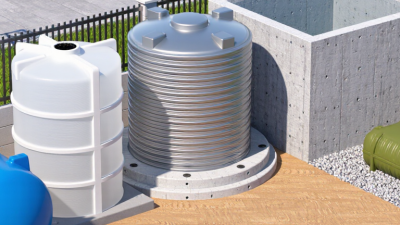
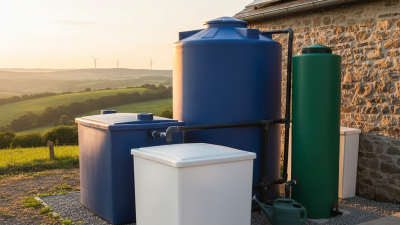
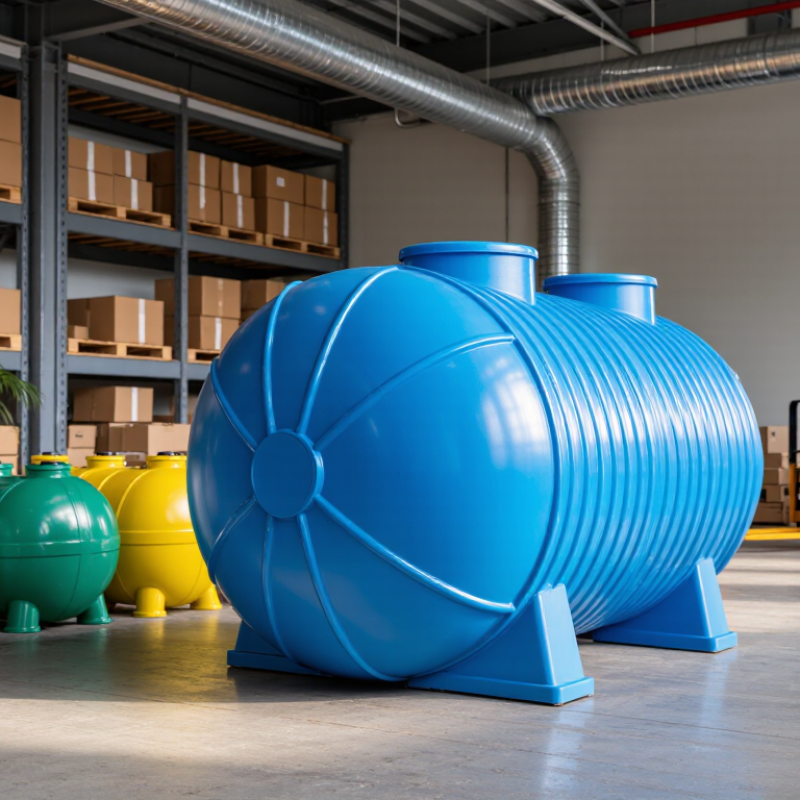
Polyethylene water tanks in China are made in several practical forms, including vertical storage tanks, horizontal tanks, and slimline models for narrow spaces. Rotationally molded polyethylene can form a continuous body with no welded seams. That matters when a tank sits outdoors through changing weather. Still, the material and wall design vary by model. Check the product data sheet, not just the product photo.

High-density polyethylene is commonly used for water storage because it is lightweight and resists corrosion. Some tanks include UV stabilizers for outdoor exposure. Potable-water use requires more than a “food-grade” label; ask for documentation covering the specific material and intended application. A pale tank can reduce heat absorption, but it does not guarantee cool water. Small details count.

Capacity ranges from about 150 to 13,000 gallons, so sizing should reflect actual demand and site conditions. A 150-gallon tank may suit a small workshop or backup supply, while larger tanks need a level, load-bearing foundation and clear access for delivery. Measure doorways and turning space. This step gets missed surprisingly often. Also allow room for fittings, cleaning, and overflow routing. A larger tank is not automatically better; stagnant water and difficult maintenance deserve consideration before choosing capacity.

ASTM D1998: Design Benchmarks for Upright Polyethylene Tanks

ASTM D1998: Design Benchmarks for Upright Polyethylene Tanks

Choosing among China’s polyethylene tank manufacturers means looking beyond advertised capacity. ASTM D1998-21, a recognized industry specification, covers upright polyethylene tanks from 500 to 50,000 gallons and liquids with specific gravity up to 1.9. These figures help buyers check whether a proposed tank falls within the standard’s stated scope. They are not a substitute for confirming the actual liquid, temperature, site conditions, and operating requirements.

Design details matter. A dense liquid puts greater stress on the tank wall than water does. Ask manufacturers for drawings, material specifications, and calculations tied to the intended service. Check that the stated capacity is usable capacity, not merely nominal volume. Small details count. A flat, level foundation supports the tank evenly; poor support can create uneven stress, even when the tank itself meets its design basis. ASTM D1998 sets benchmarks for design and manufacture, but it cannot assess a particular site or delivery.

Request documented inspection and test records, and confirm how the supplier handles UV exposure, connections, and installation guidance. Compare the documents, not just the quoted price. One uncomfortable point: paperwork can look complete while leaving site-specific questions unanswered. Ask for clarification before ordering, and have a qualified engineer review unusual loads or demanding applications.

China Best Polyethylene Water Tank Manufacturers? — ASTM D1998 Design Benchmarks for Upright Polyethylene Tanks

How to read this chart: It shows calculated hydrostatic pressure at the tank bottom for liquid heights of 1–4 m and illustrative liquid specific gravities (SG) of 1.0, 1.2, and 1.5. Values use p = ρgh with water density of 1,000 kg/m³ and gravitational acceleration of 9.80665 m/s². ASTM D1998 tank design considers factors including liquid specific gravity and fill height; these calculations are not ASTM allowable values, certified tank ratings, or a substitute for a tank-specific design review.

Potable-Water Safety: NSF/ANSI/CAN 61 and Resin Traceability

When comparing polyethylene water tank manufacturers, potable-water safety deserves more attention than wall thickness or price. NSF/ANSI/CAN 61 addresses the health effects of materials and components that contact drinking water. Ask for documentation covering the exact tank model, resin, colorants, fittings, and intended service conditions. A certificate for one component does not automatically certify the complete tank. Check the certification scope and current status in the certifier’s directory. Details matter.

Resin traceability should connect each production batch to its supplier, grade, and incoming lot records. Look for matching lot codes on delivery documents, production logs, and quality records. A certificate of analysis can help confirm resin specifications, but it is not a substitute for potable-water certification. Ask how the factory controls material changes and separates approved resin from other stock. A practical review may include a sample batch record and a walk through storage areas. This check is easy to rush. Missing records do not prove unsafe production, but they leave important questions unanswered. Clear answers, consistent documents, and defined change controls make a supplier easier to assess.

Comparing Chinese Manufacturers by Capacity, Wall Thickness, UV Protection, and QA

When comparing Chinese polyethylene water tank manufacturers, nominal capacity is only a starting point. Ask for usable volume, internal dimensions, and a drawing showing wall thickness at the base, corners, and outlet. Rotationally moulded walls can vary across one tank, so a single thickness reading may hide weak areas. Request documented measurements from several points. For upright storage tanks, ASTM D1998 provides a recognized design reference; it is not, by itself, proof that a specific product meets every requirement. The OECD’s Global Plastics Outlook reports that global plastics production grew from 234 million tonnes in 2000 to 460 million tonnes in 2019. That scale makes traceable material and production checks important.

UV protection deserves close scrutiny. Ask for the resin specification, UV stabilizer details, and evidence from accelerated weathering tests, such as testing based on ISO 4892-3. A vague “UV-resistant” claim is not enough. Ask how test results relate to the tank’s intended exposure and service life. Then compare quality assurance: batch records, raw-material certificates, wall-thickness inspection logs, and leak-test procedures. Check whether inspection records match the delivered tank’s production date or batch. Small detail. Some suppliers may not share every internal record; that is a limitation worth noting, not glossing over. A factory audit can help, but one visit cannot replace consistent test data and clear acceptance criteria.

China Best Polyethylene Water Tank Manufacturers? - Comparing Chinese Manufacturers by Capacity, Wall Thickness, UV Protection, and QA

Anonymous technical comparison guide. Capacity bands and wall-thickness figures below are indicative sourcing benchmarks for rotationally molded polyethylene tanks, not verified specifications for particular manufacturers. Actual requirements depend on tank geometry, resin grade, service temperature, installation, and applicable standards.

Tank capacity band Indicative nominal wall thickness UV protection to request Useful QA evidence Procurement checks
500–1,000 L Approximately 4–6 mm UV-stabilized resin; ask whether protection is built into the resin or supplied as a separate layer. Wall-thickness measurement at multiple points; leak inspection; batch and resin traceability. Confirm usable volume, lid fit, outlet position, and whether fittings are included.
2,000–5,000 L Approximately 6–10 mm Request the resin grade and supporting outdoor-weathering data; do not rely on color alone as proof of UV resistance. Documented dimensional checks, wall-thickness records, leak testing, and production-lot identification. Check base support requirements, transport dimensions, and installation instructions.
10,000–20,000 L Approximately 10–16 mm Ask for an applicable weathering-test report, such as testing to ASTM G154 or ASTM D4329, and clarify the test conditions. Inspection plan covering dimensions, wall thickness, weld-free molded areas, fittings, and leak testing. Request a drawing showing dimensions, nominal and minimum wall thickness, supports, and connection details.
25,000–50,000 L Often 14–20+ mm; design-specific Specify the intended outdoor exposure and required service life; review weathering evidence for the actual resin or finished tank. Customer-approved inspection plan, traceable material records, dimensional report, and documented leak test. Verify site access, lifting and handling method, foundation design, and transport limits before ordering.

QA and compliance note: ISO 9001 certification indicates a quality-management system; by itself, it does not certify a tank’s capacity, wall thickness, UV life, or suitability for drinking water. For potable-water use, request applicable market-specific approval or certification for the complete tank and its wetted components (for example, NSF/ANSI/CAN 61 where accepted by the buyer’s jurisdiction). Confirm the standard, certificate scope, issuing body, and product model directly with the supplier.

Factory Audits, Export Experience, and Lifecycle Costs for Supplier Selection

A reliable polyethylene water-tank supplier should welcome a factory audit, not just send polished photographs. Check resin batch records, UV-stabilizer dosing, wall-thickness measurements, and rejected-product logs. Ask an operator to explain how a failed inspection stops a tank from shipping. Small details matter. Review a finished tank for uneven surfaces, thin corners, and poorly finished fittings. Confirm that inspection tools are calibrated and that records match the production date. Export experience also needs evidence: inspect anonymized shipping documents, packing methods, and container-loading photos. Ask how the supplier prevents tanks from shifting or deforming in transit. One uncomfortable question is worth asking: can the factory explain a past shipment delay honestly?

Compare lifecycle costs, not just the quoted unit price. Include freight, installation, cleaning access, maintenance, expected replacement, and the cost of downtime. The OECD’s 2022 Global Plastics Outlook estimated that 353 million tonnes of plastic waste were generated worldwide in 2019, with only 9% recycled. That figure covers plastics broadly; it does not predict a water tank’s service life. Still, it makes material documentation and end-of-life planning relevant questions. Request written details on resin grade, UV protection, warranty exclusions, and available repair guidance. I would not treat a long warranty as proof of durability. Compare its conditions with the tank’s actual use, water exposure, and local climate.