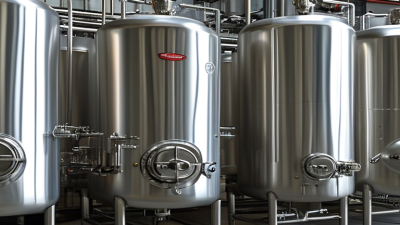
How to Choose an Open Top Tank for Global Sourcing?
Choosing an open top tank for global sourcing requires more than comparing price, capacity, and delivery time. The cargo, loading method, discharge system, and destination infrastructure must work together. A powdery mineral may need a reinforced frame and wide access opening. A food ingredient may require stainless steel, polished interiors, and documented cleaning controls. Small specification gaps can create major delays.
The ITCO Global Tank Container Fleet Survey 2024 reported approximately 801,800 tank containers worldwide, showing the scale and maturity of this transport sector. However, most fleet data covers tank containers generally, not every open top tank configuration. Buyers should therefore request drawings, test records, material certificates, and maintenance histories. ISO 1496-3, CSC requirements, and applicable ADR or IMDG rules should also guide the technical review. Compliance is not a decorative checkbox.
As tank-container consultant Mike Hawkins puts it, “The specification must follow the cargo, not the catalogue.” That principle is easy to overlook. A cheaper tank may require special handling equipment at the receiving site. A heavier model may reduce payload efficiency. A removable cover may simplify loading, but it can also increase inspection and contamination risks. These trade-offs deserve written comparison.
Reports from ITCO and the World Bank highlight the importance of reliable logistics, asset utilization, and resilient supply chains. Still, a report cannot replace a physical inspection. Ask suppliers for loading photographs, valve diagrams, pressure-test dates, and references from similar cargo applications. Verify every claim independently. The right open top tank is not merely available; it is traceable, compliant, serviceable, and suited to the complete international route.
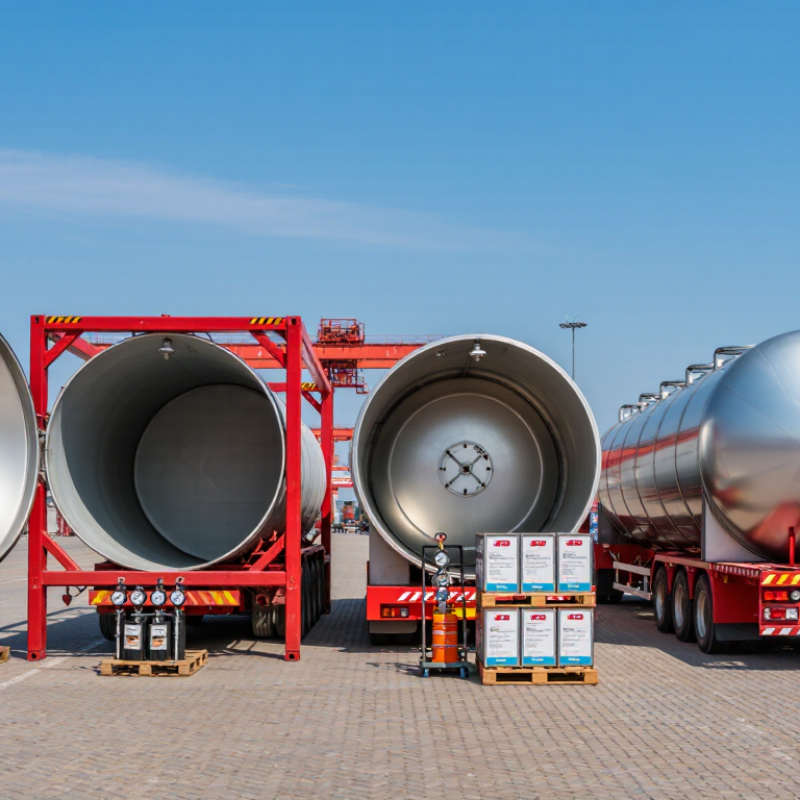
Define Service Requirements: Capacity, Fluid Density, Temperature, and Freeboard
Choosing an open top tank for global sourcing starts with service requirements, not catalog dimensions. Define the working capacity, fluid density, operating temperature, and required freeboard before requesting quotations. A 5,000-liter tank may not safely hold 5,000 liters of liquid. Leave usable space for movement, expansion, and safe filling.
Fluid density directly affects the tank’s structural load. A denser liquid can increase the load on the bottom, supports, lifting points, and transport frame. Temperature also changes material performance and liquid volume.
Record the normal temperature, highest temperature, cleaning temperature, and any short-term exposure. Do not rely on room-temperature assumptions. They are often wrong.
Freeboard needs a practical calculation. Consider filling speed, sloshing during movement, thermal expansion, and the risk of foam. For example, a tank filled near the rim may spill when a forklift turns or a truck brakes. Check the operating level against the tank’s actual geometry, not only its nominal volume. Ask for drawings, load calculations, material data, and inspection records. Confirm that valves, covers, and access points suit daily handling. An early estimate can look precise while missing one critical condition. Recheck it with the supplier’s engineer and your site operator. Small details matter.
Select Materials: Compare HDPE at 0.94–0.97 g/cm³ with 316L at 16–18% Cr
How to Choose an Open Top Tank for Global Sourcing?
Material selection affects shipping weight, chemical safety, service life, and maintenance. HDPE typically has a density of 0.94–0.97 g/cm³. This makes large tanks relatively light and easier to move with basic handling equipment. It also resists many acids, alkalis, and salts. However, sunlight, heat, and certain solvents can reduce its performance. Ask for UV stabilization and temperature limits in writing.
316L stainless steel contains approximately 16–18% chromium, which supports a protective passive surface. Its strength suits demanding industrial environments and repeated cleaning cycles. The material is heavier than HDPE, so freight costs may rise sharply for international sourcing. Chromium alone does not prove suitability. Check the complete grade, molybdenum content, weld quality, surface finish, and test records. A polished interior can reduce residue buildup, but poor welding still creates weak points.
Tips: Request a chemical compatibility chart for the actual liquid and concentration. Compare empty weight, wall thickness, outlet design, and lifting points. Inspect sample welds or ask for production photographs. Do not rely only on a supplier’s material label. One assumption often fails: a heavier tank is not automatically safer. I would also review loading limits and local installation conditions before approving the final drawing. Details can change after scale-up.
Set Compliance Criteria: Review API 650, EN 14015, ASTM D1998, and Local Rules
Choosing an open-top tank for global sourcing starts with compliance, not price. API 650 covers welded steel tanks for low-pressure atmospheric service. EN 14015 addresses similar vertical, cylindrical, above-ground steel tanks. However, neither standard automatically approves every open-top design. Confirm shell thickness, bottom construction, wind loads, welding procedures, inspection, and corrosion allowances.
ASTM D1998 applies to polyethylene upright storage tanks, so it may fit chemical or water service better than steel. Check chemical compatibility at the actual operating temperature. The U.S. EPA’s SPCC requirements use 1,320 U.S. gallons as a key threshold for aggregate aboveground oil storage. Local authorities may require larger containment, fire separation, drainage controls, or environmental permits. EU projects may also involve national implementation rules beyond EN 14015. A certificate alone is not enough.
Tips: Create a compliance matrix before requesting quotations. List capacity, liquid density, temperature, material, exposure, foundation, access, and inspection records. Ask suppliers to identify the exact clauses used. Request drawings, weld qualifications, material certificates, and leak-test procedures. Industry guidance often looks cleaner than field conditions. Rainwater, uneven foundations, and site access can defeat a good specification. I would also require a local engineer’s review, even when the imported design appears fully compliant. That extra review may feel slow. It can prevent expensive redesigns, rejected shipments, or unsafe modifications after delivery.
Verify Structural Loads: Assess Wind, Seismic, Nozzle, Hydrostatic, and Drainage Data
How to Choose an Open Top Tank for Global Sourcing?
An open top tank must survive more than its liquid weight. During sourcing, request verified wind, seismic, hydrostatic, nozzle, and drainage calculations. ASCE 7-22 provides site-specific wind speed maps and external pressure guidance. Do not accept one global wind value. Coastal exposure, tank height, and nearby buildings can change the result significantly.
Hydrostatic pressure rises with liquid depth. Water weighs about 9.81 kN/m³ at standard gravity, so the bottom shell carries the greatest load. API Standard 650 provides widely used design methods for welded storage tanks. However, suppliers may interpret corrosion allowance, shell courses, and roof-ring details differently. Check the calculation, not only the certificate. I have seen small drawing mismatches create expensive revisions.
Seismic review should reference the current National Seismic Hazard Model from the U.S. Geological Survey. Anchorage, sliding, sloshing, and overturning require separate checks. Nozzle loads also need piping flexibility data, because connected pipes can transfer bending and torsion into the shell. Drainage deserves equal attention. NOAA Atlas 14 precipitation data can support local rainfall selection, while outlet capacity should reflect blockage and maintenance conditions. This part is often underestimated. A practical review should compare drawings, calculations, test records, and site data line by line. Some assumptions will remain imperfect, especially when local rainfall or soil data is limited. Record those uncertainties before placing the order.
How to Choose an Open Top Tank for Global Sourcing?
Verify Structural Loads: Wind, Seismic, Nozzle, Hydrostatic, and Drainage Data
The chart presents representative design actions for an open-top cylindrical tank with a 6 m diameter, 5 m liquid height, water service, a 40 m/s basic wind speed, and a 0.20 seismic coefficient. Hydrostatic weight is calculated from the stored liquid volume, while wind, seismic, nozzle, and drainage values represent typical preliminary design checks.
These screening values support global sourcing discussions only. Final structural loads must be verified against the project location, applicable design code, liquid density, foundation conditions, nozzle loads, drainage capacity, and operating requirements.
Evaluate Suppliers: Audit ISO 9001, MOQ, Incoterms, Lead Time, and Inspection Records
How to Choose an Open Top Tank for Global Sourcing?
A practical supplier review starts with evidence, not attractive photographs. Ask for the current ISO 9001 certificate, certification scope, and recent audit findings. The certificate matters. The corrective-action records matter more. Confirm that production controls cover welding, surface treatment, dimensional checks, and material traceability.
Request the supplier’s MOQ in writing, including accessories, spare parts, and custom changes. A low tank price can hide an impractical minimum order. Check the proposed Incoterm carefully. Under FOB, for example, responsibility changes at the agreed port, while DDP may include more delivery obligations. Confirm insurance, customs paperwork, unloading, and destination charges before comparing quotations. Small wording differences can create large costs.
Lead time should include drawing approval, raw-material purchasing, fabrication, testing, packing, and shipment. Ask for a dated production schedule. Then compare it with previous delivery records. Inspection records should show tank dimensions, weld inspections, leak testing, coating thickness, and final photographs. Request sample reports with serial numbers, inspectors, and test dates. Do not accept a blank checklist.
A factory visit can reveal useful details. Look for labeled materials, calibrated instruments, clean weld areas, and protected tank openings. Still, a visit is only a snapshot. I once treated a neat workshop as proof of reliable delivery, which was too optimistic. Supplier evaluation needs repeated evidence, not one impressive afternoon. Ask difficult questions politely. Reliable answers are rarely vague.