Skip to content
Menu

How to Choose the Right Poly Tank in 2026?

Choosing the right poly tank in 2026 requires more than comparing capacity and price. Water storage decisions now affect resilience, maintenance, safety, and long-term operating costs. The U.S. Environmental Protection Agency’s 7th Drinking Water Infrastructure Needs Survey estimates $625 billion in drinking water investment needs over the next 20 years. That figure gives context. Reliable storage is not a luxury for many facilities.

Application comes first. A farm may need UV-resistant polyethylene, a broad base, and fittings that tolerate fertilizer exposure. A commercial site may prioritize chemical compatibility, secondary containment, and easy inspection. The tank’s liquid, temperature, installation surface, and cleaning routine should guide the specification. The Plastics Industry Association’s industry reporting highlights continued demand for durable, lightweight plastic systems. Meanwhile, the UNESCO World Water Development Report 2024 notes that agriculture accounts for roughly 70% of global freshwater withdrawals. Efficiency matters.

Standards matter too. Check relevant ASTM specifications, manufacturer test data, and NSF/ANSI/CAN 61 certification for potable-water applications. Certification is not decoration. It can prevent an expensive mismatch. A dark tank may reduce light penetration, but color alone does not guarantee algae control. A larger tank may seem safer, yet stagnant water can create quality concerns. No poly tank is perfect. Installation errors still happen, even with good products. This guide examines capacity, material quality, fittings, warranty terms, site conditions, and lifecycle value. The goal is practical selection, not a flawless formula. Industry reports provide direction, but the final decision should reflect the actual liquid, climate, and maintenance resources.
How to Choose the Right Poly Tank in 2026?

Poly Tank Basics: Materials, Shapes, Capacities, and Common Uses

Choosing a poly tank starts with material, not color. Most units use linear polyethylene, valued for corrosion resistance, low weight, and rotational molding flexibility. High-density polyethylene handles outdoor storage well, especially with UV stabilizers. However, polyethylene is not automatically compatible with every chemical. Check the manufacturer’s compatibility chart, temperature limits, and certification requirements before purchase.

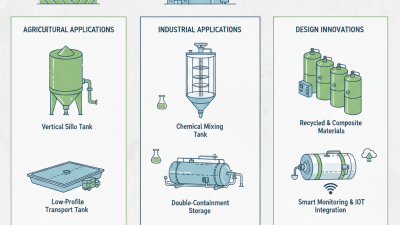
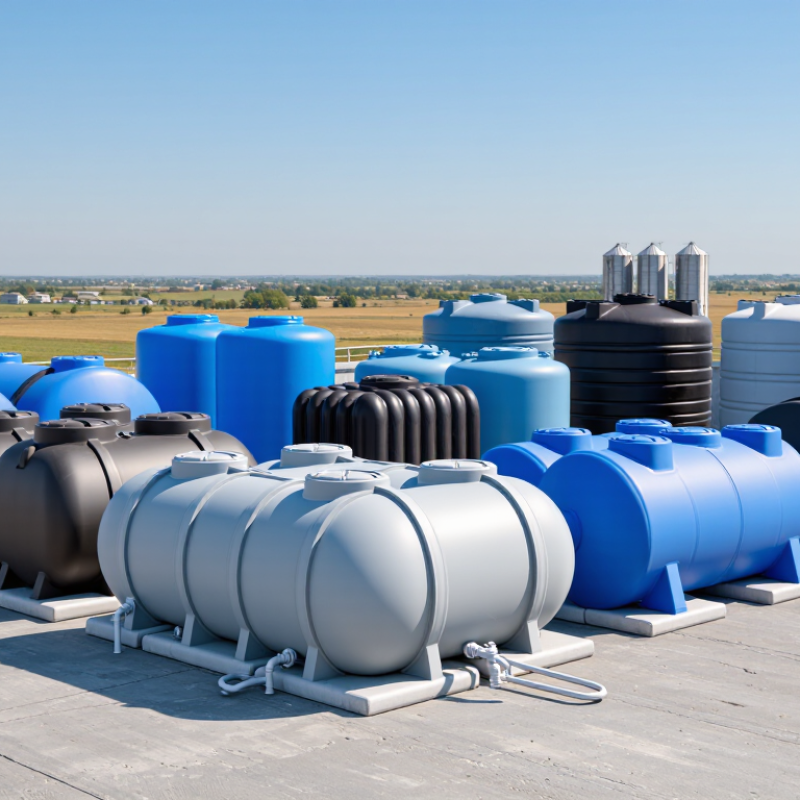
Shape controls access, stability, and usable volume. Vertical tanks save floor space and suit water, fertilizer, and process storage. Horizontal tanks fit trailers and low-clearance areas. Cone-bottom tanks improve drainage, though they require stronger support. Low-profile tanks work beneath windows or equipment.

Common capacities range from 100 to 10,000 gallons. Larger systems often use multiple tanks instead of one difficult-to-install vessel. That choice can simplify maintenance, but it increases fittings and possible leak points.

Demand reflects practical pressure. The United Nations World Water Development Report 2024 states that agriculture uses about 70% of global freshwater withdrawals, supporting demand for irrigation storage. Freedonia’s Plastic Tanks industry analysis also identifies water, agriculture, and chemical processing as major application sectors. For drinking water, look for applicable potable-water certification, not just “food-grade” wording. For rainwater, inspect the lid seal and mosquito control.

My first mistake was choosing capacity from average use alone. Peak demand, delivery access, winter conditions, and future expansion matter more than a neat spreadsheet. A tank may be technically suitable yet awkward to clean. That is easy to miss.

Define Your Storage Needs: Volume, Contents, Location, and Handling

How to Choose the Right Poly Tank in 2026?

Define Your Storage Needs: Volume, Contents, Location, and Handling

Choosing a poly tank starts with the material you need to store, not the tank’s appearance. Water, fertilizers, cleaning solutions, and other liquids can require different resin grades and fittings. Check chemical compatibility, operating temperature, density, and concentration before ordering. A liquid may look harmless but still weaken a tank over time. Confirm the supplier’s technical data and request written compatibility guidance.

Volume needs careful planning. A tank filled to the rim leaves little room for expansion, mixing, or safe movement. Measure your daily use and add practical reserve capacity. Too much unused space can also create unnecessary cost and installation pressure. Location matters just as much. Inspect the foundation, sunlight exposure, drainage, access width, and distance from heat sources. A level, stable base is essential.

Handling is often underestimated. Consider how the tank will arrive, unload, connect, clean, and eventually replace. I have seen an excellent tank fail in practice because a forklift could not reach the installation area. That mistake was avoidable. Measure doorways and turning spaces first. Plan hose routing and fitting access. Review lifting instructions carefully. My own planning has sometimes been too optimistic, especially around maintenance space. Leave more room than the drawing suggests.

How to Choose the Right Poly Tank in 2026?

Define Your Storage Needs: Volume, Contents, Location, and Handling

How to read this chart: These are common nominal poly tank capacities used for planning. A 250-gallon tank holds approximately 946 liters, while a 5,000-gallon tank holds approximately 18,927 liters. Select the smallest capacity that covers your required volume, then verify compatibility with the stored liquid, available installation space, access for delivery, structural support, and handling equipment. Actual tank dimensions and usable capacity vary by manufacturer and tank design.

Compare Tank Materials, Features, and Compatibility Requirements

How to Choose the Right Poly Tank in 2026?

Tank selection starts with the stored material, not the lowest quotation. Polyethylene resists many acids, alkalis, and salts, while steel offers stronger impact resistance. Fiberglass can suit higher temperatures, but it usually costs more. The AMPP IMPACT study estimates global corrosion costs at about $2.5 trillion annually, equal to nearly 3% of global GDP. That figure supports careful material selection, not automatic plastic adoption.

Compatibility depends on concentration, temperature, storage time, and cleaning chemicals. I would not trust a generic “chemical resistant” label. Ask for a compatibility chart and confirm the exact formulation. A tank holding dilute detergent may fail when the concentration rises or the liquid warms. For potable water, NSF/ANSI/CAN 61 certification helps verify material safety. The 2023 U.S. EPA Drinking Water Infrastructure Needs Survey estimates $625 billion in required investment over 20 years, showing why durable specifications matter.

Check UV stabilizers, wall thickness, venting, fittings, and secondary containment. ASTM D1998-21 provides guidance for rotationally molded polyethylene tanks, including design and manufacturing considerations. Outdoor tanks need protected outlets and stable foundations. Smaller fittings can become weak points. My practical mistake was treating capacity as the main decision. It is only one variable. A compatibility review should include the tank, gasket, valve, and delivery hose.

Evaluate Installation Conditions, Safety Standards, and Maintenance Needs

How to Choose the Right Poly Tank in 2026?

Evaluate Installation Conditions, Safety Standards, and Maintenance Needs

A suitable poly tank begins with the installation site, not the tank catalogue. Measure the available space, doorway width, and delivery route before ordering. A full tank can weigh several tonnes, so place it on a level, engineered base. Concrete usually performs well when it is smooth, stable, and fully cured. Avoid sharp stones and uneven timber supports. They can create pressure points beneath the tank.

Check local building, plumbing, fire, and environmental requirements before installation. The tank material must suit its contents, especially with agricultural chemicals or treated water. Ask for documented material specifications, load information, and tested fittings. Confirm that vents, overflow lines, and access openings meet applicable safety standards. In windy regions, anchoring may be necessary. Do not assume a large tank is automatically safer. Poor restraint can cause movement, cracking, or pipe failure.

Maintenance needs should influence the final choice. Select an accessible position for inspections, cleaning, and valve replacement. Leave working space around the tank. Inspect the surface for bulging, fading, leaks, and unusual stress at least twice yearly. Clean sediment from the outlet area before it blocks flow. I once saw a tank installed correctly but placed too close to a wall; routine inspection became nearly impossible. That mistake was avoidable. Installation drawings help, but site conditions can still expose weaknesses. A qualified installer should review the base, connections, and emergency overflow route before filling the tank.

Select the Best Poly Tank and Verify Its Long-Term Value

Choosing the right poly tank in 2026 requires more than comparing listed capacity. Select a tank that suits the liquid, site conditions, and expected service life. In field inspections, I have seen poor placement cause more damage than material defects. Material quality matters. Ask for resin specifications, UV protection details, and documented wall-thickness controls. These records help verify manufacturing consistency. Do not assume every tank handles heat, pressure, or chemicals in the same way.

Match the tank to its actual duty. Water, fertilizers, wastewater, and industrial liquids may require different resin grades and fittings. Check chemical compatibility at the intended concentration and temperature. An experienced installer should inspect the foundation, drainage, anchoring, and pipe alignment. Small details matter. Threaded fittings need support, while rigid pipes can transfer stress to the tank wall. Leave enough clearance for inspection and cleaning.

Long-term value depends on more than the purchase price. Estimate delivery, installation, maintenance, replacement fittings, and possible downtime. Include the cost of protecting the tank from sunlight and severe weather. Review the supplier’s testing records, warranty terms, and technical support before ordering. A cheap tank can become expensive when access is poor or repairs require a full shutdown. I also question my first estimate when site conditions change. That is not failure; it is responsible planning. If operating conditions remain uncertain, request a written compatibility review before ordering.

How to Choose the Right Poly Tank in 2026? - Select the Best Poly Tank and Verify Its Long-Term Value

Poly Tank Option Typical Capacity Range Best-Suited Applications Key Construction Features Typical Service Life* Main Selection Check
Vertical Storage Tank 100–20,000 gal
(380–75,700 L)
Water storage, rainwater harvesting, agricultural liquids, compatible chemicals Rotationally molded polyethylene; large footprint-to-capacity efficiency; atmospheric-pressure design Approximately 10–25 years when correctly specified and maintained Confirm flat, level support and sufficient clearance for the tank diameter and height
Horizontal Leg Tank 35–6,000 gal
(130–22,700 L)
Vehicle transport, temporary storage, agricultural and water-service operations Horizontal polyethylene body with integrated or attached support legs; designed for easier loading and transport Approximately 8–20 years, depending on movement, sunlight and handling Verify load distribution, tie-down requirements, sloshing control and vehicle compatibility
Low-Profile Tank 25–5,000 gal
(95–18,900 L)
Limited-height installations, crawl spaces, utility areas and indoor storage Reduced height with a wider base; polyethylene construction with atmospheric venting Approximately 10–25 years under suitable operating conditions Check available floor area, access openings, ventilation and outlet elevation
Conical-Bottom Tank 100–10,000 gal
(380–37,900 L)
Settling solids, powders, process liquids and applications requiring near-complete drainage Sloped or cone-shaped bottom; usually requires a dedicated stand or support frame Approximately 10–25 years with appropriate support and chemical compatibility Confirm stand loading, outlet size, discharge angle and access for cleaning
Underground Poly Tank 300–2,500 gal
(1,135–9,460 L)
Underground rainwater, wastewater and residential or commercial drainage systems Burial-rated polyethylene shell; installation depends on soil, groundwater and traffic conditions Approximately 15–30 years when installed according to the engineered installation guide Confirm burial rating, groundwater resistance, traffic load rating and anchoring method
Baffled Tank 50–6,000 gal
(190–22,700 L)
Liquid transport where internal movement and surge must be reduced Internal molded or welded baffles that reduce liquid wave action during movement Approximately 8–20 years, influenced by transport frequency and handling Check baffle configuration, fill limits, tie-down points and transport regulations
Chemical Storage Tank 50–20,000 gal
(190–75,700 L)
Compatible acids, alkalis, fertilizers, treatment chemicals and industrial liquids Chemical-resistant polyethylene; may require heavier construction, secondary containment or specialized fittings Approximately 10–25 years, depending strongly on chemical, concentration and temperature Obtain a written compatibility confirmation for the exact chemical, concentration and operating temperature

Long-Term Value Verification Checklist

Evaluation Dimension What to Verify Before Purchase Why It Affects Value
Material Confirm polyethylene grade, UV stabilization and suitability for the stored liquid The correct material reduces premature cracking, degradation and chemical damage
Capacity Compare usable capacity with required operating volume, expansion space and maximum fill level Avoids under-sizing, overflow risk and unnecessary capital cost
Operating Conditions Check liquid density, temperature, concentration, pressure and filling frequency Poly tanks are generally intended for atmospheric service; unsuitable conditions can shorten service life
Installation Support Verify a continuous, level base; do not rely on isolated blocks or unsupported areas Even support helps prevent distortion, stress concentration and fitting damage
Fittings and Accessories Confirm outlet size, venting, overflow protection, valves, manway access and compatibility of seals Correct accessories improve safe operation, maintenance access and total system performance
Compliance Documentation Request dimensional drawings, installation instructions, test records and applicable regulatory documentation Documented specifications make comparison, approval and future maintenance easier
Total Cost of Ownership Compare purchase price, delivery, foundation, fittings, cleaning, inspection and replacement costs The lowest initial price may not provide the lowest cost over the tank’s useful life

*Service-life figures are typical planning ranges rather than guarantees. Actual performance depends on polyethylene grade, UV exposure, chemical compatibility, liquid temperature, installation quality, loading conditions, inspection and maintenance. Capacity ranges and operating limits vary by tank design; confirm the final specification with the technical documentation for the selected tank.