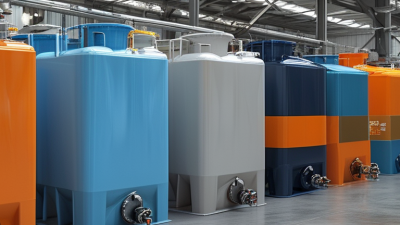
Choosing an ibc tote tank in 2026 is not just a matter of selecting a container by capacity. The right choice depends on the liquid, filling temperature, storage conditions, transport route, and handling equipment. A tank that works well for water may be unsuitable for a different product. Small details matter: valve type, outlet position, pallet design, and the condition of the inner bottle can affect daily use.
Before comparing prices, confirm material compatibility with the tank supplier. Check the product’s technical documentation, including capacity, tare weight, permitted stacking conditions, and cleaning guidance. Inspect sample units for sharp edges, damaged fittings, or hard-to-reach residue points. Ask how replacement parts are sourced. A low purchase price can become an expensive choice if routine maintenance is difficult.
One important point: no verifiable expert quotation was supplied, so I won’t invent one or attach false words to a named specialist. A useful editorial principle is: “Match the tank to the product and handling process, not just the price.” Treat that as guidance, not a sourced expert quote. Selection still requires judgment. A specification sheet cannot reveal every challenge on a busy loading bay, and real-world handling may expose assumptions that looked sound on paper. This guide will help you compare the practical factors and ask suppliers clearer questions before choosing an ibc tote tank.
Before choosing an IBC tote, define exactly what it will hold. Water, cleaning solutions, food ingredients, and viscous liquids can require different inner-container materials, fittings, or handling features. Check compatibility using the liquid’s safety data and the tote supplier’s technical guidance. Temperature matters, too. A liquid that is harmless at room temperature may behave differently when heated or stored outdoors. That detail is easy to miss.
Then map the tote’s actual job. Will it stay in one place, feed a process, or travel between sites? Consider how it will be filled, emptied, lifted, and cleaned. A narrow outlet can slow dispensing, while frequent forklift movement calls for a sound pallet and secure fittings. Capacity should reflect usable volume, not just the number printed on a specification sheet. Leave room for expansion, sloshing, or safe filling limits. Headspace matters.
It is tempting to choose the largest tote available. That can create awkward turns through doorways and unnecessary weight when full. Measure the storage area, route, and lifting equipment before settling on a size. I would treat any capacity estimate as provisional until the full tote’s weight and handling method are checked. A few centimeters can change the fit.
Define the contents, use case, and capacity requirements before selecting a tote.
Common IBC tote sizes include 275 US gallons (about 1,041 liters) and 330 US gallons (about 1,249 liters). These are nominal capacities: check the tote’s specification, confirm material compatibility with the contents, and allow for safe filling and handling.
The right IBC material depends on what you store, not just the tank’s appearance. High-density polyethylene suits many aqueous products, but heat, concentration, and storage time can change compatibility. Stainless steel may handle some demanding applications, while its fittings and seals still need checking. Small details matter. A mismatch can cause swelling, discoloration, leaks, or contamination.
Tips: Check the exact product concentration and expected temperature against current compatibility data. Confirm the liner, outlet valve, gasket, and any protective coating—not only the tank shell. If the substance changes during storage, ask the supplier to assess that specific mixture. Do not guess.
A liner can add a useful barrier, but it is not a universal fix. Polyethylene liners work with many common materials; other substances may require a different polymer. Compare the liner’s chemical resistance with the tank’s, and check whether filling or cleaning could damage it. I would not choose by a generic “chemical-resistant” label alone. Request written compatibility guidance for the intended conditions, then inspect the tank and liner before filling.
Choosing an IBC tote starts with the liquid, not the price. Check its compatibility with the inner container, gasket, and valve materials. A product’s safety data sheet can help identify relevant handling requirements, but confirm uncertain details with the supplier. Never assume two similar liquids behave alike.
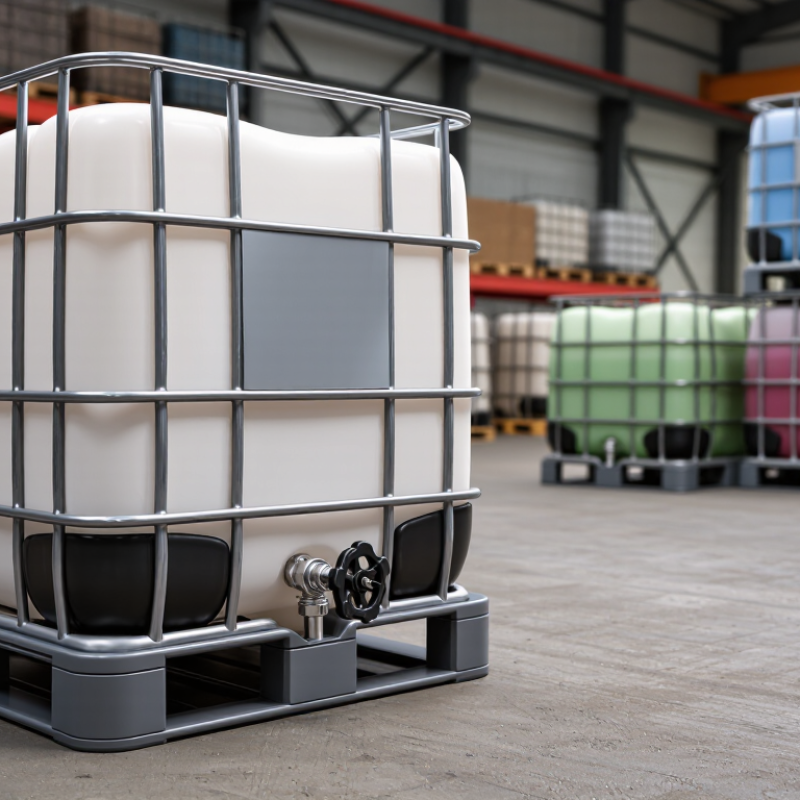
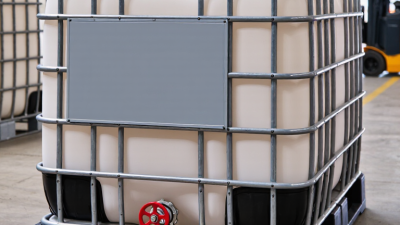
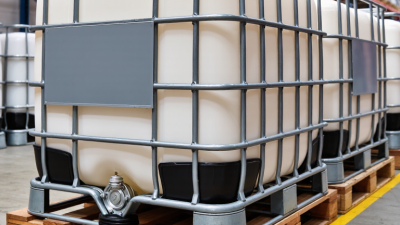
Design affects daily use. A protective cage can help guard the inner bottle from impacts, while the base style determines whether a pallet jack or forklift can move it safely. Check valve position and outlet size against your hoses and filling equipment. Small details matter. A narrow outlet may slow transfer, and a valve that faces a wall can be awkward to reach.
Measure the site before ordering. Note door widths, turning space, floor capacity, and clearance beneath shelving or pipes. Consider where a filled tote will sit, not just how it enters the building. Stacking may save space, but only when the tote’s rating and the surface support it. Also review exposure to sunlight, temperature changes, and weather. A dimension that seems minor on paper can cause trouble during unloading; it is worth checking twice.
Before comparing capacity or fittings, define what the tote will contain and how it will be moved. A tank suitable for water may not be suitable for a food ingredient or a corrosive liquid. Ask for documents that match the exact tank model, liner material, valve, and closure. A certificate for a similar product is not enough.
In 2026, confirm which safety and transport rules apply in the destination country and along the shipping route. Requirements can vary by contents, use, and jurisdiction. Where applicable, check the UN marking and supporting performance-test records. For food-contact use, request documentation covering the relevant material and intended conditions. Verify that certificates are current and issued for the actual production model. Check the scope.
Paperwork should agree with the tank in front of you. Compare the data plate, serial number, rated capacity, and manufacturing date with the records. Look closely at the cage welds, valve seal, and gasket; small defects can matter. Even complete documents cannot reveal every handling issue. It is easy to trust a neat certificate too much, so ask how inspection, cleaning, and replacement are handled after delivery.
Use this checklist to match an intermediate bulk container (IBC) to its contents, route, and intended use. Requirements vary by substance, transport mode, and jurisdiction; confirm the current rules with the relevant authority or a qualified dangerous-goods professional.
| Selection Area | What to Verify | Relevant Standard or Evidence | Practical Check |
|---|---|---|---|
| Intended contents and use | Identify the exact product, concentration, temperature range, filling method, storage duration, and whether the IBC will be shipped or used only on-site. | Current safety data sheet (SDS), product specification, and applicable transport or workplace rules. | Do not select an IBC based on capacity alone. Have the supplier confirm suitability for the exact contents and conditions. |
| Dangerous-goods approval | If the contents are regulated for transport, check that the IBC design type is approved for the substance, packing group, and transport mode. | UN Model Regulations and the applicable modal rules, such as ADR/RID, the IMDG Code, or national regulations. A UN marking applies to a tested design type and does not by itself approve every chemical or use. | Compare the substance’s transport classification and packing group with the IBC approval and the applicable packaging instruction. |
| UN marking and design type | Read the complete durable UN marking. For example, 31HA1 identifies a composite IBC for liquids with a rigid-plastics inner receptacle and steel outer casing. | The UN marking normally includes the IBC type, performance level, test information, country of approval, and manufacturer or approval identification. The full marking must be interpreted under the applicable rules. | Check that the marking is legible and matches the supplied approval documentation. Do not rely on a partial code or a label alone. |
| Performance level | For UN-packaged dangerous goods, verify that the marked performance level is appropriate for the substance’s packing group. | UN packaging performance levels commonly use X, Y, or Z: X for Packing Groups I, II, and III; Y for Groups II and III; and Z for Group III, subject to the applicable rules and substance entry. | Confirm the exact packing instruction and any special provisions. A suitable performance level does not replace chemical-compatibility checks. |
| Inspection and testing | Check the inspection and test status, including the dates required for the IBC type and the jurisdiction of use. | UN Model Regulations provide for periodic inspection and testing of IBCs at intervals not exceeding 2.5 years and 5 years, as applicable. National rules may set additional requirements or procedures. | Request inspection and test records. Confirm that the IBC is within its required inspection period before filling or dispatch. |
| Plastic inner receptacle | Verify the inner receptacle’s material, condition, and age, especially for composite IBCs used for dangerous goods. | UN rules generally limit use of plastic inner receptacles and composite IBCs with plastic inner receptacles to five years from the date of manufacture, unless a competent authority allows otherwise. | Check the manufacture date and the applicable national implementation. Replace damaged, aged, discoloured, or otherwise compromised components. |
| Chemical compatibility | Check compatibility of the liquid with the inner receptacle, gasket, valve, outlet, and any wetted fittings at the intended temperature and concentration. | Use documented material-compatibility data and written confirmation from the IBC supplier or material manufacturer. UN approval does not establish compatibility with every chemical. | Pay particular attention to oxidisers, solvents, fuels, acids, and products that may swell, embrittle, permeate, or stress-crack plastics. |
| Food-contact use | If the contents are food or ingredients, verify that every food-contact surface is suitable for the specific food and conditions of use. | In the United States, applicable FDA food-contact requirements may include 21 CFR provisions for the specific material. In the European Union, relevant rules include Regulation (EC) No 1935/2004 and, for plastics, Regulation (EU) No 10/2011. | Request a food-contact declaration or supporting compliance documentation for the exact material and intended use. A “food grade” description alone is not sufficient evidence. |
| Hazard communication | Confirm that the transported or stored product has the required hazard labels, transport marks, and accompanying documentation. | Requirements depend on the product classification and jurisdiction; examples include the applicable transport regulations and workplace hazard-communication rules. | Keep the product label and transport documents consistent with the contents. Remove or cover obsolete markings when permitted and required. |
| Capacity, fill, and expansion | Verify rated capacity, maximum permitted gross mass, density limits, filling level, and room for thermal expansion. | The IBC’s design approval, markings, manufacturer instructions, and the applicable filling and transport rules. | Do not exceed the marked limits. Account for the product’s density and temperature changes; nominal volume is not a safe-fill instruction. |
| Valves, closures, and leakage control | Inspect the discharge valve, closure, gasket, cap, seals, and protective features for the required design and condition. | Design-type approval, supplier specifications, and applicable inspection or leakproofness requirements. | Confirm that outlets can be secured against accidental opening and that seals and closures are compatible with the contents and filling system. |
| Handling and stacking | Check lifting points, pallet or base condition, stacking limits, and compatibility with the facility’s handling equipment. | IBC design ratings and manufacturer handling instructions; workplace lifting and storage rules apply as relevant. | Do not stack beyond the stated rating. Reject units with damaged cages, bases, welds, or lifting features. |
| Electrical and static risks | Assess ignition risk when handling flammable liquids, powders, or vapours; check whether grounding or bonding is required for the task. | Site fire and electrical-safety risk assessment, applicable workplace rules, and the IBC’s documented conductive or dissipative properties where relevant. | Do not assume a standard plastic or composite IBC is suitable for flammable-liquid handling. Use a documented, task-specific control plan. |
| Documentation and traceability | Obtain the design approval, marking details, inspection records, material information, and any required food-contact or compatibility documents. | Applicable transport rules, purchase specification, and the IBC supplier’s technical documentation. | Record the IBC identification, contents, inspection status, and service history so the unit can be verified throughout its use. |
Important: Regulations and approval requirements can change and differ by country and transport mode. Verify the current requirements for the specific substance, route, and intended use before purchasing, filling, or shipping an IBC.
How to Choose an IBC Tote Tank in 2026?
Evaluate the supplier before comparing prices. Ask for the tank’s material specifications, inspection records, and clear details about whether it is new or reconditioned. Check photos or inspect the unit directly: look for bent cage bars, damaged pallet corners, worn valve threads, and gaskets that do not sit flat. Ask how the supplier tracks prior use. A low price means little if the container’s history is unclear.
Calculate the full cost, not just the purchase price. Include delivery, fittings, cleaning, inspection, and any return freight. Then consider what happens after use. A tote may be suitable for reuse if its previous contents are known and compatible with the next fill, and if it can be cleaned and inspected appropriately. If reuse is not practical, ask the supplier or a qualified waste service about suitable handling. Disposal options depend on the tote’s condition and former contents. This part can be less tidy than a spreadsheet suggests.
Tips: Request written specifications. Compare delivered costs. Keep use and cleaning records. Check local handling guidance before disposal. Even careful checks may miss a worn seal, so inspect the tote again on arrival.