China Top 10 Polypropylene Water Tank Suppliers? This guide examines manufacturers through practical, measurable criteria. It considers tank capacity, polypropylene grade, wall thickness, welding quality, UV resistance, and production consistency. It also reviews customization, inspection procedures, delivery experience, and after-sales support. These details matter when a tank stores chemicals, process water, agricultural liquids, or treated wastewater.
Polymer-storage consultant Dr. Michael J. Haines states, “A tank should be selected for its service conditions, not its catalogue appearance.” His point is simple. A glossy surface proves very little. Buyers should request material certificates, weld-testing records, dimensional drawings, and chemical-compatibility data. Factory photographs help, but they cannot replace a technical audit. This is where many supplier comparisons become weak.
The selected Chinese suppliers should demonstrate repeatable manufacturing experience. Look for rotational molding or fabrication capabilities that match the tank design. Ask whether each polypropylene water tank receives proper support during transport and installation. Also check operating temperature, liquid density, connection types, and maintenance access. A low quotation may hide thinner walls, limited documentation, or unclear warranty terms.
Some information may remain incomplete. Supplier websites often omit resin sources, impact testing, or long-term field performance. That limitation deserves attention. A ranking is useful, but it is not a final purchasing decision. Site conditions can change everything. This article therefore provides a practical starting point for comparing China’s leading polypropylene water tank suppliers, while encouraging buyers to verify technical claims directly.
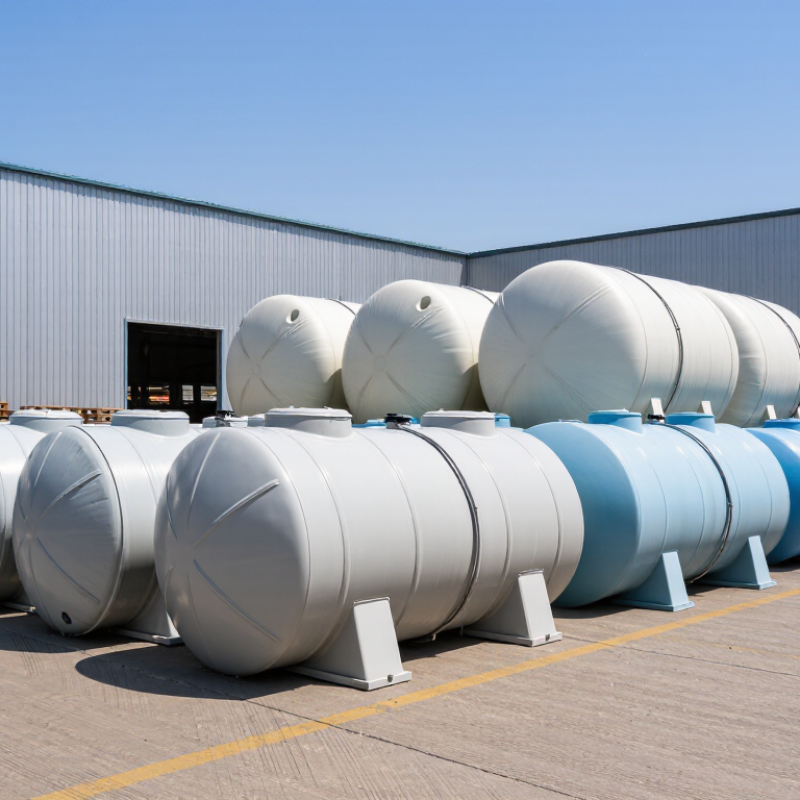
Polypropylene water tanks are storage vessels made from thermoplastic sheets or molded polypropylene. The material resists rust, many acids, alkalis, and salts. It also creates a smooth interior that is easier to clean. These properties make PP tanks useful for drinking-water storage, rainwater collection, agricultural use, and industrial process water.
Many Chinese manufacturers supply custom tanks for factories, farms, laboratories, and commercial buildings. Experienced buyers should check wall thickness, welding quality, outlet design, and support structure. A tank may look strong but still deform if its base is uneven. Ask for material certificates and confirm whether the polypropylene grade suits potable water. Chemical compatibility must be checked separately.
Polypropylene is lightweight.
That helps installation.
However, outdoor tanks need careful planning. Continuous sunlight can weaken some PP formulations over time, so UV protection may be necessary. Temperature also matters because polypropylene softens under sustained heat. Inspectors should examine weld seams, covers, vents, and fittings before delivery. Small gaps around connections can cause slow leaks, especially after repeated filling and emptying. I have found that product brochures often simplify these risks. The real decision depends on water quality, capacity, climate, and maintenance access. A cheaper tank is not always the practical choice.
Identifying China’s top 10 polypropylene water tank suppliers requires more than comparing online rankings. Start with measurable evidence. The 2024 Plastics—The Facts report recorded 413.8 million tonnes of global plastics production in 2023, showing the scale of this supply chain. However, production volume does not prove tank quality. I would check polypropylene grade certificates, wall-thickness records, UV-resistance data, and welding procedures. Suppliers should also provide ISO 9001 records and test results aligned with EN 12573 or DVS 2205 practices.
Factory verification adds practical value. Inspect sheet storage, CNC cutting, hot-gas welding, and final leak testing. Ask for hydrostatic test pressure, test duration, and failure records. A serious supplier can trace each tank to a batch number. This matters when a tank stands outdoors under heat, rain, and chemical exposure. Grand View Research valued the global polypropylene market at about USD 126 billion in 2023, with continued growth forecast through 2030. That growth may increase supplier competition, but it can also hide inconsistent material quality.
For a top-ten shortlist, score documented capacity, export experience, customization control, complaint response, and independent inspection results. Request two recent customer references. Then compare delivered samples, not only quotations. A glossy catalog is weak evidence. I would also leave room for uncertainty: one factory visit cannot reveal long-term cracking or poor weld aging. Repeat audits and third-party testing remain necessary before ranking any supplier as genuinely reliable.
| No. | Evaluation Dimension | Relevant Technical Benchmark | Information to Request and Verify | Warning Sign |
|---|---|---|---|---|
| 01 | Polypropylene Material Grade | The tank should identify the polypropylene type used, such as PP-H or PP-R, together with the applicable material datasheet. Polypropylene density is commonly about 0.90–0.91 g/cm³. | Request the resin datasheet, batch traceability information, material declaration, and confirmation that recycled material is not used in potable-water contact layers unless specifically approved. | Undisclosed material |
| 02 | Tank Construction Method | Fabricated polypropylene tanks are commonly manufactured from welded sheets or formed components. Hot-gas welding and extrusion welding are established thermoplastic fabrication methods. | Ask for welding procedure specifications, operator qualifications, weld samples, joint-design drawings, and production photographs showing the actual fabrication process. | No welding procedure |
| 03 | Wall Thickness and Structural Design | There is no single universal wall thickness for every polypropylene water tank. Required thickness depends on capacity, geometry, liquid height, temperature, support conditions, and reinforcement design. | Request a dimensioned drawing, wall-thickness map, reinforcement details, design calculations, allowable operating temperature, and maximum filling height. | Capacity-only quotation |
| 04 | Leak and Pressure Testing | Most atmospheric polypropylene storage tanks are not pressure vessels. They should be assessed using an appropriate leak-test method rather than being treated as pressurized equipment. | Request documented hydrostatic or water-fill testing, inspection records for all welds, test duration, acceptance criteria, and procedures for testing fittings and nozzles. | Pressure rating without proof |
| 05 | Potable-Water Compliance | A tank intended for drinking water must comply with the regulations or certification requirements of the destination market. General industrial polypropylene approval does not automatically equal potable-water approval. | Verify relevant food-contact or drinking-water documentation, migration test reports, declarations of conformity, and the exact product configuration covered by each document. | Generic certificate only |
| 06 | UV and Outdoor Durability | Polypropylene is not inherently resistant to long-term outdoor ultraviolet exposure. Outdoor tanks may require UV-stabilized material, protective coating, shielding, or an installation enclosure. | Ask whether UV stabilizer is included, request accelerated-weathering data where available, and confirm the stated outdoor service life and warranty conditions. | Unqualified outdoor claim |
| 07 | Temperature and Chemical Compatibility | Polypropylene performance changes with temperature and chemical exposure. Compatibility must be checked for the stored liquid, concentration, operating temperature, and cleaning chemicals. | Provide the liquid name, concentration, and temperature range. Request a written compatibility assessment and the supplier’s maximum recommended service conditions. | “Universal use” claim |
| 08 | Quality Management and Traceability | A documented quality system should control incoming material, fabrication, dimensional inspection, welding, testing, nonconforming products, and corrective actions. | Request the quality-management certificate, inspection and test plan, material batch records, final inspection report, and a sample certificate of conformity. | No traceable records |
| 09 | Customization and Fitting Accuracy | Common customization points include inlet and outlet locations, flanges, vents, overflow connections, level indicators, manways, ladders, supports, and access covers. | Compare approved drawings with the final inspection report. Confirm flange standards, nozzle dimensions, tolerances, gasket materials, and the location of every connection. | Drawing not approved |
| 10 | Export Packaging and After-Sales Support | Large polypropylene tanks may be shipped as assembled units, sectional parts, or knock-down kits. Packaging must protect welds, flanges, panels, and fittings from deformation or impact. | Request packaging drawings, loading photographs, spare-parts lists, installation instructions, warranty terms, replacement-part lead times, and a defined claims process. | No installation support |
China’s top polypropylene water tank suppliers typically serve agriculture, aquaculture, chemical processing, and commercial water storage. Their product ranges include vertical tanks, horizontal tanks, cone-bottom vessels, and rectangular tanks. Some also produce dosing tanks, filter housings, and polypropylene sumps. Capacities may range from several hundred liters to many thousands. Wall thickness, reinforcement ribs, lids, fittings, and drain positions are often configurable. This matters in crowded installations. Reliable suppliers explain load limits, operating temperatures, and fluid compatibility before quoting.
Most capable factories use PP sheets, injection molding, or rotational molding, depending on tank size and design. CNC cutting can improve panel accuracy. Hot-air welding and extrusion welding create durable seams. Skilled technicians inspect weld beads visually and perform leak tests. Better facilities use calibrated gauges, batch records, and water-fill checks. Still, advertised inspection is not always enough. Ask for material grades, thickness readings, sample reports, and production photographs. These details reveal process discipline. Some suppliers offer CAD drawings, prototypes, OEM colors, threaded ports, flanges, ladders, and support frames. Customization has limits. Thin walls may reduce cost but shorten service life.
For corrosive liquids, engineers should verify resistance at the actual concentration and temperature. UV stabilizers may be necessary for outdoor tanks. Export-ready suppliers often provide protective packaging, labeling, and installation guidance. Communication also matters. Drawing revisions, spare fittings, warranty terms, and response speed affect ownership costs. I would compare weld quality before comparing price. A low quotation can hide weak reinforcement or unsuitable accessories. Factory visits, third-party inspections, and small trial orders provide stronger confidence than a catalogue alone.
China Top 10 Polypropylene Water Tank Suppliers?
Comparing China’s top ten polypropylene water tank suppliers requires more than checking online rankings. Examine material quality, wall thickness, welding precision, and UV resistance. Ask for resin specifications and recent batch test reports. Food-contact approval may be essential for drinking-water projects. Certifications should match your destination market, not merely appear on a website. Check certificate numbers, issuing bodies, and valid product scopes.
Price needs a wider lens. Request itemized quotations covering molds, fittings, packaging, freight, inspection, and replacement parts. A low factory price can become expensive after shipping. Compare equal tank capacities and specifications. Customization may include dimensions, inlet positions, threaded connections, colors, labels, and reinforced bases. Request technical drawings before production. A small sample can expose uneven walls or poorly finished openings. Details matter.
Tips: Build a comparison sheet. Record material grade, thickness, certification evidence, lead time, warranty, and payment terms. Ask whether production records are traceable by batch. A factory audit or live video inspection adds useful evidence. Do not trust polished photographs alone. They can hide weak workmanship. Also, do not assume every certificate covers your exact tank model. This is where many comparisons become imperfect. Even experienced buyers may overlook installation conditions, temperature changes, or local water regulations. Ask practical questions, and keep written answers for later review.
This non-company-specific benchmark compares the factors commonly used when evaluating China-based polypropylene water tank suppliers. Scores are normalized from 0 to 100, with higher values indicating stronger overall performance. Price competitiveness is scored in favor of suppliers offering better value, not simply the lowest price.
Quality and certifications should be verified through test reports, ISO 9001 documentation, food-contact compliance where applicable, material-grade confirmation, UV-stabilization evidence, warranty terms, and production samples. Customization and pricing should be confirmed against the required capacity, wall thickness, fittings, color, mold, and order quantity.
China Top 10 Polypropylene Water Tank Suppliers?
Choosing among leading Chinese polypropylene water tank suppliers requires more than comparing prices. PlasticsEurope’s Plastics—The Fast Facts 2024 reports 413.8 million tonnes of global plastics production in 2023. This scale supports strong material availability, but it does not guarantee tank quality. Ask each supplier for polypropylene grade details, wall-thickness drawings, weld procedures, and batch traceability.
Request test samples before approving a factory. Check the tank’s seams, lid fit, base stability, and resistance to sunlight. A suitable supplier should explain cleaning procedures and provide test evidence for potable-water applications. ISO 9001 certification can show process control, yet it does not prove drinking-water safety. Verify compliance with the standards required in your destination market, such as NSF/ANSI 61 or equivalent local rules.
Audit the factory remotely or in person. Review extrusion equipment, welding stations, inspection records, and production capacity. The International Trade Centre’s Trade Map can help compare China’s export activity under relevant plastic tank product codes, but trade volume is only a screening signal. It cannot replace technical verification. My earlier mistake was trusting polished catalogs too quickly. The cheapest offer often excludes molds, packaging, spare fittings, or delivery protection. Ask for a complete landed-cost quotation, realistic lead time, warranty terms, and photographs from recent production. Keep the questions specific. Good suppliers welcome them.